The currency markets never sleep—and neither should your education. As we edge closer to 2026, the forex landscape continues to evolve at breakneck speed, with central bank digital currencies, AI-driven algorithms, and geopolitical realignments rewriting the rules of engagement daily. While social media gurus promise overnight success and Discord channels buzz with hot takes, serious traders understand that sustainable edge comes from deep, structured knowledge. The right trading book doesn’t just teach you patterns; it rewires how you think about risk, probability, and market behavior itself.
In an era of information overload, curated wisdom matters more than ever. A meticulously crafted forex trading book distills decades of market experience into a coherent framework you can reference, annotate, and internalize. Whether you’re battling emotional decision-making, struggling with position sizing, or trying to decode how quantum computing might impact currency arbitrage, the literature you choose becomes your silent trading partner. This guide explores what separates transformative texts from shelf clutter, helping you build a personal library that grows sharper as markets grow more complex.
Top 10 Forex Trading Books for Currency Edge
Detailed Product Reviews
1. The Little Book of Currency Trading: How to Make Big Profits in the World of Forex (Little Books. Big Profits)

Overview: Part of the respected “Little Books” series, this compact guide delivers a concentrated dose of Forex wisdom for traders seeking actionable insights without the fluff. Author Kathy Lien distills complex currency market dynamics into digestible strategies that busy professionals can actually implement. The book targets intermediate traders who understand basics but struggle with consistent profitability.
What Makes It Stand Out: Its pocket-sized format belies substantial content—this isn’t a superficial pamphlet but a carefully curated collection of proven techniques. Lien’s expertise shines through real-world examples and specific currency pair analyses. The “Big Profits” promise is tempered with realistic risk management discussions, a rare balance in Forex literature.
Value for Money: At $17.00, it sits comfortably in the mid-range, offering better value than many $30+ doorstoppers that recycle generic advice. You’re paying for concentrated expertise, not page count. For traders who value time as much as capital, the efficiency alone justifies the price.
Strengths and Weaknesses: Strengths include authoritative authorship, practical focus, and portable format perfect for reference during market hours. The concise nature means no wasted chapters on basic definitions. However, absolute beginners may need supplemental material for foundational concepts, and advanced algorithmic traders will find the technical depth insufficient.
Bottom Line: An excellent addition to any trader’s library. Buy it for the density of quality insights, not the page count. Ideal for those who’ve moved beyond babypips but aren’t yet managing institutional capital.
2. The Entry and Exit Edge in Forex Trading: [3 in 1] Exact Entry and Exit Methods to Minimize Risk and Maximize Reward (The Forex Mastery Series: Proven … Tools, and Frameworks for Smarter Trading)
![The Entry and Exit Edge in Forex Trading: [3 in 1] Exact Entry and Exit Methods to Minimize Risk and Maximize Reward (The Forex Mastery Series: Proven ... Tools, and Frameworks for Smarter Trading)](https://m.media-amazon.com/images/I/410yFfr9LBL._SL160_.jpg)
Overview: This free offering zeroes in on the most critical aspect of trading: timing. The 3-in-1 compilation addresses a glaring gap in many traders’ skill sets—knowing precisely when to pull the trigger and when to walk away. It promises specific methodologies rather than vague principles, targeting traders who already grasp market fundamentals but suffer from inconsistent execution.
What Makes It Stand Out: The price tag is obviously compelling, but the hyper-focused content is the real differentiator. While most books dedicate a chapter to entries and exits, this makes it the entire thesis. The inclusion of multiple methods within one volume provides a toolbox approach, letting traders select what fits their style.
Value for Money: At $0.00, the risk-reward is mathematically infinite. Even if only 10% of the content proves useful, you’ve gained valuable knowledge without capital risk. The obvious concern is whether it’s a loss-leader designed to upsell expensive courses. Approach with healthy skepticism but genuine curiosity.
Strengths and Weaknesses: Strengths include zero financial barrier, practical focus, and multiple strategy options. The content is surprisingly meaty for a free product. However, the lack of author pedigree information raises quality questions. Some methods may be oversimplified, and you won’t get the polished editing of premium publications.
Bottom Line: Download it immediately. Even if it serves only as a supplementary reference, free quality content is rarer than profitable trading signals. Just manage expectations and verify any strategies on demo accounts first.
3. HOW TO UNDERSTAND AND TRADE FOREX: Master the Currency Market with Confidence, Clarity, and a Winning Edge
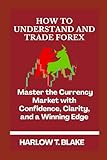
Overview: This comprehensive guide tackles the psychological barriers that cripple most retail traders. The all-caps title, while aggressive, signals its intent to build trader confidence through crystal-clear methodology. It bridges the gap between theoretical knowledge and practical application, emphasizing mental frameworks alongside technical skills.
What Makes It Stand Out: The relentless focus on “confidence” and “clarity” addresses the real reason 90% of traders fail—psychology, not strategy. Rather than just showing chart patterns, it provides decision-making frameworks that reduce analysis paralysis. The structured approach helps traders develop a personalized trading plan with defined rules.
Value for Money: At $19.99, it’s priced for the serious beginner willing to invest in education. The confidence-building aspect adds intangible value that cheaper technical manuals lack. Compared to $50+ psychology-focused trading books, it occupies a sweet spot of affordability and substance.
Strengths and Weaknesses: Strengths include excellent psychological insights, clear writing style, and practical exercises that reinforce concepts. It excels at demystifying market mechanics for nervous newcomers. However, the all-caps marketing feels unprofessional, and seasoned traders won’t find innovative strategies. Some technical analysis sections lack the depth of dedicated charting books.
Bottom Line: Perfect for traders who’ve learned the basics but freeze when real money is on the line. If you need a confidence coach more than another indicator, this delivers. Just overlook the shouting title.
4. How To Trade! - (Make Money Trading, Trade, Indexes, Commodities, Gold, Silver and FX) Options, Forex Trades (Foreign Exchange), Currency Trading, Etrade - Learn to Trade Online
Overview: This budget-friendly guide casts an impossibly wide net, attempting to cover every tradable asset class in a single volume. The keyword-stuffed title reveals its ambition—and its potential weakness. It serves as a broad introduction for absolute beginners unsure which market suits them, offering a sampler platter rather than a specialized Forex feast.
What Makes It Stand Out: The $9.95 price point makes it one of the most accessible trading books available. Its multi-asset approach helps novice traders understand how Forex interacts with commodities and indices. The Etrade mention signals practical guidance on actual platform usage, not just theory.
Value for Money: Exceptionally cheap, but value depends entirely on your goals. As a Forex-only resource, it’s poor value—too diluted. As a market comparison tool for diversifying traders, it’s reasonable. You’re paying for breadth, not depth, which suits explorers but not specialists.
Strengths and Weaknesses: Strengths include affordability, broad market coverage, and practical platform guidance. It’s an efficient way to sample different trading universes. However, the scope is ludicrously ambitious—no 200-page book can meaningfully cover all these topics. The Forex section is inevitably superficial, and the writing quality likely suffers from trying to do too much.
Bottom Line: Buy only if you’re a total beginner wanting a cheap tour of financial markets. Serious Forex traders should invest elsewhere. Think of it as a $10 menu to help you choose your cuisine, not the recipe book for mastery.
5. The Forex Edge: Uncover the Secret Scams and Tricks to Profit in the World’s Largest Financial Market

Overview: This premium-priced book takes a controversial angle, positioning itself as an exposé of Forex industry practices while simultaneously promising profit. The $41.34 price tag signals confidence in delivering exclusive insights. It targets experienced traders frustrated with conventional wisdom and seeking an “edge” through unconventional knowledge about market structure and broker tactics.
What Makes It Stand Out: The scam-exposure premise is unique in a genre that usually partners with brokers. By revealing how retail traders are systematically disadvantaged, it provides defensive strategies rarely discussed in mainstream literature. The focus on market microstructure and institutional tricks offers a perspective shift rather than just another strategy.
Value for Money: This is the most expensive option, requiring serious justification. If it genuinely reveals exploitable market inefficiencies or saves you from one major broker scam, it pays for itself. However, the “secret” marketing is a red flag—trading has few real secrets, mostly just hard work.
Strengths and Weaknesses: Strengths include potentially eye-opening industry insights, advanced risk awareness, and unique scam-identification frameworks. The content likely covers broker practices, stop-hunting, and spread manipulation. Weaknesses include probable sensationalism, lack of verifiable claims, and the danger of fostering paranoia over discipline. The high price may reflect marketing costs, not quality.
Bottom Line: For seasoned traders only. Beginners should avoid—focus on fundamentals first. Treat it as investigative journalism, not a trading bible. The insights may be valuable, but verify everything independently before adjusting your strategy.
6. Forex Trading Mastery: Cutting-Edge Strategies: Become a Top Forex Trader with Advanced Techniques and Proven Approaches

Overview: This book targets intermediate to advanced forex traders seeking to elevate their market performance through sophisticated methodologies. Positioned as a comprehensive guide to professional-grade trading, it promises to bridge the gap between basic knowledge and institutional-level strategy execution. The title suggests coverage of contemporary techniques that align with current market dynamics.
What Makes It Stand Out: The emphasis on “cutting-edge” strategies indicates the author focuses on modern algorithmic patterns, sentiment analysis, and macroeconomic correlation trading rather than outdated techniques. For traders frustrated with recycled information, this resource appears designed to provide actionable insights into high-probability setups used by top-tier professionals, potentially including risk management frameworks tailored for volatile currency markets.
Value for Money: At $13.99, this represents solid value compared to $50+ trading courses or subscription services. A single profitable trade idea could recoup the investment multiple times over. However, the crowded forex education market means quality varies dramatically at this price point. Without verified author credentials or reviews, the risk of purchasing repackaged free content exists.
Strengths and Weaknesses: Strengths include potentially advanced content at an accessible price point and a focused approach for serious traders. Weaknesses involve the lack of transparency about author expertise, no listed features to verify content depth, and the possibility of overwhelming beginners with complex material. The book’s effectiveness depends entirely on the author’s real trading experience.
Bottom Line: Suitable for traders with foundational knowledge ready to explore advanced concepts. Treat it as a supplemental resource rather than a standalone trading bible. Verify the author’s background before purchasing to ensure you’re learning from a profitable practitioner, not just a theorist.
7. Banknote Collecting Album - Clear Currency Holder World Money Storage Book Collection Supplies for Trading Cards Stamps Tickets Bills (Green [40 Pockets], 197×103mm/7.7×4.0in [Each Pocket])
![Banknote Collecting Album - Clear Currency Holder World Money Storage Book Collection Supplies for Trading Cards Stamps Tickets Bills (Green [40 Pockets], 197×103mm/7.7×4.0in [Each Pocket])](https://m.media-amazon.com/images/I/41PxIqEnXCL._SL160_.jpg)
Overview: This specialized album serves collectors seeking organized, protective storage for banknotes and similarly sized memorabilia. With 20 double-sided sheets creating 40 individual pockets, it accommodates currency up to 197×103mm. The green artificial leather cover provides a classic aesthetic while promising durability for long-term preservation.
What Makes It Stand Out: The 180° flat-lay design distinguishes it from rigid binders, enabling effortless viewing and photography of collections. Acid-free PVC inner pages offer archival-quality protection against yellowing and deterioration—critical for preserving valuable banknotes. Its versatility extends beyond currency to trading cards, stamps, and tickets, making it a multi-purpose organizational tool for diverse collectors.
Value for Money: At $7.99, this album delivers exceptional affordability compared to archival storage solutions costing $15-25. The combination of protective materials, generous capacity, and thoughtful design features (high transparency, double-sided pages) exceeds expectations for the price point. It’s an entry-level investment that doesn’t compromise on collection safety.
Strengths and Weaknesses: Strengths include acid-free protection, versatile pocket sizing, durable construction, and the convenient flat-lay display feature. Weaknesses involve PVC material (some collectors prefer Mylar), limited capacity for serious collectors with thousands of items, and the specific pocket size may not accommodate larger documents or oversized currency notes.
Bottom Line: An excellent starter album for casual to intermediate collectors. The acid-free pages and thoughtful design provide professional-grade protection at a budget price. While serious numismatists may eventually need higher-capacity solutions, this offers outstanding value for organizing and displaying collections safely.
8. Day Trader’s Edge: Unleashing the Power of Rapid Price Moves
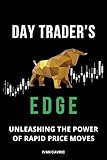
Overview: This book focuses on intraday trading tactics designed to capitalize on volatile price action. Aimed at active traders, it explores strategies for identifying and exploiting momentum bursts that occur within single trading sessions. The title suggests a practical, results-oriented approach to short-term market speculation.
What Makes It Stand Out: The emphasis on “rapid price moves” indicates specialized coverage of breakout trading, news-driven volatility plays, and tape reading techniques. Unlike general trading books, this appears dedicated to the unique psychological and technical demands of day trading, potentially offering specific entry/exit rules for high-velocity markets where seconds matter.
Value for Money: Priced at $14.89, it sits in the mid-range for trading literature. Value depends entirely on whether the strategies provide a genuine edge versus freely available information on volume profile or order flow analysis. For disciplined traders, one successful implementation could justify the cost, but the saturated day trading education space requires careful vetting of author credibility.
Strengths and Weaknesses: Strengths include specialized focus on intraday tactics and potential for actionable, time-sensitive strategies. Weaknesses involve the high-risk nature of day trading promoted without knowing risk management depth, no listed features or author verification, and the possibility of encouraging overtrading in inexperienced readers. Rapid trading requires sophisticated infrastructure the book may not address.
Bottom Line: Best suited for aspiring day traders with solid market fundamentals seeking strategy refinement. Approach with realistic expectations—no book creates profitability without screen time and discipline. Verify the author’s track record and ensure it covers risk management thoroughly before committing to its aggressive trading style.
9. Trading options for beginners: The simplified beginner’s guide to options trading to generate monthly cash flow. Best strategies to become a profitable investor includes futures and forex trading

Overview: This guide targets newcomers to options trading with promises of simplified concepts and income generation. The title suggests a comprehensive introduction covering basic strategies while also touching on futures and forex markets. It positions itself as an accessible entry point into complex derivatives trading.
What Makes It Stand Out: The “monthly cash flow” angle appeals to investors seeking regular income rather than speculative gains, likely emphasizing covered calls, cash-secured puts, and credit spreads. Inclusion of futures and forex provides broader context, helping beginners understand intermarket relationships—a feature rarely found in entry-level options books focused solely on equities.
Value for Money: At $9.95, it’s competitively priced for beginner financial literature. The multi-asset approach offers more breadth than single-market guides costing $15-20. However, the low price raises questions about depth—truly mastering options requires sophisticated understanding that may be oversimplified. The value proposition hinges on whether it builds proper risk awareness or just promises easy profits.
Strengths and Weaknesses: Strengths include affordable entry point, simplified approach for novices, and multi-market perspective. Weaknesses involve potential for dangerous oversimplification of complex strategies, “monthly cash flow” marketing that may understate risks, and lack of features/details about practical examples or paper trading guidance. Beginners need robust risk education, which budget guides often skimp on.
Bottom Line: A decent primer for absolute beginners curious about options, but should be supplemented with paper trading and additional risk management study. Treat the income claims skeptically and never trade real capital based solely on one introductory book. Use it as a glossary and concept overview, not a trading plan.
10. Forex Made Simple: The Ultimate Trend Trading $y$tem

Overview: This book promises a streamlined approach to forex trading centered on trend identification and exploitation. The stylized “$y$tem” suggests a methodology focused on systematic, rules-based trading rather than discretionary decisions. It targets traders overwhelmed by indicator overload, offering clarity through trend-focused strategies.
What Makes It Stand Out: Trend trading systems appeal to traders seeking simplicity in the chaotic currency markets. This resource likely emphasizes price action, moving average convergence, or momentum indicators to identify sustained directional moves. The “ultimate” claim suggests a comprehensive framework including entry signals, position sizing, and exit rules—potentially offering a complete trading plan rather than vague concepts.
Value for Money: At $24.99, it’s the priciest book in this set, commanding a premium for a supposedly complete system. Value depends on whether it delivers a backtested, rules-based methodology with clear risk parameters. Comparable trading systems often cost $50-200, so if genuinely effective, it could be a bargain. However, the high price demands transparency about performance metrics the description doesn’t provide.
Strengths and Weaknesses: Strengths include potential for a complete, systematic approach and focus on trend trading’s psychological advantages. Weaknesses involve premium pricing without verified track record, “ultimate” marketing hyperbole, and trend systems’ vulnerability to ranging markets. The stylized title may indicate gimmicky presentation over substance. Without sample rules, it’s impossible to assess robustness.
Bottom Line: Appropriately priced only if it delivers a fully-developed, backtested system with risk controls. For $25, demand more transparency—look for independent reviews or author trading statements. Trend following works, but requires discipline and proper execution. Treat this as a potential framework to adapt, not a guaranteed profit machine, and paper test thoroughly before deployment.
Why Forex Trading Books Remain Relevant in the Digital Age
The Enduring Value of Structured Learning
You can watch a hundred YouTube tutorials on Fibonacci retracements, but without a structured narrative connecting that concept to market psychology, risk management, and historical context, you’re collecting puzzle pieces without seeing the picture. Books force linear progression—each chapter builds on the last, creating neural pathways that random digital content simply cannot replicate. In 2026’s fragmented attention economy, the ability to sit with a single author’s complete philosophy for 300 pages isn’t just educational; it’s a competitive advantage.
Digital vs. Physical: Choosing Your Format
The debate between e-books and hardcovers isn’t about nostalgia—it’s about learning efficiency. Digital formats offer searchable text and integrated hyperlinks to real-time charts, perfect for traders who need to cross-reference concepts quickly. Physical books, however, create spatial memory; your brain remembers that the section on carry trades was on the left page, halfway down, marked with a coffee stain. Hybrid learners often benefit from owning both: digital for quick reference, physical for deep study sessions where screens would tempt distraction.
Key Features That Define Exceptional Forex Trading Books
Author Credibility and Real-World Experience
A PhD in economics doesn’t guarantee profitable trading, and a seven-figure P&L doesn’t ensure clear teaching. The sweet spot? Authors who’ve navigated live markets through multiple regimes—booms, busts, flash crashes, and quiet ranges—and can articulate why their strategies worked, failed, and evolved. Look for writers who disclose their drawdowns, not just their wins. Transparency about losing streaks and psychological pitfalls signals authenticity that textbook theorists rarely match.
Strategy Depth vs. Accessibility
Beware the book that promises “simple strategies anyone can use.” Forex is the world’s most liquid, competitive market; simplistic edges get arbitraged away within weeks. Conversely, avoid texts drowning in stochastic calculus unless you’re building quant models. The best books operate in the middle ground: they explain complex concepts through intuitive metaphors, then gradually layer in mathematical rigor. They teach you how to think about strategy construction, not just what buttons to click.
Visual Learning Elements and Chart Analysis
A picture isn’t just worth a thousand words in forex—it’s worth a thousand pips. Premium trading books invest heavily in chart annotations, candlestick pattern libraries, and before-and-after trade walkthroughs. But quality matters more than quantity. The best visualizations include multiple timeframe perspectives, show failed setups alongside winners, and explain why a pattern invalidated rather than just labeling it. For 2026, seek books incorporating heat maps, correlation matrices, and even AR-compatible charts that come alive via smartphone apps.
Matching Books to Your Trading Skill Level
Foundation-Building for Beginners
If you’re still confusing bid-ask spreads with pips, your first book must build market mechanics intuition before touching strategy. Look for texts that explain how liquidity pools form, why sessions overlap creates volatility, and how dealer desks manage inventory. These books should include practice exercises like manually calculating position sizes or backtesting simple concepts on historical data. The goal isn’t immediate profitability—it’s building a mental model robust enough to question “guru” advice later.
Intermediate Traders: Refining Your Edge
You’ve executed a few hundred trades, perhaps profitably, but consistency eludes you. At this stage, books should challenge your assumptions. Does your trend-following system fail in ranging markets? Are you misapplying indicators across different volatility regimes? Intermediate-level texts focus on market microstructure, regime detection, and strategy adaptation. They introduce concepts like market profile, order flow analysis, and the critical difference between statistical significance and economic significance in backtesting.
Advanced Practitioners: Cutting-Edge Methodologies
For traders managing substantial capital or developing automated systems, 2026’s literature must address machine learning integration, alternative data sources (satellite imagery, supply chain IoT sensors), and cross-asset arbitrage in a CBDC world. These books assume you’ve mastered classical technical analysis; they’re teaching you to build adaptive systems that evolve with market conditions. Look for discussions on reinforcement learning, Bayesian inference for position sizing, and the legal implications of using non-public but non-material data.
Specialized Forex Trading Book Categories
Technical Analysis Deep Dives
Beyond basic candlestick patterns, sophisticated technical analysis books explore the why behind price action. They dissect liquidity voids, fair value gaps, and the institutional order book dynamics that create support and resistance. For 2026, prioritize texts that address how high-frequency trading has changed traditional pattern reliability, and how to filter noise using spectral analysis or fractal dimension metrics. The best books teach you to read charts like a story of capital flows, not just shapes.
Fundamental Analysis and Macro Economics
Currency values ultimately reflect economic reality, but that reality is layered. Top-tier fundamental analysis books move beyond interest rate differentials to explore sovereign credit risk, current account dynamics, and the shadow banking system’s impact on cross-border capital. In 2026’s context, they must cover digital currency competition (e.g., e-CNY vs. digital dollar), how climate policies affect commodity currencies, and the forex implications of friend-shoring supply chains. These texts should include frameworks for building your own currency fair value models.
Trading Psychology and Mental Frameworks
Every trader knows the pain of revenge trading or freezing before a perfect setup. Psychology books that deliver lasting change avoid clichés like “be disciplined” and instead provide cognitive behavioral therapy techniques, pre-trade checklists, and post-mortem journals with specific metrics. Look for texts that address decision fatigue in 24-hour markets, the neuroscience of pattern recognition, and how to build a “trading identity” separate from your personal self-worth. The best ones include exercises tested on professional trading floors.
Risk Management and Position Sizing
This category separates amateurs from professionals. Exceptional books treat risk management as a dynamic, creative discipline—not just “don’t risk more than 2%.” They teach Kelly Criterion modifications for fat-tailed distributions, portfolio heat management across correlated pairs, and how to adjust position sizes based on market volatility regimes. For 2026, seek texts covering tail risk hedging using crypto-derivatives, stress-testing against historical correlation breakdowns, and risk budgeting in multi-strategy portfolios.
Algorithmic and Automated Trading
Manual discretionary trading still works, but understanding automation is non-negotiable in 2026. Books in this space should explain API connectivity, latency optimization, and strategy validation techniques without requiring a computer science degree. They must address overfitting in the era of abundant data, walk-forward analysis best practices, and the ethical considerations of deploying strategies that might trigger other algos. The best texts provide pseudocode and backtesting frameworks you can adapt, rather than black-box solutions.
Evaluating Book Content Quality
Case Studies and Historical Examples
Beware books that cherry-pick perfect examples. Quality texts include losing trades, ambiguous setups, and market events that broke their models. They walk through the 2015 Swiss franc shock, the 2020 COVID volatility explosion, and the gradual yen carry unwind. For 2026, they should analyze recent flash crashes in crypto-fiat pairs and how geopolitical sanctions created artificial currency pegs. Each case study should include the decision-making context, the data available at the time, and the lessons extracted.
Practical Exercises and Implementation Guides
Reading without doing is entertainment, not education. Transformative books embed exercises: “Calculate the implied volatility smile for USD/JPY using this options chain,” or “Code a simple market-making bot for a low-liquidity pair.” They provide spreadsheets, Python notebooks, or links to GitHub repositories. For 2026, look for integration with paper trading APIs and interactive quizzes that adapt based on your answers, creating a personalized learning loop.
Community and Supplementary Resources
A book that ends at the last page is incomplete. The best authors cultivate Discord communities, host monthly webinars, or maintain updated errata and bonus chapters online. They respond to reader questions about implementation challenges. Before purchasing, check if the book has an active reader base, a dedicated website with supplementary tools, or a subscription-based newsletter that extends its concepts. This ecosystem turns a static text into a living mentorship.
The Evolution of Forex Trading Literature
How 2026’s Market Dynamics Shape Modern Texts
The forex market of 2026 bears little resemblance to 2016’s landscape. Central bank digital currencies (CBDCs) are live in several major economies, creating new arbitrage channels and surveillance risks. AI language models generate fake news that moves markets before fact-checkers respond. Climate transition policies have made carbon credits a currency influencer. Modern books must address these realities, explaining how to trade when algorithmic narrative detection is as important as technical levels. They should include scenario planning for potential USD digitization or BRICS currency basket launches.
Integration with Trading Platforms and Tools
Static screenshots of MetaTrader 4 are obsolete. Forward-thinking books now embed QR codes linking to interactive TradingView charts, augmented reality overlays showing order flow, and API keys for sandbox environments where you can test concepts risk-free. Some premium texts offer companion apps that push quiz questions to your phone during market hours, reinforcing learning when it matters most. When evaluating a book, check if its publisher invests in these integrations—they signal commitment to practical application over theory.
Building a Coherent Forex Trading Library
Creating a Balanced Learning Path
Randomly accumulating books creates confusion, not competence. Map your library like a curriculum: start with market structure, layer in analysis methods, then specialize in your chosen approach (macro, technical, systematic). Allocate 30% of your budget to foundational texts, 40% to your specialization, and 30% to psychology and risk. This prevents the common trap of owning 12 technical analysis books that all explain RSI identically while you remain clueless about position sizing.
Avoiding Redundancy in Your Collection
Before buying, audit your existing library’s table of contents. If three books all have a chapter called “Introduction to Candlesticks,” you’re paying for repetition. Instead, seek complementary depth: one book on candlestick patterns, another on volume profile, a third on market microstructure. Use online syllabi from CFA programs or proprietary trading firms to identify gaps. In 2026, AI-powered tools can scan your Kindle library and recommend specific topics you’ve under-explored, optimizing your learning ROI.
Frequently Asked Questions
1. How many forex trading books should I realistically read to become consistently profitable?
Quality trumps quantity. Most professional traders find that mastering 3-5 core texts—one each on market structure, strategy development, risk management, and psychology—provides 80% of the needed framework. The key is re-reading and implementing, not accumulating. One book studied deeply over six months beats twenty books skimmed superficially.
2. Are older forex trading books still relevant for 2026 markets?
Absolutely, but selectively. Books on market psychology (e.g., crowd behavior) and risk mathematics are timeless. However, anything focused on specific platforms, pre-2010 regulation, or manual charting techniques needs supplementation with modern texts addressing algorithmic dominance and digital currency impacts. Treat classics as foundation, not gospel.
3. How can I verify an author’s trading credentials before buying their book?
Search for their track record on verified platforms like fundseeder or myfxbook. Check if they’ve managed institutional capital or run a prop desk. LinkedIn can reveal career history. Be wary of authors whose only credential is “trading educator.” Credible authors often publish research papers, speak at industry conferences, or contribute to peer-reviewed trading journals.
4. Should I focus on books specific to my preferred currency pairs?
Pair-specific books offer deep insights into unique drivers (e.g., commodity currencies vs. safe havens), but over-specialization early is dangerous. Build a broad foundation first, then add 1-2 specialized texts for your primary pairs. The EUR/USD trader who understands only eurozone economics will miss how Asian session flows and Fed policy dominate that pair’s behavior.
5. What’s the best way to take notes from a forex trading book?
Create a “living document” where you transpose key concepts into your own words, then immediately apply them to current charts. For each strategy, screenshot a live setup, annotate it with the book’s criteria, and track the outcome. This bridges theory and practice. Digital note apps with backlinking (like Obsidian) help connect concepts across multiple books.
6. How do I avoid analysis paralysis from conflicting strategies in different books?
Conflicting advice is a feature, not a bug. It reflects that multiple valid edges exist. The solution is to test each concept in a demo account with strict rules for 20-30 trades. Keep what fits your personality and schedule; discard the rest. Your trading style should emerge from this empirical process, not from blindly following any single author.
7. Are e-books or audiobooks effective for learning complex trading concepts?
E-books excel for searchable reference and linking to external tools. Audiobooks work for psychology and narrative-driven market history but fail for chart-heavy technical analysis. The optimal approach: buy the e-book for study sessions, add the audiobook for commute reinforcement of conceptual chapters, and purchase the physical copy if it becomes a core reference you’ll annotate heavily.
8. What role do book reviews on Amazon or Goodreads play in selection?
Treat public reviews as noise reduction, not quality filters. Look for detailed reviews from verified purchasers who mention specific concepts, not star ratings. Professional traders often don’t leave reviews; hobbyists do. Instead, seek critiques on trading forums where users post their implementation results. A book that generates thoughtful debate about strategy nuances is better than one with unanimous five-star praise.
9. How often should I update my forex trading library?
Schedule an annual audit every Q1. Markets evolve, and so should your library. In 2026, plan to add at least one text addressing emerging themes like AI-driven sentiment analysis or CBDC arbitrage. Simultaneously, retire books whose strategies have been commoditized or invalidated by market structure changes. A library is a dynamic tool, not a static trophy case.
10. Can reading forex trading books replace the need for a mentor or trading community?
Books provide the map, but mentors help you navigate terrain. The ideal combination is deep book study plus active participation in a peer community where members have read the same texts. This creates a shared language for discussing implementation challenges. Many premium books now include access to private forums—factor this into your purchasing decision, as the community may be more valuable than the text itself.