The shadows of the Cold War continue to captivate us, not merely as historical footnotes, but as the blueprint for every modern spy thriller that keeps you turning pages until 3 a.m. While fictional agents dash through cinematic set pieces, the true stories of that era—of moles buried deep within governments, of dead drops in foggy parks, of cryptographic breakthroughs that tilted the balance of power—offer a different kind of thrill. They’re narratives where the stakes were nothing less than global annihilation, and the spies were real people with everything to lose.
For fans of le Carré, Deighton, and the modern masters of espionage fiction, diving into authentic Cold War intelligence histories isn’t just supplemental reading—it’s unlocking the source code. These meticulously researched accounts transform the abstract concept of “geopolitical tension” into human drama, technical wizardry, and psychological chess matches that outstrip any novelist’s imagination. This year, as new archives declassify and long-silent operatives finally speak, the genre has never been more vital. Let’s explore what makes these histories essential and how to identify the ones that deserve prime real estate on your bookshelf.
Top 10 Cold War Era Espionage Histories
Detailed Product Reviews
1. The Billion Dollar Spy: A True Story of Cold War Espionage and Betrayal

Overview:
“The Billion Dollar Spy” delivers a gripping account of one of the Cold War’s most valuable intelligence assets. This meticulously researched narrative chronicles the story of Adolf Tolkachev, a Soviet engineer who provided the CIA with unprecedented access to military secrets. David E. Hoffman crafts a tense, atmospheric portrayal of Moscow in the 1980s, where CIA case officers risked everything to run their most productive agent behind the Iron Curtain. The book reads like a thriller while maintaining rigorous historical accuracy.
What Makes It Stand Out:
The book’s unique power lies in its dual focus—both the extraordinary technical intelligence Tolkachev delivered (radar and weapons systems worth billions) and the deeply human story of betrayal and ideology. Hoffman gained access to previously classified CIA cables and debriefings, offering readers unprecedented insight into tradecraft. The “billion dollar” label isn’t hyperbole; the intelligence fundamentally altered US defense planning. The psychological tension between Tolkachev’s motivations and the CIA’s operational security creates an unforgettable narrative.
Value for Money:
At $15.30, this 300+ page work represents exceptional value for serious espionage literature. Comparable Cold War histories often retail for $20-25. The depth of primary source material and Hoffman’s journalistic credentials justify every penny. You’re not just buying a story, but a definitive case study in intelligence operations that scholars still reference.
Strengths and Weaknesses:
Strengths include extraordinary primary research, cinematic pacing, and balanced analysis of both American and Soviet perspectives. The technical details are accessible without being oversimplified. Weaknesses: Some readers may find the operational minutiae slow in middle chapters, and the inevitable tragic ending may disappoint those hoping for a Hollywood resolution. The focus on a single case may feel narrow compared to broader surveys.
Bottom Line:
An essential purchase for anyone fascinated by Cold War espionage. It combines the narrative drive of a le Carré novel with the scholarly rigor of intelligence history. Highly recommended for both casual readers and serious students of the period.
2. Blind Man’s Bluff: The Untold Story of American Submarine Espionage

Overview:
“Blind Man’s Bluff” reveals the clandestine world of American submarine intelligence operations during the Cold War. Sherry Sontag and Christopher Drew expose how US submarines penetrated Soviet waters to tap undersea cables, shadow enemy fleets, and gather crucial intelligence. Based on interviews with submariners and declassified documents, this book uncovers missions so secret that even Congress remained unaware. It’s a fascinating intersection of military technology, espionage tradecraft, and extraordinary courage.
What Makes It Stand Out:
The book’s revelation of submarine espionage as a distinct intelligence discipline sets it apart. The authors masterfully explain complex sonar and submarine technology while maintaining narrative tension. Stories like the 1968 hunt for a sunken Soviet sub and cable-tapping missions in the Sea of Okhotsk read like techno-thrillers but are grounded in fact. The psychological toll on crews who couldn’t discuss their missions—even with families—adds profound human depth to the technical achievements.
Value for Money:
Priced at $15.99 for a substantial 350-page volume, this offers excellent value. Specialized military histories with this level of access typically command premium prices. The book’s unique subject matter means few alternatives exist at any price point. For those interested in naval history or technical espionage, it’s an investment in rare knowledge.
Strengths and Weaknesses:
Major strengths include unprecedented access to submarine veterans, clear technical explanations, and mission narratives that build genuine suspense. The authors balance operational details with human stories effectively. Weaknesses: Some mission accounts feel repetitive, and the chronological structure occasionally disrupts thematic coherence. A few technical sections may overwhelm readers without engineering backgrounds. The focus on American operations provides limited Soviet perspective.
Bottom Line:
A must-read for military history enthusiasts and technophiles. It opens a hidden chapter of Cold War history with authority and narrative flair. While occasionally dense, the revelations more than compensate. Perfect for readers who find traditional spy stories too terrestrial.
3. Spy in Moscow Station

Overview:
“Spy in Moscow Station” offers a focused, insider’s perspective on CIA operations in the heart of the Soviet Union. This narrative zeroes in on the cat-and-mouse game between American intelligence officers and the KGB during the Cold War’s most dangerous decades. The book details how CIA stations functioned under constant surveillance, the clever dead-drop techniques employed, and the personal toll on officers and assets. It’s a concentrated dose of Moscow operational tradecraft that reveals the daily reality of Cold War espionage.
What Makes It Stand Out:
The book’s specificity is its greatest asset—rather than surveying the entire Cold War, it immerses readers in the unique challenges of Moscow Station operations. The author captures the paranoia-inducing atmosphere where every encounter might be a KGB setup. Detailed descriptions of surveillance detection routes, clandestine meeting sites, and the famous “Moscow rules” provide practical insight into espionage methodology. The personal anecdotes from case officers humanize the strategic chess game.
Value for Money:
At $8.99, this is the most accessible entry point in this collection. While likely shorter than the other volumes, its concentrated focus delivers high informational density per dollar. It’s an affordable way to test interest in serious espionage literature before investing in pricier, more comprehensive works. Budget-conscious readers get authentic tradecraft insights without the premium price tag of academic histories.
Strengths and Weaknesses:
Strengths include laser-focused subject matter, accessible writing style, and practical operational details that larger histories gloss over. The Moscow-specific context is vividly rendered. Weaknesses: The lower price may reflect a shorter page count or older publication date with less recent scholarship. It lacks the broader historical context of more comprehensive works and may feel anecdotal rather than analytical. Some readers might want more coverage of Soviet counterparts.
Bottom Line:
An excellent, affordable introduction to the realities of Cold War field operations. Ideal for readers curious about the practical side of espionage without committing to a dense academic tome. While not encyclopedic, it’s authentic and engaging—perfect for spy thriller fans wanting the real story.
4. The Venona Secrets: The Definitive Exposé of Soviet Espionage in America (Cold War Classics)

Overview:
“The Venona Secrets” provides the comprehensive account of the Venona project—the NSA’s successful decryption of Soviet intelligence cables that exposed extensive espionage networks in America. Herbert Romerstein and Eric Breindel offer a detailed, evidence-based chronicle of how Soviet agents infiltrated the Manhattan Project, Roosevelt’s administration, and major institutions. This is less a spy thriller than a forensic historical investigation, documenting the staggering scale of Soviet intelligence success through decrypted primary sources that the US kept secret for decades.
What Makes It Stand Out:
The book’s authority stems from its foundation in actual decrypted Soviet communications, not just speculation or confessions. It definitively resolves historical controversies about figures like Julius Rosenberg and Alger Hiss with cryptographic evidence. The authors meticulously cross-reference Venona decrypts with Soviet archives and FBI files, creating an irrefutable portrait of espionage penetration. Its systematic exposure of the Communist Party USA’s role as a recruitment network provides crucial historical context often omitted in other accounts.
Value for Money:
At $19.99, this is the premium-priced option, but “definitive” is accurate. The scholarly apparatus—extensive footnotes, appendices, and index—justifies the cost for serious researchers. Comparable academic works often exceed $30. For casual readers, the price may seem steep, but the book’s unique evidentiary basis makes it unmatched. It’s a reference work that repays careful study.
Strengths and Weaknesses:
Strengths include unparalleled documentary evidence, meticulous research, and historical importance in revising Cold War narratives. The cryptographic breakthrough story itself is fascinating. Weaknesses: The prose can be dry and prosecutorial, focusing more on evidence than narrative. The authors’ clear anti-communist stance may strike some readers as ideologically rigid. Technical sections on cryptography may challenge non-specialists. It’s information-dense rather than dramatically paced.
Bottom Line:
Essential for scholars, historians, and serious students of Cold War espionage. It’s a reference monument rather than casual reading. If you want definitive proof over thrilling storytelling, this is your book. For general readers, consider starting with a more narrative history before tackling this evidentiary masterpiece.
5. Spying in America: Espionage from the Revolutionary War to the Dawn of the Cold War
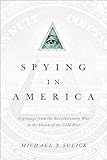
Overview:
“Spying in America” delivers a sweeping 170-year survey of American intelligence operations on its own soil. Michael Sulick, former CIA chief of counterintelligence, traces espionage from Nathan Hale’s execution through WWII espionage rings to the early Cold War. The book reveals how foreign powers consistently exploited America’s open society and how domestic vulnerabilities persisted across centuries. It’s a comprehensive chronicle that identifies patterns and lessons often missed in single-era studies, connecting Benedict Arnold to atomic spies through common operational themes.
What Makes It Stand Out:
The author’s CIA insider perspective provides unique analytical framework—Sulick evaluates historical cases through professional counterintelligence lens, identifying recurring tradecraft patterns and security failures. The broad temporal scope reveals surprising continuities in espionage methods and American vulnerabilities. Chapters on lesser-known cases (Civil War spies, WWI German sabotage networks) fill gaps in popular knowledge. The final sections connecting pre-Cold War espionage to Soviet operations provide crucial context for understanding the 1950s Red Scare.
Value for Money:
At $18.90, this 300+ page survey offers solid value. Single-era histories often cost more while covering less ground. As both narrative history and professional manual on counterintelligence lessons-learned, it serves dual purposes. Readers gain multiple books’ worth of content spanning distinct historical periods, making it cost-effective for building comprehensive understanding of American espionage vulnerabilities.
Strengths and Weaknesses:
Strengths include authoritative author credentials, unprecedented scope, and professional analysis that connects disparate cases. The writing is clear and accessible despite covering complex material. Weaknesses: The survey approach necessarily sacrifices depth—major cases like the Rosenbergs receive summary treatment. The focus on American targets means limited coverage of successful US foreign operations. Some historical transitions feel abrupt due to the broad chronological range. The counterintelligence perspective occasionally overshadows historical nuance.
Bottom Line:
An invaluable reference and educational foundation for understanding American counterintelligence challenges. Perfect for readers seeking broad context before diving into specialized Cold War histories. Sulick’s professional insights elevate it beyond typical survey books. Highly recommended as either a starting point or capstone to an espionage library.
6. Stalking the Red Bear: The True Story of a U.S. Cold War Submarine’s Covert Operations Against the Soviet Union

Overview: This gripping non-fiction account pulls back the curtain on classified U.S. Navy submarine operations during the height of Cold War tensions. Drawing on declassified materials and firsthand testimonies, the book chronicles the dangerous cat-and-mouse games played beneath the waves as American submariners tracked Soviet naval assets.
What Makes It Stand Out: Unlike broad Cold War histories, this volume delivers visceral, technical detail about submarine espionage. The narrative puts readers inside the control room, capturing the claustrophobic tension of silent running and the high stakes of intelligence gathering. Its focus on specific missions provides a granular view of naval intelligence that general military histories rarely achieve.
Value for Money: At $10.74, this specialized history offers exceptional value. Comparable submarine warfare accounts typically retail for $15-25, making this an affordable entry point into a niche subject. The price reflects its accessibility without compromising on authoritative content.
Strengths and Weaknesses: Strengths include riveting storytelling grounded in meticulous research and technical accuracy that satisfies naval enthusiasts. The firsthand perspectives create immersive tension. Weaknesses involve occasional dense jargon that may challenge readers unfamiliar with naval terminology, and some may desire more maps or diagrams to visualize operations.
Bottom Line: An essential read for military history buffs and Cold War aficionados. This submarine-specific narrative delivers authentic thrills and historical insight at a very reasonable price point.
7. Japanese Foreign Intelligence and Grand Strategy: From the Cold War to the Abe Era

Overview: This scholarly work examines Japan’s evolving intelligence apparatus and strategic thinking from the post-war period through Shinzo Abe’s administration. It provides unprecedented analysis of how Tokyo built its foreign intelligence capabilities while navigating constitutional constraints and alliance dynamics with Washington.
What Makes It Stand Out: The book breaks new ground by focusing exclusively on Japan’s underexplored intelligence community, offering rare insights into a society traditionally associated with pacifism. Its academic rigor connects institutional development to broader grand strategic shifts, making it the definitive English-language resource on this topic.
Value for Money: The $34.95 price reflects its academic pedigree and specialized research. While steeper than popular histories, university press titles in this field commonly exceed $40. For students and professionals requiring authoritative analysis of Asian security, this represents a worthwhile investment.
Strengths and Weaknesses: Major strengths include exhaustive documentation, interviews with Japanese officials, and sophisticated theoretical frameworks. It fills a critical gap in intelligence literature. The primary weakness is its dense academic prose, which may deter general readers. The narrow focus also presumes substantial background knowledge of Japanese politics and international relations.
Bottom Line: Indispensable for graduate students, policy analysts, and specialists in East Asian security. Casual readers should seek more accessible introductions to Cold War intelligence.
8. The Spy Who Came in from the Cold: A George Smiley Novel

Overview: John le Carré’s masterpiece defined the modern spy novel with its bleak, realistic portrayal of Cold War espionage. This George Smiley novel follows Alec Leamas, a burnt-out British agent tasked with one final, treacherous mission in East Germany. The story dismantles romanticized spy fiction with moral complexity and psychological depth.
What Makes It Stand Out: The novel’s literary excellence transcends genre conventions, offering prose that rivals mainstream fiction. Its unflinching examination of institutional betrayal and personal sacrifice set a new standard for realism. The used condition provides access to this classic at a fraction of the original price while remaining perfectly readable.
Value for Money: At $10.28 for a “Good Condition” used copy, this represents solid value for a canonical work. New editions typically cost $15-17, making this an economical way to acquire a physically intact, readable version of essential 20th-century literature.
Strengths and Weaknesses: Strengths include brilliant characterization, atmospheric tension, and philosophical depth that rewards rereading. The plot’s intricate twists remain compelling decades later. Weaknesses of the used condition may include minor wear, potential markings, or aged pages, though “Good Condition” ensures basic readability. Some readers might prefer a pristine copy for collection purposes.
Bottom Line: A must-own for spy fiction enthusiasts and literary readers alike. This used copy offers an affordable entry point to one of the genre’s greatest achievements without sacrificing the reading experience.
9. Cold War: A History From Beginning to End (The Cold War)

Overview: This concise volume provides a streamlined chronological survey of the Cold War, from its ideological origins to the collapse of the Soviet Union. Designed as an accessible primer, it distills complex geopolitical dynamics into digestible chapters for readers seeking a foundational understanding without overwhelming detail.
What Makes It Stand Out: The remarkably low price point combined with clear, straightforward prose makes this an ideal starting point for students or casual learners. Its structure follows a predictable timeline that helps readers quickly grasp cause-and-effect relationships between major events like the Berlin Blockade, Cuban Missile Crisis, and détente periods.
Value for Money: At just $2.99, this represents extraordinary value for basic historical literacy. Comparable introductory texts typically cost $10-15, making this a risk-free purchase for those uncertain about diving deeper into Cold War studies.
Strengths and Weaknesses: Strengths include affordability, clarity, and broad coverage that hits all major milestones. It serves as an effective roadmap for further study. Weaknesses stem from necessary brevity—analysis often lacks nuance, and complex motivations receive superficial treatment. The budget production may feature minimal maps, no footnotes, and thinner paper stock.
Bottom Line: Perfect for high school students, general readers seeking a quick refresher, or anyone wanting an affordable overview. Serious scholars will require more substantial academic treatments.
Why Cold War Espionage Histories Resonate with Modern Readers
The enduring fascination with Cold War spy histories stems from their uncanny relevance to today’s geopolitical landscape. We’re witnessing a resurgence of state-sponsored cyber operations, influence campaigns, and proxy conflicts that echo the bipolar tensions of 1945-1991. These narratives provide crucial context for understanding how intelligence agencies evolved their tradecraft and how the same ethical dilemmas—surveillance vs. privacy, security vs. liberty—continue to dominate headlines. For thriller fans, they offer the ultimate authenticity: the knowledge that these dead drops, honey traps, and coded messages actually happened, making fictional tales feel more grounded and plausible.
Key Characteristics of Authentic Cold War Spy Narratives
Declassified Documents and Primary Sources
The gold standard for any Cold War espionage history is its foundation in primary source material. Look for works that cite recently declassified documents from agencies like the CIA’s CREST database, MI6 files released to the National Archives, or Soviet-era records that became accessible after 1991. These aren’t just footnotes—they’re the actual cables, operation reports, and intelligence assessments that prove the narrative isn’t speculation dressed up as fact. A truly compelling history will show you how historians piece together fragmented evidence, sometimes from documents that were shredded and painstakingly reconstructed.
The Human Element Behind the Intelligence
While technical details fascinate, the must-have histories never lose sight of the human cost. They explore the psychological toll on case officers who recruited assets, the paranoia of double agents waiting for exposure, and the moral compromises made in the name of national security. These narratives investigate motivations: ideological conviction, financial desperation, personal vendettas, or sheer thrill-seeking. The best accounts treat spies not as chess pieces but as complex individuals whose decisions reverberated through history.
Understanding Different Subgenres of Espionage History
Technical Surveillance and Gadgetry
Some readers gravitate toward the engineering marvels of espionage: the Moscow embassy’s rebuilt walls teeming with Soviet bugs, the CIA’s robotic catfishes for underwater cable tapping, or the KGB’s ingenious concealment devices. Histories focusing on technical collection reveal how innovation raced against counter-surveillance, creating a gadget arms race that predates our digital age. These works appeal to fans who love the “how it works” aspect of spy fiction.
Defection and Double Agent Narratives
Nothing matches the tension of a true defection story—the planning, the extraction, the debriefing, and the aftermath. These histories dissect famous turncoats and the operations that brought them to the West or prevented their escape. They examine the intricate process of verifying a defector’s authenticity while protecting them from retaliation. The psychological chess game between handler and asset, multiplied by the suspicion that the asset might be a triple agent, creates narratives more layered than any fictional plot.
Cryptography and Codebreaking Chronicles
The Venona project, the cracking of Soviet one-time pads, and the battle for cryptographic supremacy form a specialized but thrilling subgenre. These histories require authors who can explain complex mathematical concepts in accessible prose while maintaining narrative momentum. They reveal how a single decrypted message could expose a spy ring or alter diplomatic strategy, making them perfect for readers who appreciate the cerebral side of espionage.
Nuclear Espionage and Atomic Secrets
The race for atomic dominance created the Cold War’s most consequential espionage. Histories in this category track the flow of secrets from Los Alamos to Moscow, examining both the scientists who passed information and the intelligence officers who facilitated the transfer. These accounts grapple with profound questions: Did Soviet spies significantly accelerate their nuclear program? How did Western agencies eventually penetrate these networks? The stakes—global annihilation—infuse every page with urgency.
What Makes a Cold War Espionage History “Must-Have”
Narrative Drive vs. Academic Rigor
The most valuable histories strike a delicate balance. Academic texts might offer exhaustive research but read like telephone directories, while journalistic accounts may sacrifice nuance for pace. Seek works where the author has conducted original research but structures it with novelistic tension—building scenes, developing character arcs, and maintaining forward momentum without fabricating dialogue or thoughts. The best signal is when historians use archival evidence to reconstruct specific moments, like the tense minutes before a dead drop exchange.
Author Credentials and Access
Evaluate the author’s background carefully. Former intelligence officers bring insider knowledge but may carry institutional bias or be constrained by lifelong secrecy oaths. Academic historians offer scholarly distance but might lack operational understanding. Journalists often excel at investigative digging and interviews but may misinterpret technical details. The ideal history sometimes features collaboration—an academic partnering with a former case officer, or a journalist granted unprecedented archival access.
Geographic Scope and Focus
A must-have history knows its boundaries. Some offer global panoramas of intelligence operations, connecting disparate events into a coherent narrative of systemic rivalry. Others provide microscopic focus—a single Berlin tunnel operation, one mole hunt, a specific embassy’s security compromise. Neither approach is inherently superior; your preference should depend on whether you want sweeping context or deep-dive detail. The key is that the scope matches the author’s evidence—broad claims require broad documentation.
Evaluating Source Material and Research Depth
The Importance of Recently Declassified Archives
Cold War scholarship evolves constantly as classification periods expire. A history published this year might incorporate NSA’s 2023 releases about Venona, or FSB archives opened under temporary cooperation agreements. Check publication dates against major declassification milestones. The most current works often contain revelations that fundamentally alter previous narratives, exposing long-accepted accounts as incomplete or even deliberate disinformation.
Interview-Based Investigations
Oral histories from aging operatives and assets provide color no document can match. However, assess the author’s methodology: Did they corroborate claims against archival evidence? Are they transparent about conflicting accounts? The best interview-driven histories read like detective work, with the author weighing testimony, detecting self-aggrandizement, and acknowledging gaps. Be wary of works that treat single-source anecdotes as gospel truth.
Balancing Historical Accuracy with Compelling Storytelling
The Role of Speculation in Factual Narratives
Even the best-documented operations contain gaps. Ethical historians explicitly label speculation, using phrases like “likely,” “probably,” or “based on circumstantial evidence.” They build plausible scenarios from known facts without crossing into fiction. This transparency actually enhances the reading experience—you’re invited into the analytical process, weighing evidence alongside the author. Avoid histories that present theories as established fact, especially regarding controversial incidents like the “Spy in the U.S. Embassy Moscow” cases.
Avoiding Sensationalism While Maintaining Tension
The truth is often more dramatic than exaggeration. Authentic histories don’t need to invent shootouts or car chases—the slow burn of a decade-long mole investigation, the claustrophobia of a surveillance detection route, the betrayal of a trusted colleague: these provide genuine tension. Quality works resist the temptation to label every operation “the most important” or every spy “the most damaging.” They let the evidence speak, creating understated but powerful drama.
Regional Variations in Cold War Spy Stories
Berlin: The Frontline of Intelligence Operations
No city symbolizes Cold War espionage like Berlin. Histories focused here explore the mechanics of tunneling under the Wall, the tradecraft of crossing sectors, and the unique pressures on agents operating in a divided city. They detail how both sides turned Berlin into a laboratory for intelligence techniques later deployed worldwide. For thriller fans, Berlin stories offer the quintessential espionage atmosphere: paranoia, moral ambiguity, and constant danger.
Moscow: Inside the Heart of the Adversary
Operations within the Soviet capital represented the ultimate challenge: a “denied area” under total surveillance. Moscow-focused histories reveal how Western officers operated under constant KGB observation, using ingenious methods to contact assets and exfiltrate information. They also explore the KGB’s perspective—how they ran Western agents and penetrated embassies. These accounts are invaluable for understanding the extreme end of spy tradecraft.
Washington and London: The Western Intelligence Hubs
Stories from the home front differ dramatically. These histories examine counterintelligence failures—how moles like the Cambridge Five operated undetected for decades. They detail bureaucratic warfare between agencies (FBI vs. CIA, MI5 vs. MI6) and the political pressures on intelligence chiefs. For readers interested in the institutional side of espionage, these works reveal how democracies balanced openness with secrecy.
The Evolution of Espionage Tactics Through the Decades
Early Cold War (1945-1960): The Golden Age of Human Intelligence
Post-war operations relied heavily on human sources—refugees, defectors, ideological recruits. Histories covering this period emphasize personal relationships, street-level tradecraft, and the desperate scramble for any information about Soviet intentions. The narratives feel more intimate, with individual agents wielding outsized influence. Look for works that capture this era’s raw, improvisational nature before technology transformed the field.
The Technological Revolution (1960s-1970s)
The Cold War’s middle decades saw satellites, advanced listening devices, and computerized data analysis reshape intelligence collection. Histories tracking this shift reveal how technology both enhanced and complicated operations—more data didn’t always mean better intelligence. They explore the rise of signals intelligence (SIGINT) and the corresponding decline in human intelligence (HUMINT) importance, a debate that still rages today.
The Digital Dawn (1980s-1991)
The final decade introduced early cyber espionage and electronic warfare. These histories bridge traditional Cold War spying and our modern digital battleground. They document how both sides began hacking computer networks, spreading disinformation through emerging media, and preparing for conflicts where bytes mattered more than bullets. For contemporary readers, this era feels eerily prescient.
Assessing Author Expertise and Bias
Journalistic Approaches vs. Academic Scholarship
Journalists excel at narrative velocity and interview access, often breaking stories through dogged investigation. Their works read like extended magazine features—fast, vivid, and personality-driven. Academic historians provide deeper context, theoretical frameworks, and exhaustive documentation, but may write more densely. Your preference depends on reading goals: entertainment and new revelations (journalistic) versus comprehensive understanding (academic). The best libraries include both.
Former Intelligence Officer Memoirs
Firsthand accounts offer unparalleled operational detail but come with caveats. Authors may be legally required to submit manuscripts for pre-publication review, potentially censoring key details. They might defend institutional decisions or settle old scores. Evaluate these works by cross-referencing with third-party histories—when accounts align despite different perspectives, you’ve found truth. When they diverge, you’ve found fascinating controversy worth investigating further.
Third-Party Historical Analysis
Independent historians without intelligence backgrounds often provide the most objective assessments. They’re free from institutional loyalty and career-long secrecy habits. However, they may misinterpret operational jargon or underestimate practical constraints on field officers. The strongest works in this category show authors who’ve immersed themselves in the culture—attending conferences, interviewing practitioners, perhaps even taking surveillance detection training—to understand the reality behind the paperwork.
Physical Book Features for Collectors
First Editions and Their Value
For serious collectors, first editions of groundbreaking Cold War histories can appreciate significantly, especially if they contain revelations later challenged or suppressed. Look for limited print runs from university presses or official government publishers. Signed copies from authors with unique access (like former CIA directors or KGB archivists) hold special value. Condition is paramount—dust jackets, unclipped price tags, and absence of library markings dramatically affect worth.
Maps, Photographs, and Supplementary Materials
Espionage histories demand visual context. Quality works include detailed maps of Berlin’s sector boundaries, Moscow embassy layouts, or dead drop sites. Photographs of key figures, surveillance photos of meetings, and reproductions of intercepted documents transform abstract narratives into tangible reality. For technical subgenres, diagrams of bugging devices or cryptographic machines are essential. When evaluating a potential purchase, flip through to assess these materials—cheap productions often lack them entirely.
Audiobook and Digital Formats for Modern Consumption
Narrator Quality in Espionage Narratives
A skilled narrator can elevate a good history into an immersive experience. Look for voice actors who handle multiple accents authentically—Russian, British, American—without caricature. The best understand espionage terminology, pronouncing “rezidentura” or “illegals” correctly. They modulate tone for tension during operation descriptions and gravitas for historical analysis. Preview audio samples before purchasing; a mismatched narrator can render even brilliant research unlistenable.
Enhanced Digital Features
E-books and digital audiobooks increasingly offer features that print cannot. Interactive maps where you can follow an agent’s surveillance detection route, linked footnotes that display when tapped, and embedded video interviews with subjects add layers of engagement. Some digital histories include searchable databases of declassified documents cited in the text. While purists prefer print, these enhancements make complex narratives more accessible, especially for readers new to the genre.
Building a Cohesive Cold War Espionage Library
Curating by Theme or Era
Approach your collection strategically. You might focus on a specific theme—Soviet illegals in America, CIA operations in Eastern Europe, or nuclear espionage—building depth in one area. Alternatively, curate chronologically, tracing how tradecraft evolved from 1945 to 1991. Thematic collections reveal patterns; chronological ones show development. Both approaches have merit, but mixing them randomly creates a disjointed library where connections remain hidden.
Balancing Breadth and Depth
A well-rounded collection includes both panoramic surveys and deep-dive monographs. Survey works provide context, showing how disparate operations connected into grand strategy. Monographs offer the satisfying detail that thriller fans crave—the specific model of camera hidden in a briefcase, the exact wording of a coded message. Start with a comprehensive overview, then add specialized works on operations or figures that particularly intrigue you. This creates a library where each book enhances the others.
Common Pitfalls to Avoid When Selecting Titles
Overly Technical Jargon Without Explanation
Some authors, particularly those with signals intelligence backgrounds, drown readers in acronyms and technical specifications without context. While authenticity matters, a history that requires constant glossary consultation becomes impenetrable. Quality works introduce technical terms naturally, explaining them through narrative context. If a sample chapter feels like reading a military manual, the book likely values showing off expertise over communicating effectively.
Politically Biased Narratives Masquerading as Fact
Cold War histories attract authors with axes to grind—former Cold Warriors justifying controversial programs, or revisionists downplaying Soviet aggression. Watch for loaded language: “heroic” vs. “fanatical,” “defending freedom” vs. “imperialist aggression.” Objective histories acknowledge wrongdoing on all sides and present motivations without moralizing. Check author biographies for political affiliations or funding sources that might color their analysis. The best works let the evidence shock or vindicate, rather than telling you how to feel.
Repackaged Old Information Without New Insights
The market is flooded with “new” histories that merely rehash previously published accounts, sometimes with flashier prose but no fresh research. Before purchasing, check the bibliography and notes section—does it cite recently opened archives? Does it include original interviews? Read professional reviews from intelligence historians, not just Amazon ratings. A genuine contribution will be noted by experts in the field; a retread will be politely ignored or explicitly called out.
How to Stay Current with New Releases This Year
Following Declassification Schedules
Intelligence agencies operate under mandatory declassification review, typically on 25-year cycles. Monitor announcements from the National Archives, CIA’s FOIA reading room, and equivalent foreign institutions. When major tranches release—like the JFK assassination files or Soviet bloc military archives—new histories incorporating these materials will follow within months. Set up Google alerts for “declassified Cold War” to catch these opportunities early.
Monitoring Academic and Intelligence Community Publications
Subscribe to journals like Intelligence and National Security or the CIA’s own Studies in Intelligence. These publish peer-reviewed articles that often expand into full books. Follow historians who specialize in the field on social media; they frequently announce upcoming works and share preliminary findings. Intelligence community alumni associations sometimes host lectures where authors preview research. Staying connected to these communities ensures you discover groundbreaking histories before they hit bestseller lists.
Frequently Asked Questions
What distinguishes a quality Cold War espionage history from a sensationalized account?
Quality histories ground every claim in documented evidence, clearly distinguishing between verified facts, informed speculation, and acknowledged gaps. They avoid hyperbolic language like “most devastating spy” or “greatest intelligence failure,” instead providing comparative context. Sensationalized accounts rely on single, uncorroborated sources and present conjecture as certainty to generate shock value.
How can I verify the accuracy of claims in these histories?
Cross-reference multiple independent sources, especially those with access to different archives. Check if the book has been peer-reviewed or endorsed by established intelligence historians. Look for extensive footnotes citing primary documents rather than secondary accounts. Be skeptical of claims that contradict well-documented consensus without presenting extraordinary new evidence.
Are memoirs by former spies reliable, or are they self-serving?
They’re both. Treat them as primary sources requiring critical analysis. Compare the author’s account with third-party histories and declassified documents. Note what’s omitted as much as what’s included—silence about controversial operations often indicates ongoing classification or personal embarrassment. The most reliable memoirs acknowledge mistakes and rival perspectives rather than painting themselves as infallible heroes.
Should I start with broad overviews or specific operation deep-dives?
Begin with a well-regarded survey history to understand the Cold War’s intelligence landscape. This provides context for specialized works. After grasping the big picture, dive into operations or figures that intrigue you. Without foundational knowledge, deep-dive books can feel confusing and lack significance.
How important is the author’s nationality or former affiliation?
It matters less than you’d think. British, American, Russian, and German historians have all produced excellent, objective work. Focus on the author’s research methodology and source access rather than their origin. However, be aware that national perspectives naturally influence which operations receive emphasis—American authors may prioritize CIA ops while British scholars focus on MI6.
What’s the typical timeline for new declassified information to appear in published books?
Major revelations can appear in academic articles within 6-12 months of declassification. Full-length books requiring synthesis of new material typically take 2-4 years. This year’s most groundbreaking histories likely incorporate documents released in 2020-2022. The delay ensures thorough analysis and peer review, separating serious scholarship from rushed exploitation.
Are audiobook versions compromised by abridgment or narration choices?
Many espionage histories are available unabridged, but always verify before purchasing. Abridgment often cuts the very footnotes and source discussions that distinguish quality scholarship. Regarding narration, professional reviewers often comment on performance quality. Preview samples to ensure the narrator handles technical terms and foreign names competently. Poor narration can render complex material incomprehensible.
How do I spot politically biased writing in ostensibly factual histories?
Watch for unqualified moral judgments, selective presentation of evidence, and dismissal of counterarguments. Biased authors often portray one side as uniformly principled and the other as entirely cynical. Check the bibliography—do they cite only sources from one ideological camp? Read reviews from historians across the political spectrum; consensus about a book’s fairness is a strong indicator of objectivity.
Is there a “canon” of essential Cold War espionage histories that every fan should own?
While certain works have achieved classic status due to groundbreaking research or literary quality, the field evolves too rapidly for a fixed canon. A book that defined the field in 1995 might be partially superseded by 2024 declassifications. Focus on building a collection that represents different perspectives, methodologies, and eras rather than chasing a static list of “essentials.”
How can I tell if a “new” history actually contains fresh revelations or just repackages old material?
Examine the copyright page for the publication date and any mention of new editions. Read the preface—authors of genuinely new research will explicitly state which archives they accessed and what documents were previously unavailable. Check academic reviews; scholars will highlight new contributions. If the book’s promotional material emphasizes “a fresh take” rather than “new evidence,” it’s likely a reinterpretation, not a revelation.