In a world where toddlers navigate tablets before they can tie their shoes and elementary students debate the merits of renewable energy on the playground, raising genuinely curious kids requires more than just handing them the latest gadget. Parents and educators face a unique challenge: how do we transform passive screen time into active scientific thinking? The answer might surprise you—it’s not another app, but the timeless power of a well-chosen book. STEM-themed children’s literature has evolved from dry fact-books into vibrant, narrative-driven adventures that make complex concepts as digestible as a bedtime story.
This transformation matters now more than ever. The gap between childhood wonder and adult innovation is bridged by those pivotal moments when a young mind connects with an idea that sparks a lifetime of inquiry. Whether your child is obsessed with dinosaur fossils, constantly asks “why” about everything, or shows early signs of engineering prowess by dismantling your coffee maker, the right STEM book can validate their curiosity while building critical thinking skills. But not all science books are created equal, and navigating the crowded marketplace requires a discerning eye for quality, accuracy, and engagement.
Top 10 STEM-themed Children’s Books for Curious Kids
Detailed Product Reviews
1. Ada Twist, Scientist: A Picture Book (The Questioneers)

Overview: Ada Twist, Scientist is a bestselling picture book from the Questioneers series that follows a relentlessly curious African American girl who uses science to understand her world. Aimed at ages 4-8, this rhyming story celebrates the scientific method and perseverance while introducing STEM concepts through an engaging narrative and vibrant, detailed illustrations that encourage close observation.
What Makes It Stand Out: This book uniquely centers a young girl of color as a STEM protagonist, addressing a critical representation gap. It treats young readers with intellectual respect, never dumbing down scientific concepts. The integration of the scientific method within a compelling story arc—rather than as dry facts—makes abstract thinking tangible and exciting, while the distinctive illustration style creates immediate visual recognition.
Value for Money: At $11.24 for a hardcover edition, this sits squarely in the standard range for premium picture books. Given its exceptional re-readability, durable construction, and cultural significance in normalizing diversity in STEM, it offers strong long-term value. Comparable STEM picture books typically retail for $10-15, making this a competitively priced investment in scientific identity formation.
Strengths and Weaknesses: Strengths include authentic diversity representation, sophisticated vocabulary that grows with children, beautiful illustrations that reward careful study, and a powerful message that failure is essential to discovery. Weaknesses: the rhyming scheme occasionally constrains natural storytelling flow; concepts may require adult mediation for younger readers; and as a narrative text, it lacks hands-on activities for kinesthetic learners.
Bottom Line: An essential addition to any child’s library, particularly impactful for inspiring girls in STEM. While it won’t replace experiment books, its narrative approach to scientific thinking is unmatched for building conceptual foundations. Highly recommended for home, classroom, and library collections seeking quality diverse literature.
2. Oliver the Curious Owl

Overview: Oliver the Curious Owl is a charming picture book that follows an inquisitive owl on a moonlit adventure to discover how big the world truly is. Targeting preschoolers ages 3-6, this gentle story combines lyrical prose with enchanting illustrations to explore themes of curiosity, courage, and friendship. The narrative structure encourages young readers to ask questions alongside Oliver, making it an ideal bedtime story that sparks wonder without overstimulating.
What Makes It Stand Out: Unlike many STEM books that focus on hard science facts, Oliver approaches discovery through emotional and philosophical inquiry, asking questions about belonging and perspective. The nighttime setting creates a calming, magical atmosphere that distinguishes it from brighter, daytime adventure stories. Its focus on meta-curiosity—thinking about thinking—helps develop critical thinking skills in a developmentally appropriate way for the youngest learners, making abstract concepts accessible through character empathy.
Value for Money: Priced at $14.29, this book sits at the higher end for picture books, reflecting likely premium production values such as thicker paper, enhanced illustrations, or special printing effects. While more expensive than mass-market titles, the price is justified if the book includes these quality features and unique artistic merit. For families seeking distinctive, contemplative stories rather than franchise characters, the investment supports independent publishing and artistic originality.
Strengths and Weaknesses: Strengths include a soothing, lyrical text perfect for bedtime; sophisticated themes about perspective and wonder; likely beautiful, atmospheric artwork; and emotional intelligence development alongside curiosity. Weaknesses: the higher price point may deter budget-conscious buyers; philosophical approach may not satisfy children seeking concrete scientific answers; limited name recognition compared to bestselling series; and may require multiple readings for children to grasp deeper meanings.
Bottom Line: A worthwhile purchase for families valuing contemplative, artful storytelling over explicit STEM instruction. Oliver excels at nurturing emotional curiosity and critical thinking in young children, though it works best as a complement to more fact-based science books. Recommended for parents seeking to cultivate wonder and philosophical thinking in preschoolers, particularly as a calming bedtime read.
3. The Everything Kids’ Science Experiments Book: Boil Ice, Float Water, Measure Gravity-Challenge the World Around You! (Everything® Kids Series)
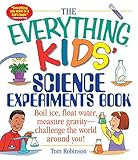
Overview: The Everything Kids’ Science Experiments Book delivers exactly what its ambitious title promises: a comprehensive collection of hands-on activities designed to challenge young minds. Aimed at ages 7-12, this paperback includes dozens of experiments using household materials to explore physics, chemistry, biology, and earth science. Each activity includes clear instructions, safety notes, and simple explanations of underlying principles, making it an accessible entry point for independent exploration or guided parent-child learning.
What Makes It Stand Out: This book’s greatest strength is its sheer density of activities—offering more experiments per dollar than nearly any competitor. The “challenge the world around you” framing transforms everyday environments into laboratories, encouraging scientific thinking beyond structured activities. Unlike many experiment books that require specialty items, this emphasizes common household materials, dramatically reducing barriers to entry. The inclusion of measurement and data collection introduces authentic scientific methodology, not just flashy demonstrations.
Value for Money: At $6.64, this represents exceptional value—costing less than a single fast-food meal while providing hundreds of hours of educational content. Comparable experiment books typically retail for $12-20, making this a budget-friendly powerhouse. The low price point removes financial risk for parents uncertain about their child’s interest level, while the content depth ensures longevity as children can tackle more complex experiments as they mature. It’s arguably the best cost-to-activity ratio in the category.
Strengths and Weaknesses: Strengths include incredible affordability, minimal material requirements, clear step-by-step instructions, authentic scientific methodology introduction, and age-appropriate complexity range. Weaknesses: black-and-white illustrations lack visual appeal of full-color competitors; experiments can feel dated compared to modern, video-enhanced content; some activities require adult supervision that isn’t always clearly flagged; and the dense text layout may intimidate reluctant readers. The book’s longevity depends on a child’s sustained interest.
Bottom Line: An unbeatable value proposition for hands-on STEM learning. This book democratizes science education by making it affordable and accessible, though it sacrifices some visual polish. Perfect for parents wanting to test their child’s interest in science without significant investment, or for supplementing school curriculum with practical applications. Highly recommended as a starter experiment book, especially for budget-conscious families.
4. Hello, World! 5-Book Collection Set - STEM-Themed Educational Board Books for Curious Toddlers - Weather, My Body, How Do Apples Grow?, Rocks and Minerals, Music

Overview: The Hello, World! 5-Book Collection Set packages STEM-themed board books into a comprehensive early learning library for toddlers ages 0-3. This set includes Weather, My Body, How Do Apples Grow?, Rocks and Minerals, and Music—introducing fundamental concepts through simple text, bright illustrations, and durable construction. Each book distills complex topics into toddler-friendly observations and vocabulary, making abstract scientific ideas concrete and accessible for the youngest learners during critical developmental windows.
What Makes It Stand Out: This collection’s cohesive STEM framework stands out in a market dominated by single-topic or character-driven board books. The series approach allows concepts to build across volumes, creating a mini-curriculum. Jill McDonald’s distinctive artistic style—bold colors, clear shapes, and friendly faces—makes science visually approachable. The inclusion of lesser-covered topics like geology and botany alongside classic body and weather books demonstrates unusual breadth for the board book format, treating toddlers as capable learners rather than just entertainment consumers.
Value for Money: At $42.97 for five board books, the per-unit cost of approximately $8.59 represents solid value for well-constructed, educationally substantive titles. Individual Hello, World! books typically retail for $8-10, so the set offers modest savings while ensuring thematic consistency. Compared to buying disparate STEM books, this curated collection eliminates decision fatigue and guarantees quality. The durability of board books means these will survive years of teething, throwing, and enthusiastic page-turning, amortizing the investment across siblings or generations.
Strengths and Weaknesses: Strengths include exceptional durability for rough toddler handling, scientifically accurate yet accessible content, cohesive visual branding across volumes, broad topic coverage, and age-appropriate vocabulary building. Weaknesses: the set price requires upfront investment that may strain budgets; some toddlers may gravitate to only 2-3 titles; board book format limits depth for rapidly developing minds; and the collection approach lacks flexibility if families already own some titles. The content may feel simplistic for children approaching preschool age.
Bottom Line: An excellent foundational investment for families committed to early STEM exposure. This collection excels at making science a natural, daily conversation for toddlers, though it works best when supplemented with hands-on experiences. While the set price requires commitment, the quality and breadth justify the cost. Highly recommended for baby showers, first birthdays, or parents seeking to build a purposeful home library from the start.
5. FUTURE NASA KIDS: STEM Activity Book for Curious Minds (Ages 6–12). 15 Types of Educational Activities

Overview: FUTURE NASA KIDS targets aspiring astronauts ages 6-12 with a space-themed activity book featuring 15 distinct educational activity types. This paperback combines mazes, word searches, math challenges, coding basics, engineering design prompts, and science factoids into a unified NASA-inspired experience. Unlike generic activity books, this maintains thematic consistency throughout, connecting puzzles and problems to real space exploration concepts, making it ideal for long car trips, rainy days, or screen-free entertainment that secretly builds STEM skills.
What Makes It Stand Out: The NASA branding and space theme create immediate aspirational appeal, tapping into children’s natural fascination with astronauts and rockets. Offering 15 activity types rather than 15 total activities suggests remarkable variety and replay value. The integration of multiple STEM disciplines—math, engineering, coding, and science—within a single cohesive narrative framework distinguishes it from single-subject workbooks. This approach mirrors how real space missions require cross-disciplinary thinking, providing authentic context for skill-building.
Value for Money: At $10.99, this activity book positions itself in the mid-range, offering more thematic depth than dollar-store alternatives but remaining accessible. The NASA licensing and specialized content justify the premium over generic activity books. With potentially dozens of hours of engagement across varied activity types, the cost-per-hour compares favorably to single-use workbooks. For space-obsessed children, the specialized content delivers higher value than general STEM books, though parents of casually interested kids might prefer broader titles.
Strengths and Weaknesses: Strengths include powerful NASA branding that motivates reluctant learners, diverse activity types preventing boredom, age range flexibility allowing siblings to share, screen-free engagement, and real science integration. Weaknesses: as a paperback, it may not withstand heavy use; some activity types may not appeal to all learners; NASA branding could limit interest for non-space fans; solutions/answer keys may be limited; and the 6-12 age range may mean some content is too easy or too hard for specific ages within that span.
Bottom Line: A stellar choice for space-enthusiast children seeking themed, varied activities that build multiple STEM skills. While not a comprehensive curriculum, it excels at maintaining engagement through aspirational branding and variety. Best for supplementing school learning or entertaining during travel. Recommended for parents wanting to channel space obsession into educational screen-free time, though those seeking deep single-subject mastery should look elsewhere.
6. 5,000 Awesome Facts (About Everything!) (National Geographic Kids)

Overview: This National Geographic Kids volume delivers exactly what its title promises—an enormous treasury of 5,000 fascinating facts covering virtually every topic a curious young mind could want. From animals and space to history and technology, this book serves as an engaging reference that children can dip into for quick bursts of knowledge or browse for hours. The hardcover format and portable design make it ideal for both home libraries and on-the-go learning during car trips or visits to grandparents.
What Makes It Stand Out: The sheer volume of information sets this apart from typical children’s fact books. National Geographic’s expertise shines through in the accuracy and visual appeal, while the “whole new style of presenting content” moves beyond dense text blocks to more digestible, visually engaging layouts. The premium materials ensure this book withstands repeated handling by enthusiastic young readers, and its convenient size means it travels well without sacrificing content depth.
Value for Money: At $28.41, this sits in the mid-to-high range for children’s nonfiction. However, considering you’re getting 5,000 vetted facts from a trusted educational brand in a durable, portable format, the price reflects genuine quality. Comparable fact collections often cost $20-35 but lack National Geographic’s visual pedigree and reliability. This is an investment in your child’s intellectual curiosity that will provide value for years.
Strengths and Weaknesses: Strengths include authoritative content from a trusted brand, massive information density, engaging visual design, durable construction, and portability. The premium materials mean it won’t fall apart after a few months. Weaknesses: The price point may stretch some budgets, and the fact-heavy format might overwhelm children who prefer narrative storytelling. Some topics receive only surface-level coverage due to the breadth-over-depth approach.
Bottom Line: Perfect for fact-hungry kids aged 8-12, this book delivers exceptional educational value in a package built to last. While not cheap, the combination of trusted content, engaging presentation, and durable construction justifies every penny. An ideal gift for young trivia enthusiasts or reluctant readers who prefer bite-sized information.
7. The Berenstain Bears’ Big Book of Science and Nature (Dover Science For Kids)

Overview: This beloved classic combines the Berenstain Bears’ charm with foundational science and nature concepts for young learners. Covering seasons, weather, plants, animals, and basic scientific principles, it uses the familiar bear family to make complex topics accessible. As a used book in good condition, it offers an affordable entry point into quality children’s literature that has educated multiple generations.
What Makes It Stand Out: The Berenstain Bears brand provides instant familiarity and comfort for children, making science feel less intimidating. The storytelling approach weaves educational content into narratives featuring Sister and Brother Bear, helping concepts stick through character-driven plots. Dover’s commitment to educational publishing ensures the scientific content remains accurate and age-appropriate, while the compilation format gives you multiple books in one volume.
Value for Money: At just $9.09 for a used copy in good condition, this represents exceptional value. New editions often retail for $15-20, so you’re saving significantly while still receiving a fully functional reading experience. The timeless content means a used copy loses none of its educational impact, making this a budget-friendly way to introduce science to preschool and early elementary children without sacrificing quality storytelling.
Strengths and Weaknesses: Strengths include trusted characters that engage reluctant learners, comprehensive coverage of basic science concepts, proven educational track record, and unbeatable price as a used book. The gentle, family-friendly approach builds positive associations with science. Weaknesses: Being used may show minor wear, and the illustrations and some scientific information reflect its original publication era. The format may feel dated compared to modern interactive books, and it lacks the digital supplements many new titles offer.
Bottom Line: An outstanding value for parents and educators seeking proven, character-driven science content. The minor compromises of buying used are far outweighed by the savings and timeless educational value. Ideal for ages 4-7, this book remains a reliable foundation for early science literacy that won’t strain your budget.
8. S.T.E.M. Riddles & Brain Games For Curious Kids: 250 Fun Challenges That Tickle Your Brain And Spark Discovery

Overview: This interactive collection of 250 S.T.E.M.-focused riddles and brain games targets curious young minds eager for mental challenges. Designed to make science, technology, engineering, and math entertaining, the book moves beyond passive reading to active problem-solving. Each puzzle encourages critical thinking and logical reasoning while disguising learning as play, making it perfect for car rides, waiting rooms, or screen-free entertainment.
What Makes It Stand Out: The interactive riddle format transforms abstract S.T.E.M. concepts into engaging, bite-sized challenges that kids can tackle independently or with family. Unlike traditional textbooks, this approach builds confidence through immediate feedback and “aha!” moments. The book’s structure grows progressively more complex, allowing children to level up their skills naturally while covering diverse topics from coding logic to physics puzzles.
Value for Money: At $9.99, this offers excellent value for an activity book with substantial educational content. Comparable puzzle books with similar educational focus typically range from $8-15, placing this in the sweet spot for affordability. The reusable nature of riddles (kids can revisit them or share with friends) and the screen-free engagement it provides makes it a worthwhile investment for parents seeking productive entertainment options.
Strengths and Weaknesses: Strengths include highly engaging format that promotes active learning, portable size for travel, progressive difficulty levels, broad S.T.E.M. coverage, and strong value. It builds critical thinking skills while entertaining. Weaknesses: Children who struggle with frustration may need adult guidance on trickier puzzles. The book lacks the visual flash of some competitors, and solutions might tempt kids to peek rather than persevere. Some riddles may feel too simple for advanced learners.
Bottom Line: A fantastic resource for turning idle time into learning opportunities. Best for ages 8-12, it brilliantly balances education and entertainment at a price that won’t disappoint. While not a comprehensive curriculum, it’s an invaluable supplement that makes S.T.E.M. thinking habitual and fun.
9. Curious Coco and the Planet Hunt: A Space Adventure Picture Book for Kids and Preschoolers to Learn About Planets, the Solar System, and Friendship: A STEM-Themed Gift for Toddlers and little minds

Overview: This picture book follows Curious Coco on an interplanetary adventure, introducing preschoolers to the solar system through storytelling and friendship themes. Designed for the youngest learners, it balances basic astronomy facts with social-emotional learning, making complex space concepts accessible through colorful illustrations and simple narratives. The book targets toddlers and preschoolers, serving as an early entry point to S.T.E.M. education.
What Makes It Stand Out: The fusion of space education with friendship lessons creates a unique dual-purpose narrative that addresses both cognitive and social development. By personifying planets and embedding scientific facts within an adventure story, it captures young imaginations while building foundational knowledge. The character-driven approach helps toddlers retain information better than traditional nonfiction, and the “little minds” focus ensures content is perfectly calibrated for early learners.
Value for Money: At $9.99, this picture book aligns with standard pricing for quality children’s literature. While you can find cheaper space books, the combination of S.T.E.M. content, social-emotional learning, and age-appropriate storytelling justifies the cost. For parents seeking to introduce science early without overwhelming young children, the specialized preschool focus makes this a smart purchase that grows with your child from ages 2-5.
Strengths and Weaknesses: Strengths include perfect age-appropriate content for toddlers, engaging character narrative, beautiful illustrations, dual focus on science and friendship, and accessible price point. It builds early science interest without intimidation. Weaknesses: Older children will outgrow it quickly due to simplistic content. The story-first approach means fewer hard facts than reference books, and some parents may prefer more straightforward educational formats. The long title suggests possible self-publishing, which could mean variable quality.
Bottom Line: An excellent introduction to space for toddlers that wisely combines learning with emotional development. While not encyclopedic, it succeeds in making science feel magical and friendly for the youngest audience. Perfect for ages 2-5, it’s a thoughtful gift that plants seeds of curiosity while teaching valuable social lessons.
10. Eating the Alphabet
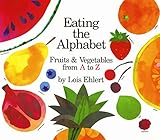
Overview: This classic children’s book uses vibrant illustrations of fruits and vegetables to teach the alphabet in a healthy, colorful way. Each page showcases letters alongside beautifully rendered produce, creating visual associations that stick with young learners. The book goes beyond basic A-B-Cs to expose children to diverse foods, expanding vocabulary and potentially encouraging healthier eating habits through positive visual reinforcement.
What Makes It Stand Out: Lois Ehlert’s signature collage-style artwork transforms a simple concept into a visual feast that captivates children and adults alike. Unlike standard alphabet books, it introduces exotic and uncommon produce alongside familiar favorites, building food literacy alongside literacy skills. The Caldecott Honor pedigree speaks to its artistic quality, while the board book durability ensures it survives toddler handling.
Value for Money: At $7.36, this represents outstanding value for a durable board book from an acclaimed author. Similar quality alphabet books typically retail for $8-12, making this an affordable entry point into award-winning children’s literature. The timeless content means it won’t become outdated, and its dual educational purpose (letters + nutrition) delivers more impact per dollar than single-concept books.
Strengths and Weaknesses: Strengths include stunning, memorable artwork, dual educational value (literacy and nutrition), durable board book format, award-winning quality, and affordable price. It exposes children to diverse foods they might not encounter otherwise. Weaknesses: The focus on produce means less traditional alphabet imagery (no “A is for Apple” simplicity). Some letters feature obscure foods that may confuse rather than educate. The artistic style, while beautiful, may not appeal to all tastes, and it lacks interactive elements found in modern board books.
Bottom Line: A must-have for every toddler’s library that elevates the alphabet book to art. Best for ages 1-4, it delivers exceptional visual and educational value at a budget-friendly price. While not a comprehensive nutrition guide, it brilliantly uses food to make letters memorable and encourages healthy curiosity about fruits and vegetables.
Why STEM Literacy Begins with Storytime
The Power of Narrative in Scientific Thinking
Storytelling is humanity’s oldest teaching tool, and it remains the most effective vehicle for complex ideas. When scientific concepts are embedded in narrative—whether through a character’s journey of discovery or a problem-solving adventure—children develop emotional connections to abstract principles. This narrative hook activates different neural pathways than rote memorization, creating memorable mental models that persist long after the book is closed. A well-crafted STEM story doesn’t just teach; it transforms the child from passive recipient to active participant in the scientific process.
Building a Foundation for Future Learning
Early exposure to STEM literature establishes mental frameworks that make later formal education less intimidating. Children who encounter scientific vocabulary in context—words like “hypothesis,” “structure,” or “pattern”—develop what educators call “academic language” naturally. This linguistic foundation demystifies technical subjects before they ever step into a classroom. Moreover, these books normalize failure as part of discovery, teaching resilience through characters who must iterate, adjust, and try again—lessons that extend far beyond science into every life challenge.
Decoding Age-Appropriate STEM Content
Toddler and Preschool Years (Ages 0-5): Sensory Exploration
For the youngest readers, effective STEM books function as extensions of their natural world exploration. Look for board books with sturdy pages that feature high-contrast patterns, textures to touch, or lift-the-flap elements revealing cause-and-effect relationships. The content should focus on observation skills—comparing sizes, counting simple objects, identifying colors in nature, or exploring basic physical properties like heavy versus light. Avoid anything requiring abstract thought; these books should mirror the concrete, sensory learning that defines this developmental stage.
Early Elementary (Ages 6-8): Questioning Everything
This “why” phase demands books that validate curiosity while providing satisfying, accurate answers. Quality titles for this age group frame scientific inquiry as adventure, featuring protagonists who ask questions and design simple investigations. The best books include “try this at home” sidebars with safe, supervised activities requiring minimal materials. Visual elements become crucial—detailed illustrations, labeled diagrams, and visual metaphors help bridge the gap between concrete observation and beginning abstract thought. Look for books that introduce the scientific method as a flexible tool rather than rigid steps.
Upper Elementary (Ages 9-12): Deep Dives and Specialization
Older children ready for specialization benefit from books that explore STEM careers, historical scientific breakthroughs, and complex systems thinking. These readers can handle multiple variables, understand scale (from microscopic to cosmic), and appreciate the social impact of scientific discovery. Books should feature diverse scientists and engineers solving real-world problems, include primary source material like field notes or data tables, and connect classroom learning to global challenges like climate change or public health. The narrative can be more sophisticated, incorporating elements of mystery, biography, or even science fiction grounded in real principles.
Essential Features of High-Quality STEM Books
Accuracy and Expert Vetting
The most engaging story falls flat if the science is wrong. Premium STEM books undergo rigorous fact-checking by subject matter experts—professors, working scientists, or museum curators. Check copyright pages for acknowledgments of expert reviewers. Be wary of books that oversimplify to the point of inaccuracy; good children’s science writing distills complexity without creating misconceptions. The best titles include backmatter with additional resources, author notes explaining research processes, and suggestions for further reading that demonstrate scholarly depth.
Engaging Visual Design and Illustrations
Visual literacy is inseparable from scientific literacy. Exceptional STEM books use illustrations not merely as decoration but as information delivery systems. Infographics should teach data interpretation, cross-sections should reveal hidden structures, and sequential art should demonstrate processes over time. The visual design must be accessible to neurodiverse readers—clear fonts, uncluttered layouts, and thoughtful use of color coding. Photographs should be high-resolution and captioned with scientific precision, while illustrated diagrams should balance accuracy with artistic appeal.
Interactive and Hands-On Elements
The gold standard in STEM books transforms reading into doing. Look for titles that integrate seamlessly with hands-on exploration—books that come with simple experiment components, include perforated activity cards, or feature QR codes linking to video demonstrations. The interactivity should feel purposeful, not gimmicky. Each activity should connect directly to a concept in the text, use household materials, and include safety considerations. This kinesthetic component is non-negotiable for deep learning; it moves concepts from page to muscle memory.
Diverse Representation and Inclusive Storytelling
STEM fields have historically lacked diversity, but children’s books can rewrite that narrative. Seek books where scientists and mathematicians represent the full spectrum of humanity—different genders, ethnicities, abilities, and socioeconomic backgrounds. Representation extends beyond characters to include culturally relevant examples (engineering in ancient civilizations, indigenous ecological knowledge) and multiple pathways into STEM (artistic design thinking, community problem-solving). Inclusive books avoid stereotypical casting and show STEM as collaborative, creative, and accessible to everyone.
Navigating the Five Pillars of STEM
Science Books: Cultivating Observation Skills
Quality science books for kids function as field guides to curiosity. They should model close observation, teach classification systems, and demonstrate how questions evolve from wonder to testable hypotheses. The best titles cover both content knowledge (what we know) and process skills (how we know it). Look for books that show science as an ongoing conversation rather than finished facts—highlighting unanswered questions, current research, and how scientific understanding changes with new evidence. Environmental science books should empower local action, connecting global issues to backyard ecosystems.
Technology Books: Demystifying the Digital World
In an age of algorithmic anxiety, technology books must do more than celebrate gadgets. They should explain the logic behind code, the ethics of artificial intelligence, and the engineering principles underlying everyday tech. Effective titles treat technology as a tool for creation rather than passive consumption, featuring young characters who build apps, design accessible interfaces, or understand cybersecurity. The best books address digital citizenship alongside technical skills, teaching critical evaluation of online information and responsible technology use.
Engineering Books: Embracing Iterative Design
Engineering is the art of systematic problem-solving under constraints, and children’s books should reflect this messy, creative process. Look for stories where characters define problems, brainstorm multiple solutions, build prototypes, test, fail, and improve. The engineering design cycle should be explicit but flexible. Quality titles showcase diverse engineering fields beyond bridges and robots—biomedical devices, sustainable packaging, acoustic design for concert halls. These books should emphasize that engineering serves human needs and that the best solutions come from understanding user perspectives.
Mathematics Books: Making Numbers Narrative
Math anxiety often stems from abstract presentation disconnected from reality. Exceptional math books weave numerical concepts into compelling stories—using narrative to explain patterns, probability, geometry, and logic. They should feature visual proofs, historical context for mathematical discoveries, and games that build number sense organically. The best titles show mathematics as a language for describing the world, from the symmetry of snowflakes to the statistics of fairness. Look for books that celebrate different problem-solving approaches and mathematical thinking styles.
Integrated STEM: Where Disciplines Collide
Real innovation happens at the intersections between STEM fields. Books that integrate multiple disciplines mirror authentic scientific and engineering work. A story about designing a community garden might involve biology (plant life cycles), engineering (irrigation systems), math (plot planning), and technology (soil sensors). These integrated titles teach systems thinking—how changing one variable affects the whole. They also reflect modern careers where data scientists collaborate with biologists and artists code interactive installations.
Series vs. Standalone Titles: Making Strategic Choices
The Advantage of Series for Sustained Engagement
A well-crafted series builds scientific vocabulary progressively and develops characters whose growth mirrors a child’s increasing competence. Series create predictable structures that reduce cognitive load, allowing deeper focus on new concepts. They foster a sense of community and identity—“I’m the kind of kid who reads these books.” Look for series where each installment explores a different concept while maintaining narrative continuity. The best series include parent/teacher guides with extension activities and online communities for sharing projects.
When Standalone Books Shine
Standalone titles offer flexibility to match a child’s fleeting interests without commitment. They’re ideal for exploring niche topics—volcanoes, cryptography, marine biology—that might not sustain a series. High-quality standalone books often have richer production values: fold-out diagrams, specialty printing, or augmented reality features. They make excellent gifts and can fill specific gaps in a home library. The key is selecting standalones that complement your child’s existing interests while gently stretching into adjacent topics.
Representation Matters: Mirrors, Windows, and Sliding Glass Doors
Gender Diversity in STEM Protagonists
Books must actively counteract persistent stereotypes about who belongs in STEM. Look for stories where girls lead engineering projects, boys express scientific curiosity through art, and gender-nonconforming characters solve mathematical mysteries. The narrative should never treat a character’s gender as remarkable for their STEM abilities; competence should be assumed. These books should show diverse family structures supporting STEM interests—single parents, grandparents as primary caregivers, and chosen families all encouraging scientific exploration.
Racial and Cultural Representation
Children of color deserve to see themselves as protagonists in STEM adventures, not just sidekicks or historical footnotes. Seek books that center indigenous scientific knowledge systems, highlight contributions from scientists across the African diaspora, and show Asian characters in roles beyond the “model minority” stereotype. The settings should reflect global diversity—stories set in bustling cities, rural communities, and everywhere in between. Cultural representation should be authentic, not tokenized, with authors and illustrators from the communities they’re portraying.
Neurodiversity and Different Learning Styles
STEM fields attract neurodiverse thinkers, and books should celebrate cognitive differences. Look for characters with ADHD who hyperfocus on mechanical puzzles, autistic protagonists who pattern-match like computers, or dyslexic heroes who excel at spatial reasoning. These narratives should show how different brains approach problems uniquely, reframing “deficits” as strengths. Visual learners need rich diagrams, auditory learners benefit from rhyming text or read-aloud rhythm, and kinesthetic learners require built-in activities. The best books offer multiple entry points to the same concept.
Interactive Elements That Transform Reading Into Doing
Experiment Guides and DIY Activities
The most effective STEM books blur the line between text and laboratory. Look for perforated cards with step-by-step experiments, embedded materials like magnifying lenses or UV-sensitive paper, or companion websites with printable templates. Each activity should include a “what’s happening” section connecting the hands-on experience to the scientific principle, safety icons for age-appropriateness, and suggestions for further investigation. The best guides scaffold complexity—starting with simple observations and building toward independent research design.
QR Codes and Digital Extensions
When used thoughtfully, technology extends the book’s reach without replacing it. QR codes might link to slow-motion videos of chemical reactions, interviews with real scientists, or interactive simulations. The digital content should feel essential, not tacked on—perhaps a 3D model that rotates to show cross-sections impossible in print, or a data collection app that aggregates results from readers nationwide. Be cautious of codes leading to dead links; quality publishers maintain these resources for the book’s lifetime.
Augmented Reality Features
AR brings static pages to life, letting children visualize molecular structures in 3D or watch planetary orbits animate above the book. The technology should enhance understanding, not distract from it. Effective AR features include X-ray vision to see inside machines, time-lapse animations of ecological succession, or virtual dissections that teach anatomy without harm. The best implementations work without requiring constant device use—perhaps one AR activation per chapter that crystallizes a key concept.
Budget-Smart Strategies for Building Your STEM Library
Library Resources and Digital Subscriptions
Before purchasing, exhaust your public library’s STEM collections. Many libraries offer interlibrary loan for specialized titles and provide digital access to science magazines and e-books. Consider subscription boxes that include books plus materials—while initially pricey, they often cost less than buying components separately. Some publishers offer “book club” style memberships with educator guides. Don’t overlook library sales and Friends of the Library bookshops, where donated STEM books often appear in excellent condition.
Gently Used and Book Swap Options
STEM books, particularly experiment guides, often have durable formats that survive multiple owners. Online marketplaces for used books can yield significant savings, especially for older titles whose science remains sound. Organize STEM-focused book swaps with other families, where children can trade books they’ve outgrown. When buying used, check that interactive elements (stickers, cut-out pages) remain intact and that QR codes or digital components haven’t been redeemed. Some publishers offer replacement activity kits for popular titles, making secondhand purchases more viable.
Where to Discover Hidden Gems Beyond Big Box Stores
Independent Bookstores and Specialty Retailers
Neighborhood bookstores with dedicated children’s sections often employ passionate readers who curate exceptional STEM collections. These sellers attend publisher previews, know which authors visit schools, and can special-order niche titles. Science museum gift shops and nature center stores stock books vetted by educators, often featuring local ecology or regional scientists. University presses produce outstanding STEM children’s books backed by research faculty but frequently overlooked by mainstream retailers.
Museum and Science Center Shops
Institution stores function as editorial filters—every title has been evaluated for accuracy and engagement by education staff. These shops often carry books by local authors, translations of international STEM titles, and publications from small presses focused on underrepresented STEM fields. Membership discounts can make these purchases competitive with online prices. The staff can recommend books that complement current exhibits, creating extended learning experiences.
Award Lists and Educator Recommendations
Professional organizations like the National Science Teaching Association and the American Library Association maintain annual lists of outstanding STEM books. These awards evaluate titles for scientific accuracy, age-appropriateness, and innovation. Follow STEM education hashtags on social media where teachers share classroom-tested favorites. Many school districts publish recommended summer reading lists categorized by interest area—these represent collective wisdom from dozens of educators.
Maximizing Impact: How to Read STEM Books Actively
The “Question, Predict, Test” Reading Method
Transform passive reading into scientific inquiry by pausing at key moments. When a character faces a problem, stop and ask your child: “What would you do?” Have them articulate a prediction before turning the page. After reading an experiment description, run the test before seeing the results. This metacognitive approach teaches that science is a process of refinement, not just answer-getting. Keep a “wonder journal” alongside the book where children record questions that arise during reading, creating a personalized research agenda.
Creating a Home Discovery Zone
Designate a space where book learning becomes hands-on exploration. Stock it with basic materials mentioned across multiple STEM books: magnifying glasses, measuring tools, building materials, and art supplies. Display books open to inspiring pages, use wall space for concept maps connecting different titles, and create a “tinker table” for ongoing projects. The environment should invite return visits and deeper investigation, making STEM a lifestyle rather than a subject. Rotate materials based on current reading to maintain novelty and relevance.
Frequently Asked Questions
What age should I start introducing STEM books to my child?
STEM concepts begin at birth through sensory exploration, but dedicated books become valuable around six months. Start with high-contrast pattern books for infants, move to texture and cause-and-effect board books for toddlers, and introduce narrative science stories around age three. The key is matching the book’s complexity to your child’s developmental stage and natural curiosity rather than forcing early academics.
How do I choose STEM books if I’m not confident in my own science knowledge?
Focus on books with strong expert vetting statements in the front matter and comprehensive backmatter that explains concepts for adults. Many quality publishers include parent guides or link to video tutorials. Your role isn’t to be the expert but to be the co-learner—modeling curiosity and showing that learning is a lifelong process. Choose books with clear visuals and step-by-step activities that build your confidence alongside your child’s.
Are digital STEM books as effective as print versions for learning?
Each format serves different purposes. Print books excel at joint attention, tactile interaction, and reducing screen fatigue. Digital books can offer animations, adjustable text complexity, and immediate definitions. The most effective approach is hybrid: use print for deep reading and discussion, digital for simulations and extensions. If choosing digital, select titles with offline activity components to maintain hands-on learning balance.
How can I tell if a STEM book is scientifically accurate without being an expert?
Check the copyright page for expert reviewer names and their credentials. Look for citations or source notes that show research depth. Quality books often include a “learn more” section linking to museums, universities, or reputable science organizations. Be suspicious of books that present science as absolute truth without mentioning ongoing research or scientific debate. Cross-reference award lists from professional science education organizations.
Should I prioritize books that match my child’s existing interests or ones that introduce new topics?
Follow the 80/20 rule: 80% of your selections should connect to established passions to build reading confidence and depth, while 20% should gently stretch into adjacent topics. If your child loves space, choose books about planetary geology or space engineering rather than jumping to marine biology. This approach honors their expertise while showing how STEM disciplines interconnect.
How do I prevent STEM books from feeling like homework or forced learning?
Let children lead the selection process, even if their choices seem repetitive. Read aloud together without quizzing, allowing natural conversation to emerge. Connect book content to play—build the structures described, draw the creatures, or act out the experiments. Never use STEM books as rewards or punishments; keep them accessible in play spaces, not just on academic shelves. Celebrate questions more than correct answers.
What role do STEM books play for children who struggle with traditional reading?
STEM books often engage reluctant readers through visual storytelling, practical applications, and shorter text blocks. Look for graphic novels with scientific themes, photographic nonfiction with captions, and interactive formats where reading is secondary to doing. Many STEM books are available as audiobooks with accompanying PDF activity guides. The hands-on components provide alternative ways to access content and demonstrate understanding beyond reading fluency.
How can I use STEM books to encourage girls’ participation in these fields?
Choose books where girls are protagonists solving problems through STEM, not just supporting characters. Show diverse representations of femininity—girls who are both scientifically brilliant and emotionally intelligent, who wear lab coats and glitter, who work collaboratively and independently. Include biographies of women scientists and engineers, but also fictional stories where STEM competence is simply part of who the character is, not the entire plot. Most importantly, ensure boys read these books too, normalizing female expertise for all children.
Are there STEM books that work well for group settings like classrooms or book clubs?
Absolutely. Look for titles with multiple entry points—characters with different skills working together, problems with various solution paths, or topics broad enough for specialization. Books with built-in discussion questions, debate scenarios, or collaborative challenges excel in groups. Series with multiple copies available through library systems work well for classroom sets. Choose books where each child can contribute their unique strength, whether that’s mathematical precision, creative design, or observational detail.
How often should I be adding new STEM books to our home collection?
Quality matters more than quantity. Aim to add one exceptional title per month rather than weekly purchases. This allows time for deep exploration of each book’s concepts and activities. Follow seasonal patterns—gardening and life cycles in spring, astronomy in winter, engineering and building during summer. Rotate books into and out of active use, storing some and reintroducing them months later when your child’s skills have grown. A library of 20 well-loved, deeply explored STEM books provides more value than 100 titles skimmed once.