Dive into the pages of American history, and you’ll quickly realize it’s far more than a dry recitation of dates and battles. It’s a living, breathing tapestry woven with threads of revolution, resilience, contradiction, and constant reinvention. Understanding this complex narrative isn’t just about memorizing facts for a test; it’s about grasping the very DNA of a nation that continues to shape global events and our daily lives. Whether you’re a curious newcomer or a seasoned enthusiast, finding the right historical narrative can transform your perspective, revealing the deep currents that pull at the surface of modern politics, culture, and identity. In a world saturated with information – and often misinformation – choosing the right guide through this intricate past is more crucial than ever.
It’s easy to feel overwhelmed by the sheer volume of historical writing available. Bookshelves groan under the weight of chronicles covering every conceivable angle of the American experience. Yet, not all histories serve the same purpose or offer the same depth. Picking up a book only to find it’s either impenetrably academic or frustratingly superficial is a disservice to both your time and the profound importance of the subject. The key lies not in chasing the latest “bestseller” list for history books, but in understanding what you need to learn and how different historical works are constructed to serve specific purposes. This guide cuts through the noise, focusing on the essential features and frameworks that distinguish truly illuminating historical narratives from those that merely skim the surface, empowering you to make informed choices that resonate with your specific quest for understanding.
Top 10 American History Books
Detailed Product Reviews
1. A People’s History of the United States

Overview: Howard Zinn’s seminal work offers a radical counter-narrative to traditional American history textbooks, focusing on marginalized perspectives like Indigenous peoples, slaves, workers, and dissenters from 1492 onward. Widely adopted in college courses, it challenges triumphalist national myths. What Makes It Stand Out: Its unwavering focus on grassroots movements and systemic oppression—rather than presidents and wars—provides a crucial corrective lens. Zinn’s accessible, narrative-driven prose makes complex socio-economic analysis engaging for non-academics, fostering critical thinking about power structures. Value for Money: Priced comparably to standard academic texts, its enduring relevance (nearly 40 years in print) and influence on modern historiography offer exceptional value. It’s indispensable for understanding contemporary social justice discourse, outperforming drier, conventional alternatives. Strengths and Weaknesses: Strengths: Provocative, deeply researched, and transformative for readers seeking alternative viewpoints; ideal for sparking classroom debate. Weaknesses: Criticized for selective sourcing and ideological framing; lacks balance on governmental achievements; not a standalone reference. Bottom Line: Essential supplementary reading for college history or political science, though best paired with traditional texts for context. A must-buy for critical thinkers, but not a comprehensive primary resource.
2. American History, Combined Edition: 1492 - Present

Overview: This comprehensive textbook delivers a chronological survey of U.S. history from pre-colonial times to the modern era, designed for university survey courses. It emphasizes political, social, and economic developments through a mainstream academic lens. What Makes It Stand Out: Its sheer scope—covering 500+ years in a single volume—provides unmatched continuity. Richly illustrated with maps, primary documents, and timelines, it prioritizes factual accuracy and scholarly consensus over ideological angles, serving as a reliable anchor text. Value for Money: Standard-priced for academic hardcovers, its dual-volume integration (colonial to present) saves cost versus buying separate editions. Durability and breadth justify the investment for students needing a permanent reference, though digital alternatives may be cheaper. Strengths and Weaknesses: Strengths: Thorough, well-organized, and citation-rich; ideal for essay research and exam prep. Weaknesses: Can feel dense and Eurocentric; narrative occasionally prioritizes dates/events over human stories; less engaging for casual readers. Bottom Line: A solid, no-frills choice for undergraduates seeking a trustworthy, all-in-one textbook. Recommended for course adoption but less compelling for independent learners wanting narrative flair.
3. The American Revolution: An Intimate History

Overview: This narrative history zooms in on personal diaries, letters, and overlooked voices to reconstruct the Revolution’s human drama beyond battles and founding fathers, targeting both academics and general readers. What Makes It Stand Out: By spotlighting women, soldiers, Loyalists, and enslaved people through intimate primary sources, it transforms a well-trodden topic into a visceral, emotional journey. The micro-historical approach reveals the war’s chaotic, uncertain reality. Value for Money: Priced mid-range for trade paperbacks, its fresh perspective justifies cost for Revolution enthusiasts tired of standard military histories. Niche appeal means it’s less valuable for those seeking broad overviews but excellent for deep divers. Strengths and Weaknesses: Strengths: Exceptionally immersive writing; humanizes historical figures; highlights social upheaval often ignored. Weaknesses: Narrow scope limits utility as a standalone resource; minimal analysis of political theory; pacing drags in sections. Bottom Line: Highly recommended for readers craving emotional depth in history, but pair with a broader text for full context. A standout niche work, not a comprehensive primer.
4. 1000 American History Facts and 101 True Tales: A Journey Through America’s Defining Moments and Figures (Bringing History to Life)
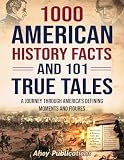
Overview: This accessible compilation distills U.S. history into bite-sized trivia, anecdotes, and short narratives, targeting casual learners, trivia buffs, and younger audiences seeking quick, engaging insights. What Makes It Stand Out: Its scannable format—1,000 facts plus 101 vivid vignettes—makes history digestible during short reading sessions. Playful storytelling (e.g., lesser-known presidential quirks) prioritizes memorability over academic rigor, ideal for sparking curiosity. Value for Money: Inexpensive paperback pricing aligns with its purpose as a light reference. While lacking depth, its portability and conversation-starting potential offer decent value for non-students, though not for serious research. Strengths and Weaknesses: Strengths: Highly approachable; great for trivia nights or classroom icebreakers; visually broken into quick segments. Weaknesses: Oversimplifies complex events; minimal sourcing; facts occasionally lack nuance; no thematic analysis. Bottom Line: A fun, undemanding read for history novices or educators needing engagement tools. Worth buying for entertainment, but supplement with substantive works for actual learning.
5. Everything You Need to Ace U.S. History in One Big Fat Notebook, 2nd Edition: The Complete Middle School Study Guide
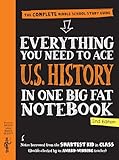
Overview: This study guide distills middle school U.S. history curricula into illustrated, note-style pages using doodles, mnemonics, and color-coded summaries, mirroring a top student’s notebook for grades 6–9. What Makes It Stand Out: Its visually dynamic format—mimicking handwritten notes with cartoons and highlighted key terms—caters perfectly to Gen Z learning preferences. Complex topics (e.g., Constitutional compromises) are simplified via flowcharts and relatable analogies. Value for Money: Priced slightly above standard workbooks, its durability (thick paper) and exam-focused utility justify cost for stressed students. Outperforms dry textbooks in engagement, though digital apps may offer interactivity at similar prices. Strengths and Weaknesses: Strengths: Reduces study anxiety; excellent for visual/kinetic learners; aligns tightly with Common Core standards. Weaknesses: Oversimplifies for advanced learners; limited primary sources; minimal critical analysis depth. Bottom Line: An exceptional resource for middle schoolers needing confidence-building review. Highly recommended as a supplementary tool, but not a replacement for critical thinking development.
6. The American Story: The Beginnings
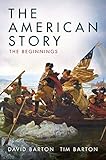
Overview:
This foundational history text focuses on the earliest periods of American history, likely covering pre-colonial societies, European exploration, and the establishment of the first colonies. It serves as an introductory resource for students or general readers seeking a structured chronological account of America’s origins, emphasizing key events and figures that shaped the nascent nation.
What Makes It Stand Out:
Its strength lies in presenting a clear, accessible narrative tailored for beginners. By concentrating solely on the formative era, it avoids overwhelming readers with later complexities, offering a dedicated deep dive into the roots of American identity, governance, and society before the Revolution.
Value for Money:
Priced accessibly as an introductory text, it offers solid value for educators seeking a no-frills primer or for self-learners building foundational knowledge. While less comprehensive than multi-volume sets, its focused scope provides targeted utility without unnecessary expense for those needing only early history coverage.
Strengths and Weaknesses:
Strengths: Clear, linear storytelling ideal for novices; essential for understanding subsequent historical developments; likely well-organized for educational use. Weaknesses: Potentially lacks depth on marginalized perspectives (e.g., Indigenous, enslaved peoples); may present a traditional, consensus-driven narrative; limited critical analysis compared to modern scholarly works.
Bottom Line:
A reliable, straightforward starting point for absolute beginners or classroom use, though supplementing with more diverse sources is recommended for a fuller historical picture. Best for foundational understanding over nuanced critique.
7. Black AF History: The Un-Whitewashed Story of America―The New York Times Bestselling Retelling of US History Through the Experiences of Black Americans

Overview:
This provocative bestseller radically reframes U.S. history by centering the Black American experience from pre-colonial times to the present. It explicitly challenges traditional, Eurocentric narratives, delivering a bold, unfiltered account that highlights systemic racism, resilience, and foundational Black contributions often erased in mainstream textbooks.
What Makes It Stand Out:
Its unapologetic focus on truth-telling and centering Black voices sets it apart. Combining rigorous research with engaging, contemporary prose (including pop-culture references), it transforms complex history into an accessible, urgent narrative. The “un-whitewashed” approach directly confronts historical sanitization, making it a vital corrective.
Value for Money:
High value given its cultural impact and unique perspective. While priced as a trade paperback, it delivers the substance of a critical scholarly work in an approachable format. It’s far more cost-effective than purchasing multiple specialized texts to achieve similar depth on Black American history.
Strengths and Weaknesses:
Strengths: Essential, long-overdue perspective; highly engaging and readable; effectively debunks myths; empowers marginalized narratives. Weaknesses: May feel confrontational to readers unfamiliar with critical race theory; limited focus on non-Black minority experiences; narrative style might lack granular academic detail for specialists.
Bottom Line:
An indispensable, transformative read for anyone seeking an honest understanding of America’s past. Highly recommended as a counterbalance to traditional histories, though best paired with complementary sources for broader context.
8. American History: A Visual Encyclopedia (DK Children’s Visual Encyclopedias)

Overview:
DK’s signature visual style drives this children’s encyclopedia, presenting American history through vivid photographs, detailed illustrations, infographics, and timelines. Aimed at middle-grade readers (8-12 years), it covers major events, figures, and themes from indigenous civilizations to the modern era in a highly digestible, image-led format.
What Makes It Stand Out:
Its exceptional visual storytelling is unmatched for young audiences. Complex topics like the Civil War or Industrial Revolution are broken down via labeled diagrams, artifact photos, and clear maps. The layout prioritizes engagement and quick comprehension, turning dense history into an interactive browsing experience.
Value for Money:
Excellent value as a durable, long-lasting reference for home or classroom. The high production quality (thick paper, full-color throughout) justifies its price point compared to text-heavy alternatives. It serves as both an educational tool and a captivating coffee-table book for kids, offering years of use.
Strengths and Weaknesses:
Strengths: Unparalleled visual appeal for children; simplifies complex topics effectively; broad chronological coverage; encourages independent exploration. Weaknesses: Necessarily simplifies nuanced events; limited depth on social/cultural history beyond key milestones; perspectives may still lean traditional despite visual modernity.
Bottom Line:
The premier visual resource for introducing kids to American history. Highly recommended for sparking early interest, though parents/educators should supplement with discussions on diverse viewpoints as children mature.
9. The Forgotten 500: The Untold Story of the Men Who Risked All for the Greatest Rescue Mission of World War II

Overview:
This narrative history recounts the audacious 1944 “Halyard Mission,” where American airmen shot down over Nazi-occupied Yugoslavia were rescued by local Serbians and OSS operatives in one of WWII’s largest airborne evacuations. It focuses on the courage of rescuers and the rescued amid extreme peril.
What Makes It Stand Out:
It shines a light on a nearly erased chapter of WWII, emphasizing grassroots heroism over top-down military strategy. The gripping, cinematic storytelling transforms archival research into a tense, human-centered adventure, highlighting extraordinary civilian sacrifice and international cooperation often overlooked in broader war histories.
Value for Money:
Strong value for history enthusiasts seeking untold stories. While niche, its compelling narrative justifies the price compared to dense academic tomes. It offers a focused, emotionally resonant read that provides unique insights into wartime resistance and diplomacy at a fraction of the cost of multi-subject anthologies.
Strengths and Weaknesses:
Strengths: Riveting storytelling that humanizes history; sheds light on a critical but forgotten operation; thorough research presented accessibly; strong emphasis on moral courage. Weaknesses: Limited broader WWII context; may oversimplify Balkan political complexities; narrow geographic focus reduces general applicability.
Bottom Line:
A must-read for WWII buffs craving fresh perspectives. Highly recommended for its powerful narrative and historical significance, though best appreciated alongside wider war surveys for full context.
10. Lies My Teacher Told Me: Everything Your American History Textbook Got Wrong

Overview:
A landmark critique of U.S. high school history textbooks, this book analyzes pervasive myths, omissions, and biases in standard curricula. Historian James Loewen systematically debunks sanitized narratives about figures like Columbus and events like the Civil War, arguing textbooks promote patriotism over critical thinking.
What Makes It Stand Out:
Its fearless, evidence-based takedown of educational orthodoxy revolutionized history pedagogy. By exposing how and why textbooks distort history (e.g., erasing racism, glorifying progress), it empowers readers to question received wisdom. Its enduring relevance, updated for modern editions, cements its status as essential reading.
Value for Money:
Exceptional value as both a scholarly resource and a public intellectual tool. Far cheaper than academic journals yet packed with rigor, it’s indispensable for educators, students, and engaged citizens. Its transformative potential for critical historical literacy offers immense ROI compared to passive textbook consumption.
Strengths and Weaknesses:
Strengths: Foundational for critical history education; meticulously researched; accessible writing; inspires active skepticism; highly influential in academia. Weaknesses: Can feel repetitive across editions; focuses heavily on K-12 texts, less on college-level; solutions for reform are less developed than critiques.
Bottom Line:
Non-negotiable for educators and anyone invested in historical truth. An urgent, eye-opening read that reshapes understanding of America’s past—strongly recommended as a corrective to conventional history education.
Navigating the Historical Landscape: Core Principles for Selection
Choosing a history book requires a shift from passive consumption to active evaluation. It’s about identifying your own learning goals and matching them to the strengths of different historical methodologies. Before you turn a single page, clarity on why you’re reading is your most powerful tool. Are you seeking a broad overview to fill foundational gaps, or diving deep into a specific era like the Civil War or the Civil Rights Movement? Do you want to understand economic forces, social transformations, or the evolution of political thought? Defining your objective upfront prevents frustration and ensures the book delivers the insights you seek. This self-awareness transforms reading from a chore into a targeted exploration.
Understanding Your Purpose and Starting Point
Your journey begins with introspection. Honestly assess your current knowledge level. Jumping into a dense scholarly monograph on Reconstruction economics might be demoralizing if you’re unfamiliar with the basic timeline of the Civil War. Conversely, a beginner’s overview might feel patronizing if you’ve already mastered the fundamentals. Be realistic about where you stand. Next, pinpoint your specific curiosity. Is it the Founding Fathers’ philosophical debates, the lived experience of immigrants in the 19th century, or the roots of contemporary political divisions? Clarity here steers you towards books designed for your precise inquiry, maximizing relevance and retention.
Recognizing Different Types of Historical Narratives
History writing isn’t monolithic. Recognize the distinct flavors: sweeping syntheses offer grand overviews connecting vast periods; specialized monographs delve deeply into narrow topics with meticulous research; biographies use individual lives to explore broader eras; thematic histories trace specific ideas (like liberty or capitalism) across time; and primary source collections let historical actors speak directly. Each serves a different purpose. Knowing whether you need the wide-angle lens of a synthesis or the microscope of a monograph is fundamental to selecting the right tool for your intellectual job.
The Critical Role of Author Expertise and Perspective
Never overlook the historian behind the history. Investigate the author’s credentials – are they a tenured professor at a major research university, an independent scholar with decades of focused study, or a journalist known for narrative history? While not the sole factor, deep subject-matter expertise often correlates with rigorous analysis and access to specialized archives. Crucially, understand that all historians have perspectives shaped by their training, era, and interests. A work focused on economic history will frame events differently than one centered on social movements. Acknowledging this inherent perspective isn’t about bias; it’s about understanding the lens through which the story is told.
Decoding the Content: What Makes a History Book Truly Valuable
Beyond the cover and the author’s name, the substance within determines a book’s real worth. Exceptional historical writing balances compelling storytelling with unwavering scholarly integrity. It doesn’t just tell what happened; it explains why it mattered, how we know, and invites you to think critically alongside the author. This section delves into the concrete elements you should scrutinize to assess a book’s depth, reliability, and ability to truly deepen your understanding of America’s complex roots.
Evaluating Scholarly Rigor and Source Material
The bedrock of trustworthy history is its engagement with evidence. Look for clear indications of the author’s research foundation. Does the book feature extensive endnotes or footnotes detailing primary sources (letters, diaries, government documents, newspapers of the time) and engagement with existing scholarship? Avoid works that rely solely on secondary sources without tracing arguments back to original evidence or that make sweeping claims without citation. A strong bibliography is a non-negotiable sign of serious work. Ask: Does the author grapple with contradictory evidence, or only present facts supporting a single viewpoint?
Assessing Narrative Style and Accessibility
Scholarly rigor doesn’t have to mean impenetrable prose. The best historical writing makes complex ideas clear and engaging without sacrificing accuracy. Consider the narrative flow: Is the story compelling? Does the author use vivid details and well-chosen anecdotes to bring the past to life, or is it a dry recitation of facts? Does the prose feel accessible for your level, avoiding unnecessary jargon, or does it constantly require a dictionary? A book that respects your intelligence while guiding you through complexity is infinitely more valuable than one that either talks down or talks over your head. Read a sample chapter if possible – does it pull you in?
Identifying Balanced Analysis vs. Agenda-Driven Narratives
History is interpretation, but it shouldn’t be propaganda. Be vigilant for works that present a single, unchallenged perspective as absolute truth, especially those dismissing vast swathes of credible scholarship or portraying historical actors in purely simplistic “heroes vs. villains” terms. Strong history acknowledges complexity, nuance, and the messiness of human motivation. Does the author fairly represent differing historical viewpoints on contentious events? Do they explore the context that shaped decisions, even those we now condemn? Beware of narratives that seem designed primarily to validate a specific modern political stance by selectively using the past. Look for analysis that challenges your assumptions, not just confirms them.
The Importance of Contextualization
A single event, like the signing of the Declaration of Independence, gains meaning only when understood within its wider context. Does the author effectively situate events within the broader sweep of time, connecting them to long-term trends, preceding causes, and subsequent consequences? Does the book explore the international dimensions (how events in Europe or elsewhere influenced America) and the diverse experiences within America itself (across regions, races, classes, genders)? History that isolates events from their intricate web of causes and effects offers a distorted, incomplete picture. Context is the key to true comprehension.
Practical Considerations for Finding Your Perfect Fit
Selecting a history book isn’t just an intellectual exercise; it’s a practical one. Physical format, publication date, supplementary materials, and even where you discover the book matter. These tangible factors significantly impact your reading experience and the book’s usefulness for your specific goals. Ignoring them can lead to frustration, regardless of the book’s inherent quality.
Judging Relevance Through Publication Date
Historical understanding evolves. New archives open, methodologies improve, and interpretations shift as society re-examines its past. While classic works remain foundational, a book published decades ago might lack crucial perspectives now considered essential (like deeper integration of social history, Native American experiences, or global contexts). For foundational topics, look for editions revised within the last 10-15 years, or newer works that explicitly engage with the latest scholarship. However, for highly specialized topics, the most recent publication might not always be the most authoritative – sometimes enduring classics set the standard. Use publication date as a guidepost, not an absolute rule.
Leveraging Reviews and Recommendations Wisely
Reviews can be helpful, but require discernment. Prioritize reviews from reputable academic journals (like The Journal of American History) or serious literary publications over random online ratings. Pay attention to what the reviewer critiques: Are they questioning factual accuracy, methodological flaws, or simply expressing disagreement with the interpretation? Look for reviewers who outline the book’s argument and structure. Be wary of reviews that are purely gushy praise or vitriolic dismissal without substantive analysis. Recommendations from trusted historians, university syllabi, or specialized history podcasts often carry more weight than generic “best of” lists.
Considering Format and Supplementary Materials
Think about how you want to engage. A massive hardcover academic tome might be ideal for deep study but impractical for commuting. A well-structured audiobook can be fantastic for absorbing narrative history during daily routines, though complex arguments might demand the focus of print. Also, examine supplementary elements: A detailed index is crucial for reference; maps are indispensable for understanding geographical context; timelines help anchor events; and illustrations can bring eras to life. For complex topics, endnotes with clear citations allow you to explore sources further – a feature often missing in trade paperbacks but vital for serious study.
Utilizing Library Resources Effectively
Your local library is a researcher’s best friend, often overlooked in the age of instant online purchase. Librarians are expert navigators of historical resources and can help you find materials you didn’t know existed. Interlibrary loan programs grant access to a vast network of books far beyond your local shelves. Browsing the history section physically allows you to flip through books, assess their writing style and structure firsthand, and discover unexpected gems. Libraries also provide access to scholarly databases containing book reviews and journal articles – invaluable tools for vetting potential reads before committing time or money.
Building a Deeper Understanding: Strategies for Active Reading
Selecting a great book is only half the battle. To truly absorb and retain historical knowledge, transform from a passive reader into an active participant. History isn’t just about absorbing information; it’s about engaging with arguments, questioning assumptions, and making connections. Employing specific strategies turns reading into a dynamic process of learning and critical thinking, cementing your grasp of America’s intricate roots.
Developing Critical Reading Habits
Don’t just let the words wash over you. As you read, constantly ask: What is the author’s main argument? What evidence do they use to support it? Are there alternative interpretations they acknowledge or dismiss? Where might their perspective be influencing their narrative? Jot down questions in the margins (or a notebook) – “Why did they focus on this aspect?” “How does this connect to what I read last week?” Challenge the text respectfully. This active interrogation deepens comprehension and helps you form your own informed opinions, moving beyond simple acceptance of the narrative.
Connecting Themes Across Time and Space
American history is a story of recurring themes and evolving tensions. As you read, consciously look for echoes of the past in later periods. How do debates over federal power in the 1790s resonate in the 1860s or today? How do early encounters with Native nations set patterns for future policies? Notice how economic forces, struggles for equality, or concepts of liberty manifest differently across centuries. Creating mental (or written) timelines of key themes helps you see history not as isolated events, but as an ongoing, interconnected process. This thematic linking is fundamental to understanding deep roots.
Supplementing with Primary Sources When Possible
Whenever feasible, seek out the voices of the past themselves. Many excellent history books include excerpts from letters, speeches, diaries, or newspapers. When they don’t, explore online archives like those from the Library of Congress, National Archives, or university digital collections. Reading a speech by Frederick Douglass, a soldier’s Civil War letter, or the text of a landmark Supreme Court decision alongside your historical analysis provides an unparalleled connection to the era. It allows you to compare the historian’s interpretation with the raw material, fostering a more nuanced and personal understanding.
Engaging in Discussion and Reflection
History is enriched through dialogue. Discuss what you’re reading with others – join a book club focused on history, participate in online forums dedicated to historical topics, or simply talk it over with a friend also interested in the past. Articulating your understanding and hearing different viewpoints challenges your thinking and reveals blind spots. Take time after finishing a chapter or section to reflect: What surprised me? What changed my mind? How does this reshape my view of the present? This reflective practice solidifies learning and transforms information into genuine insight.
Frequently Asked Questions
Frequently Asked Questions
How do I know if a history book is credible if I’m not a historian myself? Look for clear citations (footnotes/endnotes), a substantial bibliography showing use of primary sources and engagement with other scholars, the author’s academic affiliation or recognized expertise in the field, and balanced language that acknowledges complexity rather than presenting a single, simplistic narrative. Reviews in reputable academic or literary publications are also strong indicators.
Is it better to read older classic histories or focus only on the newest publications? Both have value. Enduring classics often established foundational interpretations and are essential reading. However, newer works frequently incorporate previously overlooked perspectives (like social history, gender studies, or global contexts) and benefit from access to newly opened archives. For the most comprehensive understanding, seek newer works that explicitly engage with and build upon (or thoughtfully challenge) the classic scholarship.
How can I identify if a book has a strong bias without getting bogged down in academic debates? Watch for language that’s consistently inflammatory or dismissive towards entire groups, the omission of well-documented counter-evidence, the portrayal of historical actors as purely heroic or villainous without nuance, and arguments that seem primarily designed to mirror modern political debates rather than explore the past on its own terms. Balanced history acknowledges multiple viewpoints and complexities.
Do I need to read academic histories to get an accurate understanding, or are popular histories sufficient? Popular histories written by reputable scholars can be excellent entry points and provide accurate, engaging narratives. The key is the author’s rigor and transparency. Many award-winning history books for general audiences maintain high scholarly standards while being accessible. Focus on the features discussed – citations, author expertise, balanced analysis – rather than assuming “academic” automatically equals better.
How important are footnotes and bibliographies for a casual reader? Very important, even for casual readers. They allow you to verify claims, see the depth of research, and discover other books or primary sources if you want to explore a topic further. A book lacking proper citations should raise immediate red flags about its reliability, regardless of how engaging the narrative seems.
What should I do if I find a book is much more technical than I expected? Don’t feel obligated to slog through it if it’s genuinely inaccessible. Put it aside and seek a more introductory work on the same topic. Many subjects have multiple books at different levels. Sometimes, reading a more accessible book first provides the foundation needed to tackle the denser work later. Libraries are perfect for sampling different levels.
How can I find books covering perspectives often left out of mainstream history? Look for works by historians specializing in fields like African American history, Native American studies, women’s history, labor history, or immigration history. Check bibliographies of books you already trust for leads. University press publications often champion diverse perspectives. Search specifically for terms like “social history,” “labor history,” or “gender history” alongside your topic.
Are audiobooks a good way to consume history, or should I stick to print? Audiobooks excel for narrative-driven histories and can make dense topics more approachable during commutes or chores. However, for complex arguments requiring close analysis, frequent reference to footnotes, or consulting maps/illustrations, print (or e-book with easy navigation) is usually superior. Consider the book’s complexity and your purpose – audiobooks are great for overviews and storytelling, print for deep dives.
How much time should I realistically spend trying to vet a history book before reading it? Focus on key checks: scan the table of contents for scope, read the preface/introduction for the author’s argument and approach, check the bibliography for depth and source types, read a sample chapter (especially one covering familiar ground), and glance at scholarly reviews if available. This 15-30 minute investment prevents hours wasted on a poor fit.
Can a history book be both engaging and academically rigorous? Absolutely, and the best historical writing achieves this balance. Rigor comes from methodology and evidence, not dry prose. Many historians are masterful storytellers who use vivid language, compelling narratives, and clear explanations without sacrificing scholarly integrity. Don’t assume “academic” means boring – seek out historians renowned for their writing as well as their research.