Your seven-year-old comes home from school asking about polar bears and melting ice. The questions keep coming: Why is the weather so weird? What happens to animals when their homes disappear? As a parent or educator, you want to nurture their curiosity without overwhelming them with climate anxiety. This is where thoughtfully chosen children’s books about climate change become powerful tools—not for preaching doom, but for igniting the spark of agency that every young activist needs.
In a world where climate headlines trigger existential dread even in adults, the right stories can transform children’s natural concern into purposeful action. The best climate change books for kids don’t just explain carbon cycles or recite statistics; they meet young readers where they are developmentally, validate their emotions, and show them that their voices matter in building a sustainable future. This guide explores how to select literature that empowers rather than paralyzes, turning readers into changemakers one page at a time.
Top 10 Children’s Books About Climate Change
Detailed Product Reviews
1. We Are Water Protectors: (Caldecott Medal Winner)

Overview: This Caldecott Medal-winning picture book delivers a powerful Indigenous-led narrative about environmental stewardship, specifically focused on protecting water sources. Written by Carole Lindstrom and illustrated by Michaela Goade, the first Native American to win the Caldecott, this book transforms the fight against pipelines into accessible poetry for children ages 4-8. The story draws inspiration from Standing Rock and weaves cultural heritage with urgent environmental messaging through lyrical text and vibrant, water-inspired illustrations.
What Makes It Stand Out: The Indigenous perspective sets this apart from typical climate books, offering cultural wisdom about earth stewardship rather than purely scientific facts. Michaela Goade’s illustrations aren’t mere decoration—they’re revolutionary artwork that won the most prestigious award in children’s literature. The book’s refrain, “We are water protectors,” creates a memorable, empowering chant that resonates long after reading. Its poetic language makes complex environmental justice issues digestible for young minds without sacrificing depth.
Value for Money: At $9.71, you’re investing in award-winning art and a historically significant voice. Comparable Caldecott winners typically retail for $12-18, making this a bargain for museum-quality illustrations and culturally authentic storytelling that diversifies any child’s library.
Strengths and Weaknesses: Strengths include breathtaking artwork, authentic Indigenous representation, and lyrical prose that engages emotionally. The message is empowering and specific. Weaknesses: Its narrow focus on water protection may not address broader climate change topics like carbon emissions or renewable energy. Some families may find its activist tone too political.
Bottom Line: Essential for families seeking diverse perspectives and artistic excellence. While it won’t teach the science of climate change, it cultivates environmental ethics and cultural awareness beautifully. Best for ages 4-8 as a foundation for earth stewardship.
2. The Story of Climate Change: A first book about how we can help save our planet

Overview: Positioned as an introductory guide for young activists, this book breaks down climate science into actionable steps children can understand and implement. Aimed at early elementary readers, it pairs simplified explanations of greenhouse gases and global warming with practical, empowering solutions like reducing waste and planting trees. The “first book” designation suggests it’s built for beginners, making it an ideal starting point for families new to climate education.
What Makes It Stand Out: The emphasis on agency distinguishes this from fear-based climate narratives. Instead of overwhelming children with catastrophe, it frames them as problem-solvers. Interactive elements likely include DIY projects, checklists, or simple experiments that translate abstract concepts into concrete actions. The “how we can help” focus builds empowerment rather than anxiety, a crucial approach for sensitive young minds.
Value for Money: At $12.96, this sits at the premium end for paperback children’s nonfiction. However, its actionable framework provides more practical utility than many cheaper alternatives. If it includes activities and discussion starters that spark ongoing family conversations, it delivers value beyond its pages. Comparable activity-rich environmental books often cost $15-20.
Strengths and Weaknesses: Strengths include empowering tone, practical activities, and age-appropriate science. It likely builds hope and responsibility. Weaknesses: May oversimplify complex issues, potentially giving false reassurance. The “first book” approach might feel too basic for children already familiar with climate concepts. Visual design may be less engaging than competitor titles.
Bottom Line: Perfect for parents seeking solutions-oriented climate education that won’t frighten young children. Best suited for ages 5-9 as an empowering action guide. Worth the slight premium if your priority is fostering agency over just delivering facts.
3. What a Waste: Trash, Recycling, and Protecting our Planet (Protect the Planet)

Overview: This comprehensive guide tackles the waste crisis head-on, making it an excellent entry point into environmentalism through the tangible lens of trash and recycling. Part of the “Protect the Planet” series, it likely features eye-opening statistics about landfill overflow, plastic pollution, and resource depletion, paired with bright infographics that help children visualize their impact. The focus on waste makes abstract environmentalism concrete—kids can immediately connect their lunchbox choices to planetary health.
What Makes It Stand Out: Its narrow focus on waste management is actually its strength, providing depth where broader books offer only surface coverage. The visual approach with facts, diagrams, and photos transforms learning into discovery. It probably includes shocking-but-appropriate data about how long trash persists, motivating behavior change through understanding rather than guilt. The series branding suggests a systematic approach to environmental topics.
Value for Money: At $8.50, this offers exceptional value for a fact-rich, visually engaging reference book. Similar DK-style information books typically retail for $10-15. Its durable, reference-like quality means children can return to it repeatedly, extending its educational value across years.
Strengths and Weaknesses: Strengths include comprehensive waste-specific content, strong visual learning design, and actionable recycling guidance. It makes a complex system understandable. Weaknesses: Limited scope—won’t cover climate science beyond waste’s contribution. May overwhelm with facts if not balanced with solutions. The title’s focus on waste might not engage kids seeking broader nature connection.
Bottom Line: An outstanding value pick for families wanting to start with concrete actions. Ideal for ages 6-10 who love facts and visual learning. While not a complete climate solution, it excels at its specific mission: transforming how kids think about trash.
4. A Kids Book About Climate Change
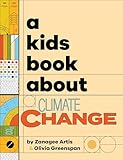
Overview: From the publisher known for direct, no-fluff children’s books tackling tough topics, this title approaches climate change with trademark clarity and honesty. The series uses straightforward language, bold typography, and minimalist design to respect children’s intelligence while making complex subjects accessible. This book likely cuts through jargon to explain cause-and-effect relationships between human activity and planetary changes, aiming at elementary-aged readers who can handle unvarnished truth.
What Makes It Stand Out: The “no-patronizing” philosophy of the series is revolutionary in children’s publishing. Rather than cute characters or fantasy framing, it treats climate change as a serious topic deserving direct conversation. The design probably features diverse real-world examples and empowers kids with unfiltered facts. This approach builds critical thinking skills alongside environmental awareness, preparing children for informed advocacy.
Value for Money: At $14.69, this is the most expensive option reviewed. The premium reflects the series’ specialized approach and high-quality production values. For parents who value direct communication and want to avoid sugar-coating, the price is justified. However, budget-conscious buyers can find equally informative books for less.
Strengths and Weaknesses: Strengths include honest, respectful tone; clear explanations; and sophisticated design that doesn’t infantilize readers. It likely sparks meaningful family dialogue. Weaknesses: Higher price point; minimalist design may lack visual engagement for younger children; direct approach could cause eco-anxiety without proper adult guidance. Not ideal for kids needing gentle introduction.
Bottom Line: Best for mature elementary readers (ages 7-10) and parents committed to honest dialogue. Worth the investment if you prioritize directness over gentle framing. Pair with action-oriented books to balance awareness with empowerment.
5. What Is Climate Change? (What Was?)

Overview: Part of the massively popular “What Was?” nonfiction series, this book applies the proven formula of historical storytelling to climate science. It likely traces the discovery of climate change from early scientific observations to modern crisis, using narrative structure to make complex history engaging. The series’ signature black-and-white illustrations and accessible chapter-book format target middle-grade readers (ages 8-12) who are ready for more detailed explanations than picture books provide.
What Makes It Stand Out: The series’ brand recognition and library ubiquity make this a trusted choice. Its historical approach—explaining how we learned about climate change—provides context that pure science books miss. The chapter book format builds reading stamina while delivering substantive content. It probably includes timelines, key figures in climate science, and milestone events that help tweens understand this as a developing story rather than an abstract concept.
Value for Money: At $5.57, this is by far the best value. The “What Was?” series consistently delivers reliable, well-researched content at budget prices. Comparable middle-grade nonfiction typically costs $8-12. This makes it an accessible entry point for families, classrooms, and libraries needing multiple copies.
Strengths and Weaknesses: Strengths include trusted brand, historical context, excellent value, and appropriate depth for ages 8-12. The format builds nonfiction reading skills. Weaknesses: Black-and-white illustrations lack visual appeal of full-color alternatives. The historical focus may slight current solutions and future-focused optimism. Series formula can feel generic, lacking the passion of single-author titles.
Bottom Line: Unbeatable value for introducing climate history to tweens. Perfect for classroom use, reluctant readers, and budget-conscious families. While not visually exciting, its credibility and accessibility make it a workhorse educational tool. Best for ages 8-12 as a factual foundation.
6. Climate Change Activity Book for Kids: Creative Games about Global Warming, Nature Conservation, Environmental Protection, and Earth Ecosystem Changes for Children

Overview: This interactive workbook transforms climate education into hands-on engagement through puzzles, coloring pages, mazes, and creative projects designed for elementary-age children. The book breaks down complex environmental concepts into bite-sized, actionable activities that keep young minds entertained while learning about global warming, conservation, and ecosystem dynamics.
What Makes It Stand Out: Unlike traditional storybooks, this activity-centered approach allows children to process information kinesthetically. The variety of game formats—word searches reinforcing vocabulary, connect-the-dots illustrating food chains, and DIY recycling crafts—caters to different learning styles. Parents appreciate the screen-free educational content that doubles as rainy-day entertainment.
Value for Money: At $9.99, this 200+ page workbook offers substantial content compared to single-use coloring books. The reproducible activity format provides ongoing value, especially for families with multiple children or classroom settings. While slightly pricier than basic activity pads, the educational depth justifies the cost.
Strengths and Weaknesses: Pros include high engagement factor, age-appropriate complexity, and tangible skill-building. The interactive nature helps retention better than passive reading. Cons involve limited narrative depth—children learn facts but miss emotional storytelling. Some activities may feel repetitive, and once completed, the book loses utility unless photocopied beforehand.
Bottom Line: Perfect for parents seeking educational screen-time alternatives. This book effectively introduces climate concepts through play, making it ideal for younger children who learn best by doing.
7. Our World Out of Balance: Understanding Climate Change and What We Can Do

Overview: This straightforward guide distills climate science into accessible language for middle-grade readers, focusing on cause-and-effect relationships and practical solutions. The book presents factual information about rising temperatures, melting ice caps, and extreme weather patterns while emphasizing empowerment through individual and collective action.
What Makes It Stand Out: The direct, no-frills approach respects children’s intelligence without overwhelming them. Clear diagrams illustrate carbon cycles and greenhouse effects, while real-world examples make abstract concepts tangible. The action-oriented conclusion transforms anxiety into agency, providing concrete steps kids can implement immediately.
Value for Money: At $6.20, this is the most budget-friendly option in the climate education category. The paperback format delivers essential information without premium pricing, making it accessible for schools, libraries, and families. While lacking color illustrations, the content density offers excellent informational value per dollar.
Strengths and Weaknesses: Pros include affordability, clear scientific explanations, and empowering messaging. The text-heavy format suits confident readers. Cons involve minimal visual appeal—black-and-white illustrations may lose younger readers’ attention. The serious tone, while appropriate, might feel daunting for sensitive children without narrative cushioning.
Bottom Line: An excellent starter resource for budget-conscious buyers. Best suited for children who prefer factual reading and are ready to understand climate science fundamentals without sugary storytelling.
8. Elephant in My Kitchen!: A light-hearted illustrated children’s book about climate change and caring for our animals

Overview: This whimsical picture book uses animal characters and gentle humor to introduce climate awareness to the youngest readers. When an elephant appears in a child’s kitchen seeking refuge from habitat loss, the story frames environmental issues through empathy and friendship rather than fear. Vibrant illustrations accompany the narrative, making complex topics digestible for ages 5-8.
What Makes It Stand Out: The personification of climate impacts through relatable animal characters creates emotional connection without climate anxiety. The light-hearted tone balances seriousness with hope, using laughter as an entry point to difficult conversations. The “kitchen” setting grounds global issues in a child’s everyday world.
Value for Money: Priced at $6.99, this picture book offers solid value for a full-color illustrated story. While shorter than activity books or guides, the quality artwork and re-readability factor compensate. It serves as both entertainment and conversation starter, justifying its cost for families with young children.
Strengths and Weaknesses: Pros include age-appropriate storytelling, beautiful illustrations, and emotional resonance. The gentle approach prevents overwhelm. Cons involve limited scientific depth—the metaphorical style sacrifices specifics for emotional impact. Older children may find it too simplistic, and the story format provides fewer actionable takeaways than guidebooks.
Bottom Line: Ideal for introducing climate concepts to preschool and early elementary children. The heartwarming narrative builds empathy and environmental consciousness through storytelling rather than science lessons.
9. Something Happened to Our Planet: Kids Tackle the Climate Crisis

Overview: This empowering narrative follows young protagonists who discover environmental problems in their community and organize solutions. Blending fiction with real-world activism, the book showcases youth-led climate initiatives, from beach cleanups to school recycling programs. The story models civic engagement and demonstrates how children can effect meaningful change.
What Makes It Stand Out: The focus on youth agency and real-world problem-solving distinguishes this from awareness-only books. Featuring diverse characters and actual kid-led projects, it serves as both entertainment and blueprint for action. The inclusion of resource guides connects readers to external organizations and project ideas.
Value for Money: At $11.83, this sits in the premium tier but delivers unique value through its actionable framework. The book functions as a mini-manual for youth activism, potentially inspiring long-term environmental stewardship that outweighs the initial cost. For motivated families, the ROI extends beyond reading time to community impact.
Strengths and Weaknesses: Pros include inspirational storytelling, practical activism guidance, and representation of diverse young heroes. The proactive message counters climate despair. Cons involve higher price point and potential intimidation—some children may feel pressured rather than empowered. The activism focus might overshadow basic science education.
Bottom Line: Best for children already aware of climate issues who are ready to channel concern into action. This book transforms passive readers into active participants, making it worth the premium for families prioritizing civic engagement.
10. Understanding Climate Change: A Vivid Illustrated Book About the Climate Crisis and Realistic Goals for Children (Ages 10-13)

Overview: Designed specifically for tweens, this comprehensive guide delivers scientifically accurate climate information through sophisticated visuals and measured prose. The book covers greenhouse gases, ocean acidification, renewable energy, and policy solutions without patronizing its audience. Graphs, infographics, and realistic illustrations support the text, respecting the developing critical thinking skills of ages 10-13.
What Makes It Stand Out: The age-targeted approach avoids dumbing down content while remaining accessible. Complex data visualization teaches analytical skills alongside climate literacy. The focus on “realistic goals” provides honest assessment of challenges without inducing hopelessness, striking a rare balance between urgency and agency for this age group.
Value for Money: At $11.99, this represents the highest investment but also the most sophisticated content. The educational depth rivals middle-school textbooks while remaining engaging. For parents seeking a single comprehensive resource for their tween, it eliminates the need for multiple books, offering long-term reference value.
Strengths and Weaknesses: Pros include scientific rigor, age-appropriate complexity, and high-quality visuals. It grows with the child, allowing deeper understanding over time. Cons involve narrow age targeting—too advanced for younger kids and potentially too simplistic for teens. The density requires sustained attention, making it less suitable for reluctant readers.
Bottom Line: The definitive choice for mature tweens ready for substantive climate education. This book treats its readers as future leaders, providing the scientific foundation and realistic perspective necessary for informed environmental citizenship.
Why Climate Change Books Matter for Young Minds
Children are already receiving fragmented, often frightening messages about our planet’s future. Without context or agency, these messages can morph into eco-anxiety—a genuine psychological phenomenon affecting increasing numbers of youth. Quality climate literature serves as a cognitive and emotional buffer, providing scaffolded understanding that matches a child’s developmental stage. These books act as conversation starters, giving families and classrooms a shared language to discuss complex environmental issues while framing solutions within a child’s sphere of influence.
The psychological research is clear: children who understand both the challenges and their capacity to contribute develop resilience rather than despair. Climate literacy through storytelling builds what psychologists call “self-efficacy”—the belief that one’s actions can make a difference. This is the foundation of lifelong environmental stewardship and the engine that drives youth activism from local school recycling programs to global movements.
Age-Appropriate Climate Education: A Developmental Approach
Toddlers and Preschoolers (Ages 2-5)
At this stage, abstract concepts like atmospheric carbon are meaningless. Effective books for this age group focus on emotional connection to nature and simple cause-and-effect relationships. Look for stories that celebrate the beauty of ecosystems, introduce basic conservation habits (turning off lights, planting seeds), and use sensory-rich language. The goal isn’t climate education per se, but biophilia—cultivating love for the natural world that later activism will be built upon.
Early Elementary (Ages 6-8)
Children in this bracket can grasp simple systems thinking. They understand that actions have consequences and are developing empathy for animals and people in distant places. The best climate change books for this age introduce concepts like pollution, habitat loss, and renewable energy through concrete examples. Characters should be relatable children who take small, achievable actions. Avoid overwhelming statistics; instead, focus on one clear problem and one hopeful solution per story.
Middle Grade Readers (Ages 9-12)
This is the sweet spot for climate activism literature. These readers can handle multi-faceted problems, understand basic scientific principles, and are hungry for ways to make a difference. They need books that respect their intelligence while providing genuine pathways to action. Look for narratives that include real-world data, explore systemic challenges, and showcase youth-led movements. At this age, children can differentiate between individual actions and collective advocacy, so literature should address both scales.
Young Adults (Ages 13+)
Teen readers require sophisticated analysis of climate justice, political economy, and intersectional environmentalism. They’re ready to critique greenwashing, understand corporate responsibility, and explore how climate change exacerbates social inequalities. Books for this demographic should feature complex protagonists navigating moral ambiguity, systemic barriers, and the emotional weight of climate grief—all while modeling effective organizing strategies and authentic hope.
Key Themes That Empower Young Activists
From Awareness to Action
The critical shift in empowering literature is moving beyond “what’s wrong” to “what we can do.” Books that linger too long on devastation without pivoting to agency inadvertently teach helplessness. Effective narratives structure their arc as: identify problem → feel emotional response → explore solutions → take action. This mirrors the psychological process of turning anxiety into activism. The action must be age-appropriate—a kindergartner organizing a classroom compost bin carries the same emotional weight as a teenager leading a school walkout.
Hope-Based Narratives vs Doom and Gloom
Climate scientist Katharine Hayhoe’s research shows that hope, not fear, motivates sustained action. The most effective children’s books about climate change employ “hope-centric” storytelling. This doesn’t mean sugarcoating reality; it means framing challenges as solvable. Look for books that show human ingenuity, community resilience, and ecological recovery. The language should be honest but empowering: “The coral reefs are struggling, but scientists and kids are working together to help them heal” rather than “The coral reefs are all dying.”
Youth-Led Solutions and Role Models
Representation matters immensely. When children see protagonists their age effecting change, they internalize that they can too. These characters should be diverse in background, approach, and location—showing that activism looks different for everyone. Some might be community organizers, others artists, scientists, or quiet influencers. The key is demonstrating multiple pathways to impact, validating that introverts, extroverts, artists, and analysts all have essential roles in the climate movement.
What Makes a Climate Book Truly Empowering?
Scientific Accuracy Without Overwhelming
The best climate literature partners with scientists or educational organizations to ensure accuracy while translating complex concepts into child-friendly metaphors. A book might explain the greenhouse effect by comparing Earth to a greenhouse where too many blankets trap heat, or describe carbon footprints through the lens of a day’s activities. The science should be robust enough that a knowledgeable adult won’t cringe, but accessible enough that a child can explain it back to you using their own words.
Diverse Voices and Global Perspectives
Climate change disproportionately affects marginalized communities, yet mainstream environmentalism has historically centered privileged voices. Empowering books must reflect the global reality: stories from Pacific Island nations facing sea-level rise, Indigenous communities protecting forests, urban youth fighting for clean air in industrial neighborhoods. This diversity isn’t just about representation—it’s about accuracy and justice. Children need to understand that climate solutions must be equitable and that frontline communities hold invaluable expertise.
Intersectionality: Connecting Climate and Social Justice
The most sophisticated children’s climate literature explores how environmental issues intersect with race, class, gender, and geography. A book about drought might also address food insecurity. A story about renewable energy could explore job transitions in fossil fuel communities. This approach teaches children to think systemically and builds solidarity across movements. It prevents the narrow thinking that environmental problems exist in isolation from social ones.
Practical Calls to Action
Empowering books conclude with concrete, achievable next steps. For fiction, this might be a “What You Can Do” section tailored to the story’s themes. Non-fiction should scaffold actions from simple (write a letter) to complex (start a club). The best resources include templates, websites, and organizations where young readers can connect with existing movements. This bridges the gap between inspiration and implementation, preventing the motivational fade that occurs when children finish a book feeling fired up but directionless.
Literary Qualities That Engage Young Readers
Story-Driven Narratives vs Informational Texts
While both formats have value, narrative non-fiction and compelling fiction consistently outperform dry informational texts in creating lasting impact. The human brain is wired for story—we remember characters and emotional journeys far longer than facts. Look for books where scientific concepts are embedded in plot, where data becomes discovery, and where readers experience climate challenges through a protagonist’s perspective. This narrative transportation is what transforms passive reading into active empathy.
Visual Storytelling: Illustrations That Inspire
In picture books and graphic novels, illustrations do more than decorate—they communicate complex emotions and scientific processes visually. Effective climate art balances realism with hope, showing both beauty and degradation without traumatizing young viewers. Color palettes matter: books that use vibrant greens and blues for solutions sections versus muted grays for problem sections create a visual narrative of possibility. Illustrations should show diverse children actively engaged in solutions, not just suffering victims of climate disasters.
Interactive Elements and Hands-On Activities
The most engaging climate books function as workbooks for activism. Flaps that reveal scientific processes, QR codes linking to youth activist videos, carbon footprint calculators, seed paper for planting, or citizen science project suggestions—these features transform reading into doing. For older children, discussion guides, debate prompts, and research project ideas extend the book’s impact beyond solitary reading into collaborative action.
Avoiding Climate Anxiety: The Balance of Truth and Hope
The line between education and overwhelm is thin. Books that describe worst-case scenarios without context or solutions can trigger climate anxiety, characterized by feelings of helplessness, grief, and existential dread. The American Psychological Association notes that young people are particularly vulnerable because they lack the life experience to contextualize threats and the agency to enact solutions.
Empowering books use several psychological strategies: they normalize climate emotions (it’s okay to feel scared, angry, or sad), provide accurate but bounded information (focus on one aspect rather than overwhelming with all possible catastrophes), and always, always end with agency. They also model adult support—showing parents, teachers, and community members working alongside children, so the burden doesn’t fall solely on small shoulders.
Building a Climate-Conscious Home Library
Creating Thematic Collections
Rather than one “climate book,” think in terms of collections that build a comprehensive worldview. A robust collection might include: books celebrating nature’s beauty, stories about environmental scientists and activists, narratives exploring environmental justice, practical guides to sustainable living, and fiction set in climate-changed futures. This variety prevents fatigue and shows that environmentalism is multifaceted. Rotate themes seasonally—gardening books in spring, energy conservation in winter—to keep concepts fresh and relevant.
Balancing Fiction and Non-Fiction
Both genres serve distinct purposes. Fiction builds empathy and emotional connection, allowing children to experience climate impacts through characters they love. Non-fiction provides credibility, data, and real-world examples. A 3:2 ratio of fiction to non-fiction works well for younger children, shifting to more non-fiction as they mature. Graphic novels offer a hybrid approach, delivering factual information through narrative visuals that appeal to reluctant readers.
Seasonal and Topical Rotation
Climate education shouldn’t be a one-time conversation. Keep books accessible and rotate them based on current events, seasons, or your child’s developing interests. After a hurricane, books about extreme weather and community resilience become teachable moments. During election seasons, stories about youth political advocacy take on new relevance. This approach normalizes climate as an ongoing part of life rather than a single, scary topic to be covered and forgotten.
Using Climate Books as Launchpads for Real-World Action
Family Discussions and Dinnertime Debates
The best books provide discussion questions that move beyond comprehension to application. Use them to spark family conversations: “What would we do if our neighborhood faced this problem?” “Who in our community is already working on this?” These discussions help children see themselves as part of a larger ecosystem of care. Encourage debate about solutions—should we focus on individual actions or systemic change? This develops critical thinking and shows that environmental problem-solving involves trade-offs and values.
School Projects and Community Initiatives
A great climate book should naturally suggest school projects. After reading about plastic pollution, a child might propose a cafeteria waste audit. A story about renewable energy could inspire a science fair project on solar cookers. Help your child connect book concepts to school curriculum and existing clubs. If no outlet exists, the book itself should provide guidance on starting new initiatives, from drafting proposals to recruiting members.
Connecting Books to Local Environmental Issues
Global problems feel abstract; local issues feel solvable. Use books as lenses to examine your own community’s environmental challenges. Reading about water pollution? Test your local creek’s water quality. Learning about urban heat islands? Map your neighborhood’s tree canopy. This hyper-local application makes climate change tangible and shows children that their geographic location is a valid starting point for global stewardship.
The Role of Diverse Representation in Climate Literature
When children only see one type of activist—often white, middle-class, and from the Global North—they receive a subtle message that environmentalism isn’t for everyone. Truly empowering literature showcases the full spectrum of humanity: Indigenous water protectors, Black urban farmers, Asian American climate scientists, Latinx renewable energy advocates, Pacific Islander youth leaders. This representation matters for all children. Marginalized kids see themselves as essential environmental leaders, while privileged kids learn that expertise and leadership aren’t monopolized by people who look like them.
Diverse representation also combats the colonial narrative that frames frontline communities as helpless victims awaiting rescue. Instead, these stories show communities as innovators, holders of traditional ecological knowledge, and powerful agents of change. This accurate portrayal builds respect and teaches collaborative rather than paternalistic approaches to global challenges.
Evaluating Books for Bias and Greenwashing
Not all environmental books are created equal. Some inadvertently promote consumerism as the primary solution (“buy this eco-product!”). Others push individual responsibility while ignoring corporate or governmental accountability—what’s known as “lifestyle environmentalism.” The most problematic frame climate change as a future threat rather than a present reality affecting millions today.
Teach children to be critical readers. Does the book acknowledge that some communities are already experiencing climate displacement? Does it present solutions that require collective action, not just personal virtue? Does it mention the role of policy, corporations, and systemic change? Books that only show recycling and reusable straws while ignoring fossil fuel subsidies are doing children a disservice by narrowing the scope of necessary action.
Beyond Reading: Complementary Learning Resources
The most effective climate education is multimedia. A powerful book should be a gateway, not a destination. Look for titles that reference documentaries appropriate for the age group, citizen science apps like iNaturalist or Global Earth Challenge, youth climate organizations with local chapters, and podcasts featuring young activists. Some publishers now offer online portals with extended learning materials, virtual reality field trips to climate-impacted areas, and forums where readers can share their own action projects.
Consider pairing books with experiences: after reading about forests, visit one with a field guide. Following a story about renewable energy, tour a local solar installation. These multi-sensory connections cement learning and transform abstract concepts into lived reality.
The Future of Climate Literature for Children
The genre is rapidly evolving. We’re seeing emergence of climate fiction (“cli-fi”) that explores adaptation and resilience in warming worlds, interactive choose-your-own-adventure books where readers make policy decisions, and augmented reality titles that bring climate data to life in a child’s own environment. The most exciting trend is the rise of collaborative books written by youth activists alongside scientists, centering lived experience and intergenerational partnership.
As climate education becomes more urgent, expect to see books that address previously taboo topics: climate migration, eco-grief, and the emotional labor of activism. The next generation of literature will likely include more solutions-focused narratives about geoengineering, carbon capture, and climate restoration—controversial topics that will require nuanced, age-appropriate treatment to empower without providing false hope.
Frequently Asked Questions
How early should I start talking to my child about climate change?
Children as young as three can begin learning about nature stewardship and conservation through play and picture books. The key is matching complexity to developmental stage. Start with stories that celebrate Earth’s beauty and simple actions like recycling or gardening. Around age six, you can introduce basic concepts like pollution and renewable energy. By nine or ten, children are ready for more complex discussions about systemic challenges and activism. The goal is building a foundation of love for nature before layering in challenges, so the motivation to act comes from protection, not panic.
What if my child becomes anxious or overwhelmed by climate books?
This is a valid concern. First, validate their feelings—climate anxiety is a rational response to real threats. Then, shift focus immediately to action. Help them identify one small, local project where they can see tangible results. Create a “hope folder” of positive environmental news and project successes. Ensure books you’re choosing balance problems with solutions, and consider reading them together so you can process emotions in real-time. If anxiety persists, consult a child psychologist who specializes in eco-anxiety. The goal is channeling concern into empowerment, not eliminating the concern entirely.
Should I prioritize fiction or non-fiction for climate education?
Both serve essential, complementary roles. Fiction builds emotional connection and empathy, allowing children to experience climate impacts through characters they care about. Non-fiction provides credibility and concrete data. For elementary ages, lean heavier on narrative non-fiction and climate-themed fiction with strong factual underpinnings. Middle graders benefit from a 50/50 split, while teens can handle more data-heavy non-fiction balanced with cli-fi that explores social implications. Graphic novels offer a powerful hybrid format that engages reluctant readers while delivering substantial information.
How do I know if a climate book is scientifically accurate?
Check the author’s credentials and acknowledgments. Quality climate books for children typically list scientific advisors or partnerships with research institutions. Look for citations or source lists in the back matter. Compare key facts with reliable sources like NASA Climate Kids, NOAA, or the IPCC’s summaries for policymakers. Be wary of books that present controversial claims as settled science or that oversimplify to the point of inaccuracy. Reputable publishers in the educational space often have rigorous fact-checking processes. When in doubt, ask a science teacher or local university expert to review the book.
Can climate books really inspire meaningful action, or is it just feel-good reading?
The research on youth activism suggests a strong correlation between early climate literacy and later civic engagement. Books provide the “why” and the “how” that transforms vague concern into specific action. However, books alone are insufficient—they require adult support and real-world opportunities. The most effective approach is reading followed by immediate, supported action: if the book mentions planting trees, actually plant one. If it discusses plastic pollution, conduct a family waste audit. Books are the spark; adult facilitation provides the fuel and direction.
How do I address climate denial or misinformation my child encounters?
Equip your child with critical thinking skills rather than just correct answers. Ask questions: “What evidence does that claim use?” “Who benefits from that perspective?” “What do most scientists say?” Use books that explicitly teach media literacy around climate information. Create a family culture of evidence-based thinking where you model saying, “I don’t know, let’s research it together.” Address misinformation calmly without dismissing the source—your child may have heard it from a trusted relative or friend. Focus on scientific consensus and the difference between opinion and evidence.
What role should schools play versus parents in climate education?
Ideally, they complement each other. Schools provide systematic, curriculum-based climate literacy across subjects—science, social studies, even math and language arts. Parents provide emotional processing, values context, and real-world application opportunities. If your child’s school lags in climate education, advocate for integration using books as evidence-based resources. Offer to donate empowering titles to the school library or volunteer to read them in class. The most powerful model is when schools teach the science and parents help children process the implications and take action at home.
How do I balance climate education with letting my child have a “normal” childhood?
This concern reflects a common misconception that climate awareness robs children of innocence. In reality, purpose and agency enhance childhood wellbeing. The key is proportion and tone. Climate books should be part of a diverse reading diet, not the sole focus. Choose stories that emphasize joy, community, and solutions alongside challenges. Frame activism as empowering and even fun—kids love projects, teamwork, and seeing their impact. Many young activists report that their involvement gives them meaning and community, not burden. The goal is integration into a full, rich childhood, not replacement of it.
Are there climate books that address the emotional side of activism, like burnout and grief?
This is an emerging but crucial category. As youth activism becomes more visible, books are beginning to address eco-grief, activist burnout, and the emotional labor of advocacy. For teens, look for memoirs by young activists that discuss mental health and self-care. For younger children, books that show characters taking breaks, leaning on community support, and celebrating small wins model healthy activism. These emotional literacy components are essential for sustaining long-term engagement and preventing the cynicism that comes from unrealistic expectations of constant urgency.
How can I use climate books to build community rather than isolation?
Frame reading as a community activity. Start a parent-child climate book club that meets monthly and ends each session with a group action project. Partner with your child’s school for a “climate literature fair” where students present books and action projects. Connect with local environmental organizations to see if they have youth programs aligned with book themes. Share powerful titles with other parents and discuss them together. The goal is creating a village of climate-conscious families so children see their values reflected in their community, not just their own household. This social reinforcement is what sustains youth activism long-term.