Understanding why your morning coffee costs more during certain months or how a factory closure in Asia affects local job markets starts with grasping global economics. Yet most people feel intimidated by dense textbooks filled with complex equations and academic jargon. The good news? A well-chosen paperback can demystify international markets without requiring a PhD or a trust fund for expensive hardcovers. The challenge isn’t finding economics books—it’s finding the right ones that transform abstract concepts like currency fluctuations and trade deficits into relatable, actionable knowledge.
This guide walks you through exactly what to look for when building your personal library of global market economics paperbacks. We’ll explore how to evaluate writing quality, identify essential concepts, avoid common selection mistakes, and create a learning path that takes you from curious novice to informed observer of the world economy.
Top 10 Economics Paperbacks for Beginners
Detailed Product Reviews
1. Economics in One Lesson: The Shortest and Surest Way to Understand Basic Economics

Overview: Henry Hazlitt’s classic distills economics into a single powerful framework: analyzing policies by their long-term consequences for all groups. This 1946 masterpiece remains a cornerstone introduction to free-market principles, using clear prose and memorable examples to dismantle common economic fallacies. At under 200 pages, it delivers timeless wisdom without academic jargon.
What Makes It Stand Out: The book’s central “broken window fallacy” lesson provides a mental model for evaluating everything from minimum wage to tariffs. Hazlitt’s approach is relentlessly logical, transforming abstract theory into intuitive understanding through everyday scenarios. Unlike modern textbooks, it reads like a conversation with a brilliant mentor, making complex ideas stick permanently.
Value for Money: At $9.80, this is extraordinary value for a work that has influenced thinkers for over seven decades. You’re purchasing timeless principles, not disposable information. Comparable primers often cost $20-30 while lacking this book’s clarity and intellectual rigor.
Strengths and Weaknesses: Strengths include unparalleled clarity, memorable real-world examples, and concise delivery that respects your time. It fundamentally rewires how you evaluate policy claims. Weaknesses include a strong libertarian bias that may not suit all readers, and dated 1940s examples that occasionally feel disconnected from today’s digital economy. It also focuses on theory over contemporary application.
Bottom Line: Essential reading for anyone seeking a clear, principled foundation in free-market economics. Approach it aware of its ideological perspective and supplement with modern sources for a balanced understanding.
2. Cartoon Introduction to Economics, Volume I: Microeconomics

Overview: This innovative graphic novel transforms microeconomics into visual storytelling. Economist Yoram Bauman and illustrator Grady Klein use humor and illustrations to explain supply curves, market structures, and consumer behavior. The format makes abstract concepts tangible for visual learners who struggle with traditional textbooks, covering serious academic content through engaging narratives.
What Makes It Stand Out: Economics as you’ve never seen it—literally. The cartoon format embeds concepts like elasticity and externalities in your memory through visual metaphors and memorable characters. It maintains academic rigor while feeling like leisure reading, perfect for students intimidated by dense prose. The humor reduces anxiety and increases retention.
Value for Money: At $11.28, it offers excellent value for a full-color illustrated book. Traditional microeconomics texts cost $50-150, and this delivers core concepts at a fraction of the price while being infinitely more engaging. You’re paying for both content and a superior learning experience.
Strengths and Weaknesses: Strengths include exceptional accessibility for intimidated beginners, perfect for high school or early college students. The visual approach creates lasting comprehension and makes studying enjoyable. Weaknesses include limited depth—it’s an introduction, not a comprehensive course. The cartoon format may feel unserious to academic purists, and it only covers microeconomics, requiring a separate purchase for macroeconomics.
Bottom Line: Ideal for visual learners, younger students, or anyone who thinks economics is too dry. Pair it with a traditional text if you need rigorous depth, but it’s unbeatable for building initial confidence and understanding.
3. Economics for Beginners: A Comprehensive Beginner’s Guide to Understanding Economics…

Overview: This modern guide bridges the gap between superficial overviews and college textbooks, promising thorough coverage from supply and demand to monetary policy. Targeting self-learners, it offers structured, comprehensive knowledge without academic formality. The title suggests a complete foundation for serious independent study.
What Makes It Stand Out: Unlike brief primers, this book aims for completeness, likely including contemporary examples from digital economies, cryptocurrency, and global trade. The “comprehensive” approach suggests organized chapters with summaries and practical applications, creating a self-paced learning experience that mirrors an introductory course without tuition fees.
Value for Money: At $19.86, it’s the priciest option here, but justifiable if it truly delivers comprehensive coverage. Equivalent to a few cups of coffee for what could be a semester’s worth of foundational knowledge. However, the unknown author/publisher makes this investment riskier than established alternatives.
Strengths and Weaknesses: Strengths include potentially up-to-date content reflecting modern economic realities, structured progression from basic to advanced topics, and sufficient depth for serious learners wanting more than superficial coverage. Weaknesses include the risk of being overly dense or textbook-like despite its beginner-friendly claim. The higher price point is a barrier, and without a known author or publisher, quality is uncertain. It may try to cover too much, overwhelming true beginners.
Bottom Line: Best suited for committed self-students wanting a single, thorough resource. Verify the table of contents and author credentials before purchasing to ensure it matches your learning goals and justifies its premium price.
4. 45 Home Economics Projects: For Homemakers & Homesteaders - A Step by Step Instruction Guide For Beginners of All Ages - The Thinking Tree

Overview: This practical manual focuses on homesteading and household management, not academic economics. It delivers step-by-step instructions for budgeting family finances, food preservation, basic repairs, and resource optimization for self-sufficient living. The project-based approach teaches financial prudence through hands-on application rather than theoretical discussion.
What Makes It Stand Out: It reclaims “economics” in its original Greek sense—household management. The activity-based format transforms abstract concepts like budgeting and resource allocation into tangible, memorable projects. Perfect for families, homeschoolers, or aspiring homesteaders, each exercise builds cumulative skills for self-sufficient living.
Value for Money: At $27.50, it’s the most expensive option here, but you’re paying for specialized, actionable content. If you’re building a homesteading lifestyle, these skills can save hundreds of dollars. However, academic economics students will find zero value here, making it poor value for that audience.
Strengths and Weaknesses: Strengths include immediate real-world applicability, family-friendly projects suitable for all ages, and a unique focus on practical life skills that build genuine competency. It teaches resourcefulness and financial discipline through doing. Weaknesses include the misleading title for economics students—this contains nothing about supply/demand, GDP, or monetary policy. The niche appeal limits its audience, and some projects may require significant material investment beyond the book’s cost.
Bottom Line: Purchase only if you seek homesteading skills or home economics education. For academic economics, this is entirely irrelevant. Know your needs before buying to avoid disappointment.
5. Economics For Dummies, 3rd Edition (For Dummies (Business & Personal Finance))

Overview: The “For Dummies” series delivers its trademark accessible approach, breaking down economic principles into digestible chunks. This comprehensive guide covers both micro and macroeconomics with practical examples and minimal jargon. It serves as a complete introductory course in book form, suitable for absolute beginners.
What Makes It Stand Out: The trusted “For Dummies” brand represents reliability in plain-English explanations. This edition includes updated content on post-recession economies, monetary policy changes, and digital marketplaces. The modular structure lets you jump to specific topics without reading cover-to-cover, making it both a learning tool and reference guide. The familiar format reduces learning anxiety.
Value for Money: At $6.52, this is exceptional value—the lowest price here for one of the most comprehensive guides. You’re getting professionally edited, market-tested content for less than a fast-food meal, making it accessible to any budget.
Strengths and Weaknesses: Strengths include comprehensive coverage of both micro and macroeconomics, accessible writing, trusted brand quality, and excellent organization with icons, tips, and warnings. The price is unbeatable. Weaknesses include the “For Dummies” branding that some find patronizing. The humor can feel forced, and the breadth sometimes sacrifices depth on complex topics. It’s a starting point, not a graduate text, and may oversimplify some concepts.
Bottom Line: The best budget choice for a complete economics overview. Perfect for beginners wanting solid fundamentals without financial or intellectual intimidation. Pair with specialized texts for deeper dives into specific areas.
6. Economics 101: The Essential Guide for Beginners: Master the Fundamentals of Economics and Build a Strong Financial Foundation with This Comprehensive Guide.

Overview: This guide serves as a gateway to economic literacy for novices. It systematically unpacks core principles like supply and demand, market structures, and fiscal policy without overwhelming readers with academic jargon. The book positions itself as both an educational tool and a practical resource for building personal financial acumen, bridging theoretical knowledge with real-world money management.
What Makes It Stand Out: The dual focus on theoretical economics and personal financial application distinguishes this from purely academic texts. It promises to bridge the gap between abstract concepts and real-world money management, incorporating contemporary examples and case studies that resonate with modern readers seeking both knowledge and actionable insights for everyday financial decisions.
Value for Money: At $17.95, this sits comfortably between cheap pamphlets and expensive textbooks. For a self-proclaimed “comprehensive guide,” the price represents solid value—comparable titles often exceed $25. You’re investing in foundational knowledge that could yield significant returns in financial decision-making, making the cost reasonable for serious beginners committed to learning.
Strengths and Weaknesses: Strengths include accessible language, practical focus, and structured learning path for absolute beginners. It likely demystifies complex topics through clear explanations and relatable examples. Weaknesses may include limited depth for intermediate learners seeking advanced theory, and the comprehensive claim might mean some topics receive only surface-level treatment. The lack of author credentials in the title could concern some buyers.
Bottom Line: An excellent starting point for adults wanting to understand economics without committing to a university textbook. Ideal for self-learners and those looking to improve their financial literacy through economic principles.
7. Economics and Personal Finance Workbook for Kids Grades 3 - 6: Reading Passages, Comprehension Questions, Puzzles, Writing Activities, and more!

Overview: This workbook introduces elementary students to economic concepts through interactive, age-appropriate activities. Designed for grades 3-6, it combines reading comprehension with hands-on puzzles and writing exercises, making abstract ideas like budgeting, saving, and basic market principles tangible and engaging for young minds while building essential literacy skills.
What Makes It Stand Out: The fusion of economics and personal finance in a single workbook for children is rare. Its multi-modal approach—reading, puzzles, writing—caters to different learning styles while maintaining developmental appropriateness. The activity-based format transforms potentially dry topics into an engaging experience, potentially sparking early financial curiosity and positive money habits.
Value for Money: At $9.99, this represents exceptional value. Comparable educational workbooks typically range from $12-$18, making this an affordable resource for parents and teachers. The dual-subject approach effectively provides two learning tracks for the price of one, maximizing educational ROI for families on a budget seeking quality supplemental materials.
Strengths and Weaknesses: Strengths include engaging format, age-appropriate content, and variety of activities that reinforce learning through multiple methods. It likely builds critical thinking alongside economic concepts. Weaknesses include limited depth—it’s an introduction, not a comprehensive curriculum. The grade 3-6 span is broad; some activities may be too simple for sixth graders or too challenging for third graders. Durability of paperback workbook format may be an issue with heavy use.
Bottom Line: A smart purchase for parents and educators aiming to build early financial literacy. Perfect for summer learning, homeschooling supplements, or classroom enrichment activities that make economics accessible and fun.
8. Foundations of Economics: A Beginner’s Companion
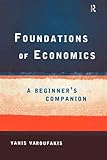
Overview: This text positions itself as a serious yet accessible entry point into economic study. The “Companion” designation suggests a thorough, reference-quality resource that supports structured learning. It likely covers micro and macroeconomic fundamentals with greater academic rigor than typical pop-economics books, appealing to students and professionals seeking a solid conceptual base for further study or career development.
What Makes It Stand Out: The title’s academic tone implies depth without intimidation. It probably balances theoretical frameworks with contemporary applications, serving as a reliable reference that readers return to as their understanding evolves. The “companion” approach suggests it works well alongside other learning, whether formal coursework or self-study, providing clarity on complex topics that confuse beginners.
Value for Money: At $37.44, this is a premium-priced beginner text—significantly higher than many alternatives. The investment may be justified if the content includes detailed explanations, professional diagrams, and real-world case studies that rival introductory college materials. However, buyers should expect corresponding quality in content depth, accuracy, and production values to justify the cost over cheaper options.
Strengths and Weaknesses: Strengths likely include comprehensive coverage, academic credibility, and depth suitable for building lasting understanding. It may feature excellent pedagogy and clear structuring that facilitates progressive learning. Weaknesses center on the steep price point for a beginner’s book and potential density that could overwhelm casual learners. Without knowing the author or publisher, the cost-risk ratio increases for potential buyers.
Bottom Line: Best suited for committed learners who want a rigorous foundation. Worth the investment if you’re pursuing formal studies or need a reliable reference, but overkill for those seeking a light introduction to economic concepts.
9. LLC Beginner’s Step-by-Step Guide: The Simplest Guide to Start, Manage, and Grow a Successful Limited Liability Company. With Smart Tax Strategies, Expert Insights, and Essential Legal Instructions
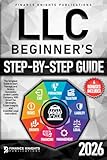
Overview: This guide offers a practical roadmap for aspiring business owners navigating LLC formation and management. It promises to demystify legal requirements, tax obligations, and operational best practices through a systematic, step-by-step approach. The focus on “smart tax strategies” and “essential legal instructions” addresses the two most critical concerns for new entrepreneurs trying to avoid costly mistakes.
What Makes It Stand Out: The hyper-specific focus on LLCs sets it apart from general business startup books. It likely includes state-specific considerations, operating agreement templates, and practical checklists that generic business guides omit. The combination of legal, tax, and growth strategies in one resource provides a holistic toolkit for LLC owners at all stages, from formation to expansion.
Value for Money: At $22.24, this represents strong value compared to legal consultations ($200+/hour) or multiple specialized books. If it delivers on its promise of comprehensive guidance, it could save readers hundreds in legal fees. The price is reasonable for a specialized business resource that combines formation, management, and growth strategies in a single volume.
Strengths and Weaknesses: Strengths include actionable step-by-step instructions, specialized focus, and potential cost savings on legal fees. It likely provides practical templates and real-world examples from experienced entrepreneurs. Weaknesses include rapid obsolescence risk as tax laws change, potential oversimplification of complex legal issues, and the danger of replacing professional legal advice entirely. State-specific information may vary in accuracy or completeness.
Bottom Line: An invaluable resource for entrepreneurs ready to form an LLC. Use it to educate yourself and handle basic formation, but still consult professionals for complex situations. The practical guidance and potential savings outweigh the risks for most small business owners.
10. The Economics Book: Big Ideas Simply Explained

Overview: This entry in the popular “Big Ideas Simply Explained” series brings visual learning to economic theory. It uses infographics, timelines, and digestible summaries to trace economic thought from classical to contemporary schools. The format makes it ideal for visual learners and those wanting a broad survey without academic density, serving as both an introduction and a quick reference.
What Makes It Stand Out: The visual-first approach distinguishes it from text-heavy alternatives. It breaks down complex theories—from Keynesian economics to behavioral economics—into single-page explanations with supporting graphics. This makes abstract concepts memorable and accessible, serving as both an introduction and a quick reference for key ideas and their historical context in a way that traditional texts cannot.
Value for Money: At $13.30, this is highly affordable for a visually-rich, professionally designed reference book. Comparable titles in this series typically retail for $15-$25, making this a budget-friendly option. The combination of breadth, visual appeal, and low cost creates excellent value for casual learners and students seeking engaging study supplements that won’t break the bank.
Strengths and Weaknesses: Strengths include exceptional accessibility, visual engagement, and broad coverage of economic history and theory. It’s perfect for beginners and visual learners who struggle with traditional textbooks. Weaknesses include inevitable superficiality—each “big idea” gets limited space, sacrificing depth for breadth. It may lack the systematic structure needed for comprehensive learning and probably offers minimal personal finance application or practical economic problem-solving.
Bottom Line: A fantastic primer for visual learners and anyone seeking an engaging overview of economic thought. Excellent as a supplement to formal study or a coffee-table reference, but not a standalone deep dive for those needing comprehensive economic training.
Why Paperbacks Are Perfect for Learning Global Economics
The Psychology of Physical Books for Complex Topics
There’s something powerful about physically marking up a paperback that digital reading can’t replicate. When you’re wrestling with concepts like quantitative easing or comparative advantage, the tactile experience of underlining, dog-earing pages, and scribbling margin notes creates stronger neural pathways. Paperbacks for learning global markets become personal artifacts of your intellectual journey—each coffee stain and highlighted passage represents a moment of breakthrough understanding. Unlike digital texts that encourage skimming, the physical presence of a book demands focused attention, crucial for absorbing economic models that build upon previous chapters.
Cost-Effectiveness for Exploratory Learning
Building expertise in global economics requires sampling multiple perspectives, which gets expensive with hardcovers averaging $30-40. Paperbacks typically cost half as much, letting you explore three books for the price of one. This financial freedom encourages intellectual risk-taking—you can experiment with a behavioral economics approach, dive into a supply chain-focused text, or explore emerging market perspectives without buyer’s remorse. For beginners still discovering their learning style, this affordability removes the pressure to find the “perfect” single book, recognizing that understanding global markets comes from synthesizing many viewpoints.
Key Features to Look for in Beginner-Friendly Economics Books
Writing Style and Tone
The best economics paperbacks for beginners read like a skilled professor explaining concepts over coffee, not a lecture hall monologue. Look for authors who use first-person storytelling, acknowledge complexity without hiding behind it, and occasionally show humor. Preview the introduction and first chapter—if you encounter sentences like “Consider how your last Amazon purchase traveled across three continents,” you’re on the right track. Avoid books that open with equations or dense footnotes. The tone should be inviting but not condescending, treating you as an intelligent adult who simply hasn’t learned the terminology yet.
Real-World Examples and Case Studies
Abstract theories about global markets only stick when anchored to concrete stories. Quality paperbacks illustrate currency devaluation through the 1997 Asian Financial Crisis, explain trade wars via the US-China tariff timeline, or demonstrate supply chain vulnerabilities using the Suez Canal blockage. These narratives transform the foreign exchange market from a mysterious number ticker into a human drama of policy decisions, business strategies, and consumer impacts. When browsing potential books, check the table of contents for chapter titles that reference specific events or companies rather than purely theoretical constructs.
Structure and Organization
Beginner-friendly economics books follow a logical sequence that mirrors how we naturally learn complex systems. They start with foundational microeconomic principles—how individual businesses and consumers make decisions—before scaling up to macroeconomic interactions between nations. The ideal structure dedicates early chapters to core vocabulary, building your confidence before tackling open economy macroeconomics. Look for books with clear chapter summaries, concept review sections, and perhaps most importantly, a robust index that lets you jump back to definitions when you encounter “balance of payments” for the third time and still can’t quite recall it.
Visual Aids and Illustrations
Global markets involve flows of goods, money, and information that text alone struggles to convey. Effective paperbacks include clean supply-and-demand curves, world maps showing trade routes, and simple charts tracking GDP growth across decades. These visuals should clarify, not complicate—if a diagram requires five minutes to decipher, it’s failed its purpose. Infographics that show how a dollar spent on imported fruit gets divided among farmers, shippers, and retailers make abstract concepts tangible. When evaluating a book, flip to the middle and examine a random chart—if you can understand its message within 30 seconds without reading the surrounding text, the author respects visual communication.
Essential Economic Concepts Every Beginner Should Master
Supply and Demand in a Global Context
Before diving into forex markets or trade agreements, solidify your understanding of supply and demand as universal forces. The best beginner books demonstrate how these basics scale globally—how a drought in Brazil’s coffee regions reduces supply, raising prices in American cafes, which then affects consumer spending patterns and import statistics. Look for texts that explicitly connect microeconomic fundamentals to macroeconomic outcomes, showing that global markets are simply local markets interacting across borders. This foundation prevents the common beginner mistake of treating international economics as a separate, exotic discipline.
Currency Exchange and Forex Fundamentals
Understanding global markets requires grasping why currencies fluctuate and how these movements ripple through economies. Seek books that explain exchange rates through relatable scenarios: why your vacation dollars buy more in some countries, how exporters benefit from weaker currencies, and why central banks intervene in markets. The right paperback will demystify terms like “carry trade” and “currency pegs” without requiring you to memorize formulas. It should emphasize that forex markets reflect collective human expectations about entire nations’ economic futures—a concept both profound and accessible.
International Trade and Comparative Advantage
The principle that nations benefit from specializing in what they do relatively best forms the cornerstone of global market understanding. Quality beginner texts explain comparative advantage through simple numerical examples—perhaps two countries producing wine and cloth—before scaling up to modern supply chains where iPhone components cross dozens of borders. Be wary of books that present trade as zero-sum; the best ones acknowledge both the aggregate benefits and the distributional challenges, preparing you for nuanced understanding of contemporary trade debates.
Global Supply Chains and Interdependence
Modern markets operate through intricate networks connecting raw material extraction to final consumption. Look for paperbacks that map these chains, showing how a semiconductor shortage in Taiwan stalls car production in Germany, which then affects steel demand from India. This systems-thinking approach reveals that global markets are less about individual countries trading finished products and more about collaborative production processes. The book should help you visualize these invisible threads connecting your daily purchases to distant economies.
How to Evaluate Author Credentials Without Being Intimidated
Academic Economists vs. Market Practitioners
University professors bring rigorous theoretical frameworks and peer-reviewed research, invaluable for understanding the mathematical underpinnings of global markets. Practitioner authors—former traders, policy advisors, or business strategists—offer war stories and practical applications. For beginners, the sweet spot often lies with academics who’ve consulted for real-world organizations or practitioners with teaching experience. Check author bios for this hybrid background without getting hung up on prestigious institutions. A professor who can explain complex topics to undergraduates often writes better for beginners than a famous economist who only addresses peers.
Journalists Who Specialize in Economic Analysis
Financial journalists who’ve covered global markets for decades possess a rare skill: translating breaking economic news into coherent narratives. Their books often excel at connecting policy decisions to human consequences, using the reporting techniques that make complex stories digestible. When evaluating these authors, look for those who’ve maintained long-term beats—covering the Federal Reserve, international trade, or emerging markets—indicating deep source networks and sustained expertise. Their writing tends to be more engaging and less ideologically rigid than pure academics or partisans.
The Role of Historical Context in Understanding Modern Markets
Learning from Financial Crises
The best economics paperbacks treat history as a laboratory where theories get tested. Books that walk through the 2008 financial crisis, the Asian Financial Crisis, or Latin America’s debt struggles provide mental models for recognizing patterns. They show how housing market bubbles in the US triggered global credit freezes, or how currency pegs created vulnerability in Thailand. This historical grounding transforms abstract concepts like “systemic risk” and “contagion” into memorable stories. When selecting books, prioritize those that dedicate chapters to specific crises, using narrative structure to teach economic mechanisms.
The Evolution of Global Trade Systems
Understanding why today’s global markets function as they do requires knowing the journey from Bretton Woods to floating exchange rates, from GATT to WTO. Look for texts that explain how post-WWII institutions shaped contemporary trade patterns and why some nations advocate for returning to modified gold standards while others push for cryptocurrency alternatives. This historical lens prevents the beginner’s error of assuming current market structures are natural or permanent, instead revealing them as evolving human constructions responsive to political and technological change.
Reading Strategies for Complex Economic Texts
Active Reading and Marginalia
Passive reading fails with economics; you must engage actively. Develop a personal system: underline key definitions, star passages that connect to current events, and write questions in margins. When the book mentions “quantitative tightening,” note how it differs from “quantitative easing” right there on the page. This annotation transforms reading from consumption to conversation with the author. The physical act of writing helps cement concepts, and reviewing your margin notes before the next reading session creates spaced repetition—a proven learning technique.
Building Your Personal Economics Glossary
Keep a dedicated notebook or digital document where you rewrite definitions in your own words. Don’t just copy “balance of payments: a country’s international transactions summary.” Instead: “Balance of payments = country’s financial diary with the world, tracking money in (exports, investments) vs. money out (imports, foreign aid).” This paraphrasing reveals true comprehension gaps. Review this glossary weekly, adding real-world examples as you encounter them in news. Over time, you’ll develop a personalized reference that reflects your learning journey and thinking style.
Connecting Concepts to Current Events
The day you read about comparative advantage, pull up trade statistics between two countries in the news. When studying monetary policy, check what central banks announced that week. This immediate application prevents knowledge from remaining theoretical and builds mental hooks for retention. The best economics paperbacks actually encourage this by ending chapters with “Think about this when you hear…” prompts. If your chosen book doesn’t, create these connections yourself—it’s the difference between memorizing and internalizing economic principles.
Common Pitfalls When Choosing Economics Books
Avoiding Overly Technical Jargon
Some authors use complex language to signal expertise rather than clarify concepts. Preview random paragraphs—if you need a dictionary for multiple words on a single page, the author hasn’t adapted their voice for beginners. Terms like “heteroskedasticity” or “epistemological framework” might impress academic reviewers but alienate learners. The best global economics paperbacks introduce technical terms gradually, always pairing them with plain-language explanations. They recognize that mastery comes from understanding ideas, not vocabulary flexing.
Steering Clear of Ideological Echo Chambers
Economics attracts strong opinions, and many books push specific agendas—rigid free-market fundamentalism or heavy-handed interventionism. As a beginner, you need exposure to multiple perspectives before forming conclusions. Be suspicious of books that present their approach as the only correct one or dismiss alternative views as foolish. Look instead for authors who acknowledge legitimate debates: “While some economists argue trade deficits signal weakness, others view them as reflecting strong investment opportunities.” This intellectual honesty equips you to think critically rather than adopt dogma.
Building a Progressive Learning Path
Microeconomics Before Macroeconomics
Resist the temptation to jump straight into hot macro topics like currency wars or trade deficits. Solid microeconomic intuition—understanding how individual firms set prices, how consumers make choices, how markets handle information—provides the foundation for grasping why macro phenomena occur. The best learning sequences start with firms competing internationally, then scale up to national trade policies, then to global financial systems. Books that rush to big-picture drama without establishing micro foundations leave you with superficial understanding that crumbles under scrutiny.
Layering Complexity: From Simple Models to Reality
Effective economics instruction begins with stripped-down models—a two-country, two-good world—and gradually adds realistic complications. Your chosen paperback should follow this pedagogical principle, perhaps starting with perfect competition before introducing monopolistic elements, or explaining fixed exchange rates before floating regimes. Each chapter should acknowledge its model’s limitations, setting up the next layer of nuance. This approach prevents the frustration of encountering real-world anomalies that “shouldn’t happen” according to oversimplified theories you learned.
Why Publication Date Matters (But Isn’t Everything)
Timeless Principles vs. Timely Examples
The laws of supply and demand haven’t changed, but the examples illustrating them must feel relevant. A book published in 2010 referencing Blockbuster’s supply chain strategies will confuse modern readers. However, don’t dismiss older books that excel at explaining core principles—simply supplement them with current news articles. The sweet spot is recent paperbacks (last 5-7 years) that use contemporary case studies but ground them in enduring economic frameworks. Check publication dates, but prioritize conceptual clarity over recency.
Finding Updated Editions with New Data
Many classic economics texts release updated editions with new prefaces, recent statistics, and refreshed examples. These revisions maintain the original’s pedagogical excellence while keeping data current. When browsing, always check if you’re looking at the first edition or a later revision—Amazon and publisher websites usually list this clearly. An updated edition might add analysis of post-pandemic supply chain disruptions or cryptocurrency’s impact on forex markets, making the timeless theory immediately applicable to today’s global markets.
Supplementary Resources to Accelerate Your Understanding
Economic Podcasts and Newsletters
The best paperback becomes more valuable when paired with daily economic news podcasts that reinforce vocabulary and concepts. Hearing terms like “yield curve inversion” or “balance of payments crisis” in context solidifies book learning. Look for podcasts that explain the “why” behind headlines, not just report numbers. Similarly, subscribe to one or two economic newsletters that provide weekly analysis. This steady drip of information transforms isolated book chapters into a living, evolving understanding of global markets.
Free Online Courses and Lectures
Platforms like Coursera and edX offer free introductory economics courses from top universities. Use these to preview topics before reading your paperback, or to review concepts afterward through a different teaching lens. Many courses provide problem sets that let you apply theories actively—calculating exchange rates or analyzing trade data—complementing the passive reading experience. The combination of video lectures, interactive exercises, and deep paperback reading creates a robust, multimodal learning system that accommodates different thinking styles.
Designing Your Personal Economics Reading Curriculum
Balancing Theory with Application
A well-rounded economics education requires both “why” and “how” books. Theory-focused texts build mental models explaining market behavior, while application-oriented books show these models in action—analyzing specific industries, policy decisions, or historical events. Aim for a 2:1 ratio: two theory books establishing core frameworks, followed by one application book stress-testing those frameworks against reality. This rhythm prevents either abstract confusion or anecdotal overload, steadily building both conceptual depth and practical wisdom.
Setting Achievable Reading Goals
Global economics can’t be mastered in a weekend. Set realistic targets: one chapter per day, or one book per month with active note-taking. This pace allows concepts to percolate and connect to your daily news consumption. Create a reading schedule that aligns with your learning goals—perhaps focusing on trade theory during weeks when trade negotiations dominate headlines. Track your progress not just by pages read, but by concepts successfully explained to someone else. Teaching a spouse or friend about comparative advantage reveals true mastery better than any self-assessment.
Navigating Different Economic Schools of Thought
Mainstream Neoclassical Economics
Most introductory paperbacks teach from the neoclassical perspective—rational actors, efficient markets, supply-demand equilibrium. This foundation is essential because it provides the common language and baseline models used in policy and business. Even if you later explore alternative views, you must understand the mainstream to engage in economic discourse. Ensure your core texts cover this territory thoroughly, explaining concepts like marginal analysis, utility maximization, and general equilibrium without requiring you to endorse every assumption.
Keynesian and Monetarist Perspectives
After establishing neoclassical basics, expose yourself to Keynesian economics (emphasizing aggregate demand, government intervention) and monetarism (focusing on money supply’s role). The best beginner-friendly books present these as complementary tools rather than warring religions. They explain when each framework proves most useful—Keynesian insights during recessions, monetarist warnings about inflation—preparing you to recognize that economic policy involves choosing among imperfect tools for specific contexts, not discovering one eternal truth.
Why Beginners Should Sample Multiple Viewpoints
Reading only one economic school creates intellectual blinders. A book advocating pure free trade might impress you until you encounter one explaining market failures and infant industry arguments. This cognitive dissonance is valuable—it mirrors real-world policy debates and develops critical thinking. Your reading list should intentionally include authors from different traditions, teaching you that economics is a contested discipline where smart people disagree. This pluralistic approach inoculates you against ideologues who claim certainty in inherently uncertain domains.
Translating Book Knowledge into Real-World Market Analysis
Key Economic Indicators to Watch
Effective economics paperbacks teach you which metrics matter: GDP growth rates, inflation indices, unemployment figures, trade balances, and central bank policy rates. They explain not just what these numbers mean, but why markets react to them and how they’re interconnected. A rising trade deficit might signal strong domestic demand (positive) or declining competitiveness (negative)—context determines interpretation. Your chosen book should provide a dashboard of indicators to monitor, explaining each one’s significance and limitations. This transforms you from passive news consumer to active economic analyst.
Building a Global Market Watchlist
As you read, create a personal watchlist of countries, currencies, and industries to track. Start with your own nation’s major trading partners, then add economies discussed compellingly in your books. Follow their central bank decisions, election outcomes, and trade statistics. This focused monitoring makes abstract concepts concrete—you’ll witness purchasing power parity in action as you track exchange rates against inflation differentials. The best paperbacks suggest specific watchlist candidates and provide frameworks for what to monitor, turning theoretical learning into ongoing market intelligence.
The Importance of Geographic and Cultural Diversity
Avoiding Western-Centric Economic Narratives
Many economics books implicitly assume US or European perspectives as the default, presenting emerging economies as deviations. Seek paperbacks that treat all economies as interesting cases, explaining how Japan’s keiretsu system, China’s state capitalism, or India’s service-led growth challenge Western models. This global perspective reveals that market mechanisms operate within diverse institutional and cultural contexts. Books that include case studies from Africa, Latin America, and Southeast Asia provide richer understanding than those focused solely on G7 nations, preparing you for a multipolar economic world.
Emerging Market Perspectives
The most dynamic global market action increasingly occurs in emerging economies. Quality beginner books dedicate substantial coverage to these markets, explaining unique challenges like capital flight, commodity dependence, and demographic dividends. They explore how mobile money transformed African banking or how Southeast Asian nations navigated supply chain shifts. This coverage isn’t just about geography—it’s about understanding different development paths and institutional arrangements, crucial for anyone wanting comprehensive global market literacy. If a book mentions emerging markets only in passing, it’s missing a vital part of the modern economic story.
Maximizing Retention and Application
Effective Note-Taking Systems
Develop a systematic approach: create a “concept log” where each entry includes the definition, a real-world example you found, and a question it raises. For instance, after learning about currency pegs, note China’s management of the yuan, then ask: “What happens if they let it float?” This three-part structure—definition, evidence, inquiry—moves knowledge from short-term memory to long-term understanding. Review these logs monthly, adding updates as you see concepts play out in news. Over time, you’ll build a personal encyclopedia reflecting your growing sophistication.
Joining Economics Discussion Communities
Learning economics in isolation limits your progress. Seek out local library discussion groups, online forums like Reddit’s r/AskEconomics, or university extension programs where you can debate ideas from your reading. Explaining why you disagree with an author’s take on trade deficits forces clarity in your thinking. These communities also recommend additional resources and provide diverse interpretations of current events. The best paperbacks often have associated online communities where readers discuss chapters—joining these extends the book’s value far beyond its final page.
Frequently Asked Questions
How long should it take to understand global markets through reading?
Most readers need 6-12 months of consistent study—reading 2-3 foundational books, following economic news, and actively applying concepts—to develop solid intuition. True fluency, where you can analyze novel situations independently, typically requires 18-24 months of ongoing learning. The key is daily engagement rather than cramming.
Can I learn global economics without any math background?
Absolutely. While advanced economics uses calculus, beginner paperbacks rely on arithmetic, graphs, and logical reasoning. Focus on books that emphasize conceptual understanding over equations. You can grasp 80% of global market dynamics through supply-demand curves, percentage changes, and basic algebra—no derivatives required.
Should I read multiple books simultaneously or finish one before starting another?
Finish one foundational text completely before adding others. Economics concepts build sequentially; jumping between books creates confusion. Once you have solid micro and macro basics, then layer in specialized books on trade or finance, reading them concurrently with your core text to see different perspectives on familiar topics.
How do I know if a book is too advanced for me?
If you can’t summarize the main point of a chapter in your own words after reading it twice, the book is too advanced. Effective beginner books make you work but don’t leave you lost. Try the “five-page test”—read five random pages throughout the book. If you understand the core argument in most of them, it’s appropriate for your level.
Are older economics books still valuable for understanding today’s markets?
Yes, if they focus on timeless principles. Books from the 1990s explaining comparative advantage or monetary policy remain relevant. However, supplement them with recent articles on post-2008 monetary innovations, cryptocurrency, and current trade patterns. Avoid older books for topics like China’s economic role or digital trade, where the landscape has fundamentally changed.
What’s the difference between international economics and global markets?
International economics studies trade and finance between nations—theories, policies, and outcomes. Global markets refers to the actual mechanisms where currencies, commodities, securities, and goods trade across borders. Think of international economics as the “why” and global markets as the “how.” Your reading should cover both: economics books for theory, market-focused texts for practical mechanics.
How can I remember all the terminology?
Don’t try to memorize—instead, use terms actively. When you learn “current account deficit,” immediately find three examples in news articles and discuss them with someone. Create flashcards with the term on one side and your own explanation plus an example on the other. Review weekly, adding new connections. Usage, not rote repetition, builds lasting vocabulary.
Should I take notes while reading or read first and then summarize?
Take light notes while reading—underline key definitions and jot margin questions—then write a comprehensive summary after finishing each chapter. This two-step process keeps you engaged during reading while forcing synthesis afterward. Your summary should explain concepts as if teaching a friend, revealing what you truly absorbed versus what just sounded familiar.
How do I apply book knowledge to investing or business decisions?
Start by using your knowledge for analysis, not action. Predict how markets might react to news, then observe actual outcomes to refine your mental models. Keep a journal of these predictions and results. Only after 6+ months of accurate analysis should you consider applying insights to small, low-risk financial decisions. Book knowledge prevents costly mistakes long before it generates profits.
What if I disagree with an author’s political perspective?
Engage with it critically. Note where assumptions seem ideologically driven rather than evidence-based. Seek out books presenting opposing views on the same topics—trade, regulation, monetary policy. The goal isn’t to find an author you agree with completely, but to understand how reasonable people interpret the same data differently. This builds the critical thinking essential for navigating real-world economic debates.