We’ve all been there: staring at a fresh calendar, buzzing with motivation to overhaul our lives, only to watch that spark fizzle within weeks. The cycle is painfully familiar—ambitious goals, fleeting discipline, and the creeping sense of defeat when yet another routine collapses under the weight of old patterns. But what if the problem isn’t your willpower? What if it’s not about wanting change harder, but about understanding the invisible architecture of habits themselves? In 2026, where distractions are more sophisticated and time feels scarcer than ever, cracking the code of sustainable routine-building isn’t just helpful—it’s essential for reclaiming control and designing a life that truly aligns with your aspirations.
True transformation happens not in grand, one-off gestures, but in the quiet accumulation of tiny, consistent actions woven into the fabric of your daily existence. The right guidance can illuminate the path from fleeting intention to automatic behavior, turning overwhelming resolutions into effortless rhythms. Forget quick fixes or gimmicks; this is about leveraging timeless behavioral science, adapted for the unique pressures of our modern world. Whether you’re aiming to boost productivity, improve health, nurture relationships, or simply find more peace, the foundation lies in mastering the art of habit formation. Let’s explore how to choose resources that equip you with the real tools for lasting change, moving beyond hype to build routines that stick for years, not just weeks.
Top 10 Habits Books
Detailed Product Reviews
1. Atomic Habits: An Easy & Proven Way to Build Good Habits & Break Bad Ones

Overview: James Clear’s Atomic Habits delivers a practical, science-backed framework for incremental habit change. It argues that tiny, consistent improvements—1% gains—compound into remarkable results over time, shifting focus from goals to sustainable systems. What Makes It Stand Out: Its actionable “Four Laws of Behavior Change” (make it obvious, attractive, easy, satisfying) transform abstract theory into daily practice. The emphasis on environment design and identity-based habits (“become the type of person who…”) sets it apart from willpower-centric approaches. Value for Money: At standard paperback pricing, it offers exceptional ROI. The clarity and immediate applicability surpass pricier programs or apps, providing lifelong tools without subscriptions. Its universal relevance justifies the cost for virtually any reader. Strengths and Weaknesses: Strengths: Exceptionally clear writing, memorable frameworks, evidence-based without being academic. Weaknesses: Some strategies may feel overly simplistic for complex behavioral challenges; limited depth on breaking deeply entrenched addictions. Bottom Line: A must-read for actionable habit formation. Its pragmatic, non-judgmental approach makes lasting change feel achievable, earning its status as a modern classic in personal development.
2. The Power of Habit: Why We Do What We Do in Life and Business

Overview: Charles Duhigg’s investigative work explores the neuroscience and psychology behind habits, using real-world case studies from individuals, corporations (like Target and Starbucks), and social movements to decode the “habit loop” (cue, routine, reward). What Makes It Stand Out: It uniquely bridges personal habit change with organizational and societal patterns, revealing how keystone habits can trigger widespread transformation. The narrative-driven style makes complex science accessible and engaging. Value for Money: Priced competitively, it delivers broad insights applicable across life and work contexts. While less prescriptive than Atomic Habits, its depth on why habits form offers complementary value, enriching understanding beyond tactical fixes. Strengths and Weaknesses: Strengths: Fascinating research, compelling storytelling, holistic perspective. Weaknesses: The “life changing novel” descriptor is misleading (it’s nonfiction); actionable steps are less structured, requiring reader interpretation. Some case studies feel dated. Bottom Line: Highly recommended for understanding habit mechanics deeply. Best paired with a more tactical guide for implementation, but invaluable for context and motivation.
3. The 7 Habits of Highly Effective People: 30th Anniversary Edition (The Covey Habits Series)
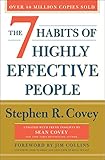
Overview: Stephen R. Covey’s seminal work presents a principle-centered framework for personal and interpersonal effectiveness, rooted in character ethics. The 30th-anniversary edition updates examples while preserving the core timeless habits. What Makes It Stand Out: It transcends quick-fix habit hacks by building foundational character traits (like proactivity and win-win thinking). The holistic shift from “success” to “significance” and emphasis on interdependence distinguish it from purely individual-focused guides. Value for Money: This enduring classic justifies its price through decades of proven impact. The anniversary edition’s refreshed context enhances relevance, offering profound ROI for those seeking transformative, values-based growth over superficial tips. Strengths and Weaknesses: Strengths: Deep philosophical grounding, universally applicable principles, powerful focus on integrity. Weaknesses: Dated language/examples in original sections; slower pace demands patience; less immediate “how-to” than newer books. Bottom Line: An essential investment for foundational personal mastery. While dense, its wisdom remains unparalleled for building lasting character-driven effectiveness.
4. Breaking The Habit of Being Yourself: How to Lose Your Mind and Create a New One

Overview: Dr. Joe Dispenza merges neuroscience, quantum physics, and mindfulness to argue that we can rewire our brains and biology by changing habitual thought/emotional patterns, moving beyond automatic reactions to conscious creation. What Makes It Stand Out: Its unique blend of hard science and meditative practice guides readers to literally “rewire” their brains through deliberate mental rehearsal. The focus on breaking emotional habits (not just behaviors) and creating a “future self” is distinctive. Value for Money: Offers a novel, holistic approach justifying its cost. While demanding active participation (meditation, journaling), it provides tools for profound mindset shifts that generic habit books overlook, especially for emotional regulation. Strengths and Weaknesses: Strengths: Groundbreaking integration of science and spirituality, empowers deep emotional change, practical guided exercises. Weaknesses: Concepts can feel esoteric; requires significant commitment to see results; scientific claims occasionally stretch evidence. Bottom Line: Ideal for those ready to transform their inner world. Not a quick habit fix, but a powerful pathway to fundamental self-reinvention for dedicated practitioners.
5. The Coaching Habit: Say Less, Ask More, and Change the Way You Lead Forever

Overview: Michael Bungay Stanier distills coaching into seven essential questions leaders can use in 10-minute conversations to foster employee autonomy, problem-solving, and engagement, moving away from default advice-giving. What Makes It Stand Out: Its razor-sharp focus on fewer, better questions makes coaching practical for busy managers. The “lazy person’s guide” angle—doing less to achieve more—is refreshingly counterintuitive and immediately actionable within daily work. Value for Money: At 244 pages, it’s concise and skimmable, offering immense value for its price. Far more cost-effective than lengthy leadership courses, with proven ROI through improved team dynamics and reduced managerial burnout. Strengths and Weaknesses: Strengths: Ultra-practical, evidence-based questions, humorous and relatable writing. Weaknesses: Niche focus (best for managers, less for personal habits); depth limited by brevity; assumes some leadership context. Bottom Line: A top recommendation for managers seeking efficient, impactful leadership tools. Delivers transformative results through simplicity, making coaching a sustainable habit.
6. The Atomic Habits Workbook: Official Companion to the #1 Worldwide Bestseller

Overview: This interactive workbook serves as a practical extension to James Clear’s blockbuster Atomic Habits, designed to help readers translate its principles into tangible action through structured exercises and reflection prompts. It focuses on personalizing habit formation strategies. What Makes It Stand Out: Its strength lies in transforming theoretical concepts into actionable steps. The guided worksheets for identifying keystone habits, designing environment cues, and tracking incremental progress provide a hands-on framework unmatched by the original book alone, making habit change systematic and measurable. Value for Money: Priced competitively with the hardcover, it offers significant added value for readers committed to implementation. While the core book explains the ‘why,’ this workbook delivers the crucial ‘how,’ justifying its cost as an essential tool for serious habit changers, far exceeding generic journals. Strengths and Weaknesses: Strengths: Highly structured, eliminates ambiguity in applying concepts, promotes deep self-reflection, durable layout. Weaknesses: Can feel overwhelming for absolute beginners; some exercises require consistent effort to yield results, potentially discouraging those seeking quick fixes. Bottom Line: An indispensable companion for readers who finished Atomic Habits inspired but unsure how to start. It transforms passive reading into active habit-building, making it a worthy investment for anyone dedicated to lasting personal change through small, consistent actions.
7. Tiny Habits: The Small Changes That Change Everything

Overview: Dr. BJ Fogg’s Tiny Habits introduces a science-backed method for behavior change, emphasizing starting with actions so small they feel effortless, then naturally expanding them. It challenges traditional willpower-focused approaches with a focus on simplicity and celebration. What Makes It Stand Out: The core innovation is the “Fogg Behavior Model” (B=MAP) applied through the “Tiny Habits Recipe” (Anchor > Tiny Behavior > Celebration). This focus on minuscule, immediate actions paired with instant positive reinforcement makes habit formation accessible and sustainable, even for the busiest or most resistant individuals. Value for Money: At standard non-fiction pricing, it delivers exceptional value by providing a complete, research-based system applicable to any goal. Its effectiveness in overcoming inertia offers a high return on investment compared to costlier, less proven habit programs or coaching. Strengths and Weaknesses: Strengths: Extremely accessible, scientifically rigorous, empowers immediate action, highly adaptable to any habit. Weaknesses: The emphasis on “tiny” may frustrate those seeking rapid, dramatic change; requires consistent application of the celebration step for full effect, which some might initially find awkward. Bottom Line: A revolutionary and practical guide ideal for beginners or those burned out by complex systems. Its focus on simplicity and celebration makes habit formation genuinely achievable, offering profound results through deceptively small steps—highly recommended for sustainable change.
8. Daily Creative: The 5-Minute Habit to Rewire Your Brain
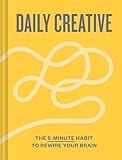
Overview: Daily Creative targets individuals seeking to unlock creativity through micro-habits, arguing that dedicating just five minutes daily to a structured creative prompt can rewire neural pathways and combat creative block over time, regardless of artistic skill level. What Makes It Stand Out: Its unique promise is accessibility: the strict 5-minute limit removes the intimidation barrier of “being creative.” The curated daily prompts (writing, drawing, observation) are designed for immediate engagement, focusing on the process of showing up rather than producing masterpieces, making creativity a sustainable practice. Value for Money: This concise guide offers excellent value by providing a lifetime of simple, actionable prompts at a low cost. Compared to expensive art classes or complex creativity systems, it delivers a proven, low-effort entry point, justifying its price for anyone wanting consistent creative flow without time commitment. Strengths and Weaknesses: Strengths: Effortless daily commitment, demystifies creativity, portable and easy to integrate, scientifically plausible rewire concept. Weaknesses: Results require genuine consistency over months; minimal guidance on overcoming deeper creative resistance beyond the initial habit; may feel too simplistic for experienced artists seeking technique. Bottom Line: A highly effective, no-pressure solution for reigniting or establishing a creative practice. Perfect for busy professionals or hobbyists intimidated by creativity, it proves that tiny, consistent actions build significant mental shifts—strongly recommended for unlocking everyday inspiration.
9. Habits of the Household: Practicing the Story of God in Everyday Family Rhythms

Overview: This book reframes family routines as spiritual disciplines, guiding Christian parents to intentionally shape household habits (meals, chores, bedtime) around biblical narratives, transforming mundane tasks into opportunities for faith formation and family connection. What Makes It Stand Out: It uniquely bridges theology and practical parenting, moving beyond generic habit advice. By connecting daily rhythms to the overarching “Story of God” (Creation, Fall, Redemption, Restoration), it provides deep meaning to ordinary moments, offering specific, faith-infused practices rather than just time-management tips. Value for Money: For faith-oriented families, it offers exceptional value by providing a transformative framework worth far more than its cost. Compared to secular parenting books, it delivers unique spiritual depth and purpose, making household management feel significant and joyful, justifying the investment for its target audience. Strengths and Weaknesses: Strengths: Profound spiritual integration, practical and adaptable for various ages, fosters intentional family culture, deeply comforting for religious parents. Weaknesses: Niche appeal limited to Christian families; requires significant mindset shift from task-focused parenting; some suggested habits may feel burdensome if not embraced authentically. Bottom Line: An essential, perspective-shifting resource for Christian families seeking to root daily life in faith. It transforms chores and routines into sacred moments, offering profound meaning—highly recommended for parents wanting to weave spiritual formation into the fabric of home life.
10. The High 5 Habit: Take Control of Your Life with One Simple Habit

Overview: Mel Robbins’ The High 5 Habit proposes a single, deceptively simple daily practice: giving yourself a literal high-five in the mirror while stating your name, designed to instantly boost self-efficacy, interrupt negativity, and build self-trust through neuroplasticity. What Makes It Stand Out: Its power lies in radical simplicity and immediacy. Unlike complex habit systems, this one-minute ritual leverages mirror neurons and self-touch to create a tangible, physiological shift in confidence and mood, providing an accessible “micro-moment” of self-connection proven to rewire self-talk patterns. Value for Money: Priced as a standard self-help book, it delivers outsized value through its laser focus on one highly actionable tool. The potential return—improved daily mindset with minimal time investment—far exceeds the cost, especially compared to lengthy therapy or unproven confidence-boosting products. Strengths and Weaknesses: Strengths: Instantly applicable, requires zero preparation, scientifically grounded in neuroscience, remarkably effective for mood regulation. Weaknesses: Can feel silly or uncomfortable initially; effect might plateau without deeper mindset work; less comprehensive for tackling complex life challenges alone. Bottom Line: A brilliantly simple, evidence-based tool for instantly improving self-talk and daily resilience. While not a panacea, its ease and effectiveness make it a powerful foundational habit—highly recommended as a quick, accessible starting point for anyone needing a daily confidence boost.
Understanding the Core Science of Habit Formation
The Habit Loop Demystified
At the heart of every automatic behavior lies a three-part neurological pattern: the cue, the routine, and the reward. This loop operates beneath conscious awareness, driving actions from morning coffee rituals to late-night scrolling. Recognizing these components—what triggers the behavior, the action itself, and the craving it satisfies—is the critical first step in rewiring unwanted patterns. Effective resources will dissect this loop with clarity, showing how to identify and manipulate each element without relying on sheer willpower.
Why Neuroplasticity is Your Secret Weapon
Your brain isn’t hardwired; it’s constantly reshaping itself based on repeated experiences—a concept known as neuroplasticity. High-quality habit guidance emphasizes this adaptability, explaining how consistent repetition strengthens neural pathways until new behaviors become automatic. Look for materials that translate this science into practical steps, illustrating how small daily actions literally rewire your brain over weeks, making change feel less like a struggle and more like a natural evolution.
The Critical Role of Identity Shifts
Lasting change often stalls because we focus solely on doing new things rather than becoming someone new. Resources that resonate deeply will address the identity shift required—moving from “I’m trying to exercise” to “I am someone who values movement.” This subtle mental reframing reduces reliance on motivation and creates intrinsic alignment with your routines, making them feel authentic and sustainable rather than imposed.
Evaluating Habit Resources for Maximum Impact
Scientific Rigor and Evidence-Based Foundations
In an era flooded with self-help noise, prioritize resources grounded in peer-reviewed psychology and neuroscience. Does the material cite longitudinal studies, behavioral experiments, or established models like the Fogg Behavior Model? Avoid anything promising overnight miracles; credible sources acknowledge complexity, discuss limitations, and build strategies on reproducible research, not anecdotal success stories.
Practical Application Over Abstract Theory
The true test of any habit resource lies in its actionable scaffolding. Does it provide concrete templates for implementation—like habit stacking prompts, environment design checklists, or craving journaling frameworks? Valuable guides translate theory into “how-to” steps you can apply today, with clear examples for troubleshooting common pitfalls (e.g., navigating social triggers or managing energy slumps).
Adaptability to Individual Contexts
No two lives follow identical rhythms. Superior resources acknowledge diverse starting points—busy parents, shift workers, neurodivergent individuals—and offer flexible frameworks, not rigid prescriptions. Seek materials that encourage self-experimentation, with guidance on tailoring strategies to your unique energy cycles, cultural context, and existing responsibilities without demanding a complete lifestyle overhaul.
Designing Routines That Thrive in Modern Life
Mastering the Art of Tiny Habits
Ambition often kills consistency. The most resilient routines begin absurdly small—micro-actions taking less than two minutes. Look for guidance emphasizing “atomic” habits: flossing one tooth, doing two push-ups, or writing one sentence. This approach bypasses resistance, builds early wins, and leverages the compound effect. Resources should explain how to scale these micro-habits only after they’ve become frictionless.
Strategic Environment Design as Your Silent Ally
Your surroundings constantly nudge behavior, often without you noticing. Effective resources spotlight environmental engineering: making desired cues obvious (e.g., placing running shoes by the bed) and friction points for bad habits invisible (e.g., deleting social media apps). This shifts reliance from motivation to smart context, automating choices before willpower is even needed.
Leveraging Technology Without Digital Burnout
While apps promise habit tracking mastery, they can become sources of stress. Forward-thinking materials address this paradox, teaching intentional tech use—like setting app limits, using distraction-free tools, or scheduling “analog anchors” (e.g., paper journals). The goal isn’t to reject technology but to harness it as a supportive tool that enhances, rather than hijacks, your focus.
Navigating Common Pitfalls and Plateaus
The Inevitability (and Power) of Slips
Perfectionism derails more routines than laziness. Resources worth their salt normalize setbacks as data points, not failures. They’ll provide structured reflection templates: What triggered the slip? How can I adjust my plan? This reframes “relapses” as essential learning moments, building antifragility—the ability to grow stronger through disruption.
Managing Energy, Not Just Time
Chasing productivity often ignores biological rhythms. Insightful guidance distinguishes between time management and energy management, teaching you to schedule demanding habits during personal peak hours (e.g., creative work in the morning for early risers) and align low-energy tasks with natural dips. This prevents burnout and honors your body’s innate cycles.
Overcoming the Mid-Process Motivation Dip
The initial excitement fades around the 3–6 week mark for most new routines, leading to abandonment. Quality resources anticipate this “valley of despair,” offering strategies like pre-commitment devices (e.g., scheduled accountability calls) or “why reconnects” to reignite purpose. They emphasize designing rewards that feel meaningful now, not just distant outcomes.
Future-Proofing Your Habit Strategy for 2026 and Beyond
Anticipating Evolving Distraction Landscapes
As AI assistants and immersive tech reshape attention economies, future-ready habit systems must address novel interruptions. Look for materials discussing “attention hygiene”—practices like scheduled notification purges or creating tech-free zones—to maintain focus in increasingly fragmented environments. Sustainability means adapting to tomorrow’s distractions, not just yesterday’s.
Building Habit Resilience for Uncertain Times
Global volatility demands flexible routines. Resources should cover “habit elasticity”—designing core behaviors that can morph during crises (e.g., a 20-minute home workout replacing gym sessions). This ensures your foundational habits survive life’s inevitable upheavals without total collapse, fostering psychological safety through consistency.
The Integration of Holistic Well-Being
Isolated habit changes rarely stick. Cutting-edge approaches recognize that physical health, mental clarity, and emotional balance are interwoven. Prioritize materials that connect habit loops across domains—like linking hydration habits to mood tracking or sleep routines to decision fatigue management—creating a self-reinforcing ecosystem of well-being.
Frequently Asked Questions
How long does it really take to form a new habit in 2026?
Research shows variability—anywhere from 18 to 254 days depending on complexity and individual factors. Consistency matters more than arbitrary timelines; focus on daily execution, not calendar dates.
Can habit books help if I have ADHD or executive dysfunction?
Yes, but seek resources specifically addressing neurodivergent challenges, emphasizing external triggers, reduced friction, and flexible “good enough” standards over rigid systems.
What’s the biggest mistake people make when starting new routines?
Trying to change too much too fast. Prioritize one keystone habit that creates ripple effects (like morning movement) before layering others.
How do I choose between competing habit methodologies?
Match the approach to your personality: systems thinkers may prefer behavioral science frameworks, while creatives might thrive with narrative-based techniques. Experimentation is key.
Are digital habit trackers more effective than pen-and-paper methods?
Not inherently. Choose based on your friction points: apps suit those needing reminders, while analog journals reduce screen time. The best tool is the one you’ll use consistently.
What if my routine clashes with family or work demands?
Frame habits as shared values (“Let’s all cook dinner together”) or negotiate micro-moments (5 minutes of meditation during lunch). Protect non-negotiable anchors without demanding others adapt.
How do I maintain motivation when results aren’t visible?
Shift focus from outcomes to identity reinforcement (“I’m becoming disciplined”) and celebrate process wins—like completing a habit streak—regardless of external progress.
Can habit formation work during periods of high stress or grief?
Temporarily scale back to “minimum viable habits” (e.g., one deep breath daily). Stability returns faster when you preserve the ritual of showing up, even minimally.
Why do some habits stick effortlessly while others fail repeatedly?
Habits succeed when they align with existing rewards and identity. If flossing feels punitive, pair it with something pleasurable (audiobooks); if running drains you, try dance videos instead.
How can I avoid falling for habit trends that don’t last?
Prioritize resources emphasizing first principles (cues, cravings, context) over trendy hacks. Sustainable change leverages universal behavioral laws, not viral challenges.