Military science fiction has always been the perfect playground for strategy enthusiasts. There’s something deeply satisfying about diving into vast interstellar conflicts where every decision carries galactic consequences, and the fog of war isn’t just atmospheric—it’s woven into the fabric of wormhole travel and AI-driven battlefields. If you thrive on outmaneuvering opponents, dissecting command structures, or pondering the ethical weight of tactical choices, this genre offers intellectual stimulation unlike any other. It transforms abstract strategic theory into pulse-pounding narratives where logistics, deception, and resource allocation become as critical as the weapons themselves.
What truly sets military sci-fi apart for strategy lovers isn’t just the spectacle of laser battles or armored exosuits—it’s the cerebral chess match unfolding beneath the surface. Imagine scenarios where quantum computing alters real-time decision-making, or where cultural misunderstandings escalate into full-scale wars requiring nuanced diplomatic gambits alongside brute force. These stories challenge readers to think beyond the battlefield, considering how political maneuvering, technological asymmetry, and psychological operations shape the outcome of conflicts. For those who relish dissecting Sun Tzu or Clausewitz, this genre translates timeless strategic principles into tomorrow’s frontiers, making every page-turn an exercise in critical thinking.
Top 10 Military Science Fiction Books
Detailed Product Reviews
1. The Forever War

Overview: Joe Haldeman’s seminal 1974 novel, The Forever War, is a cornerstone of military science fiction. It follows William Mandella, a soldier conscripted into an interstellar war against the enigmatic Taurans, where time dilation due to near-light-speed travel means decades pass on Earth during short combat tours. The narrative powerfully explores the psychological and societal dislocation of prolonged warfare. What Makes It Stand Out: Its profound exploration of time dilation’s human cost sets it apart, offering a visceral anti-war allegory rooted in Haldeman’s Vietnam experience. The novel masterfully critiques military bureaucracy, societal evolution, and the alienation of soldiers returning to unrecognizable homes, blending hard sci-fi concepts with deep emotional resonance. Value for Money: As a genre-defining classic often available affordably in paperback and ebook formats, its enduring relevance and literary significance offer exceptional value. It provides far more intellectual depth and thematic weight than many modern military sci-fi entries at similar price points. Strengths and Weaknesses: Strengths: Unmatched thematic depth, realistic portrayal of soldier trauma, innovative use of relativistic physics, timeless relevance. Weaknesses: Some dated technological assumptions, slower pacing compared to contemporary action-focused sci-fi, less emphasis on intricate battle details. Bottom Line: An essential, thought-provoking read for any sci-fi fan. Its profound insights into war’s true cost make it invaluable despite minor dated elements, earning its place as a must-read classic.
2. Terms of Enlistment

Overview: Terms of Enlistment by Marko Kloos introduces readers to Andrew Grayson, a young man in a resource-scarce future Earth who sees the military as his only escape from poverty. Enlisting in the North American Federation’s armed forces, he endures grueling training and is thrust into a brutal interstellar conflict against alien forces. What Makes It Stand Out: Kloos delivers a highly relatable, ground-level perspective on military life, focusing on the grunt’s experience with gritty realism. Its strength lies in the authentic depiction of boot camp, camaraderie, and the visceral chaos of combat, making the futuristic setting feel immediate and plausible through the soldier’s eyes. Value for Money: Priced accessibly as a popular series starter, it offers substantial entertainment value with its fast pace and immersive military detail. It provides a more digestible, action-oriented entry point into military sci-fi compared to denser classics, justifying its cost for genre newcomers. Strengths and Weaknesses: Strengths: Compelling protagonist, realistic boot camp portrayal, fast-paced combat sequences, strong sense of squad dynamics. Weaknesses: Predictable plot trajectory, somewhat thin world-building beyond the military sphere, character development can feel secondary to action. Bottom Line: A solid, highly entertaining debut for the series. While not groundbreaking, its authentic military grit and relentless pace make it a worthwhile, satisfying purchase for fans seeking accessible, boots-on-the-ground military sci-fi.
3. Legionnaire (Galaxy’s Edge)

Overview: Set in the expansive Galaxy’s Edge universe created by Jason Anspach and JN Chaney, Legionnaire by Nick Cole follows Jackson Roth, a disillusioned corporate drone who flees Earth’s oppressive regime by joining the notorious Legion – a vast, multi-species mercenary army known for its brutality and effectiveness in the galaxy’s endless conflicts. What Makes It Stand Out: The novel excels in its darkly humorous, cynical take on military service within a morally grey universe. Roth’s journey from cowardice to reluctant competence, combined with the Legion’s unique, chaotic culture and Cole’s sharp, irreverent prose, creates a distinct, adrenaline-fueled experience. Value for Money: As part of a popular shared universe series, it delivers high re-readability and hooks readers into the broader saga. Its brisk pace and entertaining voice offer excellent entertainment value for the price, especially appealing to fans of snarky, character-driven action. Strengths and Weaknesses: Strengths: Engagingly flawed protagonist, dark humor, fast-paced plot, strong sense of the Legion’s unique culture, accessible writing style. Weaknesses: Underdeveloped supporting characters, world-building relies heavily on prior series knowledge, plot can feel episodic. Bottom Line: A fun, quick, and darkly comedic entry into military sci-fi. Its unique voice and relentless action make it a strong value proposition for readers seeking an entertaining, less-serious take on the genre.
4. Against All Odds: A Military Sci-Fi Series (Grimm’s War Book 1)

Overview: Against All Odds, the first book in Michael Anderle’s Grimm’s War series, centers on Grimm, a former elite soldier framed for treason and cast out. Stranded on a dangerous frontier world, he must use his skills to survive monstrous threats and uncover a conspiracy that could doom humanity, forging new alliances along the way. What Makes It Stand Out: The series leverages strong tropes of the military-litRPG subgenre, blending squad-based tactics, character progression (almost leveling up), and survival elements within a sci-fi setting. Grimm’s struggle against overwhelming threats and his focus on building a found family unit provide a distinct motivational core. Value for Money: As part of a prolific, rapidly updated series popular in subscription services, it offers significant volume of content. For fans of the subgenre, the fast pace, clear progression, and serialized nature provide good value, especially at low introductory prices or via Kindle Unlimited. Strengths and Weaknesses: Strengths: High pacing, satisfying character progression elements, clear-cut heroes/villains, strong survival narrative, accessible writing. Weaknesses: Formulaic plot structure, limited thematic depth, world-building often serves plot convenience, prose can be functional over literary. Bottom Line: A dependable choice for fans of fast-paced, progression-focused military-litRPG sci-fi. While lacking depth, its consistent action and series momentum deliver solid entertainment value for its target audience.
5. Call Me Ares: A Military Science Fiction Adventure (I, Soldier Book 1)

Overview: In Call Me Ares, the first book of the I, Soldier series by Nathan Lowell, former soldier Ares wakes up with amnesia aboard a derelict ship. Thrust into a complex political landscape and hunted by unknown enemies, he must reclaim his identity and past while navigating lethal dangers and forming uneasy alliances in a fractured galaxy. What Makes It Stand Out: The novel distinguishes itself through its intense focus on the protagonist’s internal struggle with lost identity and trauma, coupled with intricate political maneuvering. Ares’ journey is less about large-scale battles and more about personal survival, espionage, and uncovering layered conspiracies, offering a cerebral twist on military sci-fi. Value for Money: Priced competitively as an indie series starter, it provides a unique blend of military backstory, mystery, and political intrigue. Readers seeking character depth and puzzle-solving over constant combat will find its thoughtful approach a worthwhile investment compared to more action-saturated alternatives. Strengths and Weaknesses: Strengths: Compelling amnesia/mystery hook, strong character-driven focus, intricate plotting, realistic portrayal of disorientation and trauma. Weaknesses: Slower initial pacing, less emphasis on traditional military action, some world-building details emerge gradually. Bottom Line: A refreshing, character-centric entry for readers wanting psychological depth and political intrigue within military sci-fi. Its unique focus justifies the price for those prioritizing narrative complexity over non-stop warfare.
6. Forged in Battle: A completely gripping military science fiction adventure (Command Decision Book 1)

Overview: “Forged in Battle” kicks off the Command Decision series, plunging readers into a high-stakes universe where humanity clashes with formidable alien forces. Centered on tactical command decisions under extreme pressure, the narrative follows a skilled but untested officer thrust into leadership during a critical campaign. It delivers fast-paced action and immersive military strategy typical of the subgenre. What Makes It Stand Out: The novel excels in its realistic portrayal of command dilemmas and military hierarchy, avoiding common tropes of infallible heroes. Its focus on the psychological weight of leadership decisions and the gritty, chaotic nature of interstellar combat provides a fresh, grounded perspective within military SF, emphasizing strategy over simplistic heroics. Value for Money: Priced competitively as an indie debut ebook or paperback, it offers substantial value for military SF fans seeking a new series. While lacking the polish of major publishers, its engaging plot and unique command focus provide hours of entertainment comparable to more expensive established authors, especially for series completists. Strengths and Weaknesses: Strengths: Compelling tactical depth; authentic-feeling military culture; relentless pacing. Weaknesses: Character development can feel secondary to action early on; world-building exposition occasionally slows momentum; prose is functional but not lyrical. Bottom Line: A strong, action-packed entry for military SF enthusiasts craving tactical realism and command-focused narratives. While not groundbreaking, it delivers exactly what the genre promises with competence. Recommended for fans of David Weber or Elizabeth Moon, especially those starting a new series.
7. Old Man’s War

Overview: John Scalzi’s acclaimed debut introduces John Perry, who, at 75, joins the Colonial Defense Forces (CDF) after Earth’s mandatory retirement age. Rejuvenated with a genetically enhanced body, he’s thrust into humanity’s brutal interstellar war. The novel blends sharp wit, accessible prose, and high-concept military sci-fi, exploring themes of aging, identity, and the cost of survival. What Makes It Stand Out: Scalzi masterfully balances laugh-out-loud satire with poignant commentary on war and aging. The unique premise of seniors as frontline soldiers, coupled with the CDF’s morally ambiguous tactics and advanced “BrainPal” tech, creates a refreshingly original and deeply human take on military SF, avoiding grimdark clichés. Value for Money: As a modern classic often available affordably in paperback and ebook, it offers exceptional value. Its perfect blend of humor, action, and thought-provoking ideas provides immense re-readability and serves as an ideal gateway into the genre, easily justifying its price against newer, less substantive releases. Strengths and Weaknesses: Strengths: Hilarious and insightful narration; highly accessible writing; brilliant satirical edge; strong thematic depth. Weaknesses: Some alien designs feel underdeveloped; the middle section pacing lags slightly; resolutions can feel a bit neat for the setup. Bottom Line: An essential, highly entertaining read that redefined accessible military sci-fi. Its wit, heart, and clever concepts make it a must-buy, offering immense enjoyment and value. Perfect for both genre newcomers and veterans seeking a smart, funny adventure.
8. The Lost Fleet: Dauntless
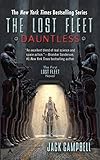
Overview: Jack Campbell’s (pseudonym for John G. Hemry) “Dauntless” launches The Lost Fleet series, following Captain John “Black Jack” Geary, who awakens from a century in survival sleep to find himself the revered, reluctant hero leading a fleet stranded deep in enemy territory. The story emphasizes realistic physics, naval tactics, and the burden of command in a desperate war. What Makes It Stand Out: The novel’s rigorous adherence to plausible physics (no artificial gravity, real light-speed delays) and authentic-feeling naval warfare tactics (“dreadnoughts” maneuvering in 3D space) set it apart. Geary’s internal conflict between mythic legend and pragmatic leadership provides a compelling core rarely explored with such depth in space opera. Value for Money: As a foundational military SF paperback, it delivers significant value through its unique tactical focus and strong world-building. Its influence on modern hard military SF justifies the cost, offering a more intellectually rigorous alternative to flashier, less substantive space battles often found at similar price points. Strengths and Weaknesses: Strengths: Groundbreaking realistic space combat; fascinating command dynamics; strong emphasis on discipline and chain of command. Weaknesses: Prose can be overly technical/dry for some; character development outside Geary is initially thin; pacing is deliberate rather than breakneck. Bottom Line: A seminal work for tactical military SF fans seeking realism and command drama over hand-wavy tech. Its unique approach offers excellent value and remains highly influential. Recommended for readers who prioritize strategic depth and naval tradition in their space battles.
9. The Expanse Boxed Set: Leviathan Wakes, Caliban’s War and Abaddon’s Gate

Overview: This essential boxed set collects the first three novels of James S.A. Corey’s (Daniel Abraham & Ty Franck) groundbreaking “The Expanse” series. It chronicles humanity’s fragile existence across the Solar System, following the crew of the Rocinante as they navigate political conspiracies, alien protomolecule threats, and the fracturing between Earth, Mars, and the Belt. What Makes It Stand Out: The series’ unparalleled strength lies in its deeply realistic political intrigue, meticulously crafted socio-economic dynamics (especially Belters’ culture), and the seamless blend of noir mystery, space opera, and hard SF. The protomolecule introduces truly alien, unpredictable stakes, while the Rocinante crew’s evolution feels organic and compelling. Value for Money: Offering three full-length, critically adored novels in one package at a price often lower than buying them individually, this set represents outstanding value. It provides immense reading hours and serves as the perfect, cost-effective entry point into one of modern SF’s most significant and well-regarded series. Strengths and Weaknesses: Strengths: Masterful political/social world-building; complex, evolving characters; perfect genre blend; highly addictive plotting. Weaknesses: First book’s noir pacing may feel slow to some; technical jargon requires initial adjustment; the protomolecule’s nature remains deliberately mysterious (a pro for some, con for others). Bottom Line: An exceptional value proposition and arguably the best starting point for contemporary epic sci-fi. This boxed set delivers a complete, immersive saga foundation with immense depth and re-readability. An unreserved buy for any serious SF reader.
10. The Last Dance (Terran Scout Fleet Book 8)

Overview: Marking the eighth installment in David VanDyke’s extensive Terran Scout Fleet series, “The Last Dance” continues the saga of Commander Kate “Ironsides” Daniels and her crew. Facing escalating threats from ancient alien powers and internal strife, the novel delivers the series’ signature blend of intense space combat, fleet tactics, and character-driven drama within a vast galactic conflict. What Makes It Stand Out: The series is renowned for its relentless pacing, detailed spaceship combat sequences, and the protagonist’s unwavering competence. Book 8 excels in raising the stakes significantly, weaving long-planned narrative threads into a climactic confrontation that tests the fleet’s unity and Daniels’ leadership like never before. Value for Money: For dedicated series fans, the ebook price offers good value as a direct continuation of an ongoing, expansive story. However, as a late entry, its standalone value is low; new readers should start from Book 1. Compared to standalone novels, the value is contingent on deep series investment. Strengths and Weaknesses: Strengths: Satisfying payoff for long-time readers; intense, well-described fleet battles; strong character continuity; high stakes execution. Weaknesses: Nearly impenetrable for newcomers; character depth sometimes sacrificed for action; formulaic elements may feel repetitive to some. Bottom Line: A compelling, action-packed chapter for invested Terran Scout Fleet readers, delivering expected thrills and narrative culmination. However, its value is strictly for series completists; new readers should begin at the start. Recommended only within its dedicated fanbase.
Understanding Military Sci-Fi for Strategic Minds
Why Strategy Lovers Are Drawn to Tactical Narratives
Military science fiction resonates deeply with strategy enthusiasts because it elevates conflict beyond mere action sequences. It forces readers to engage with layered decision-making processes where a single miscalculation in supply chain management or intelligence gathering can doom entire fleets. The genre excels at illustrating how constraints—whether technological limitations, political oversight, or environmental hazards—demand innovative problem-solving. This mirrors real-world strategic planning, where perfection is unattainable, and adaptability often trumps raw power.
Distinguishing Military Sci-Fi from General Space Opera
Not all space-based fiction prioritizes strategic depth. Military sci-fi specifically centers on the mechanics of warfare, command hierarchies, and the human (or alien) elements of combat leadership. Unlike space opera, which might emphasize romance, exploration, or mythic heroism, military-focused narratives scrutinize the “how” and “why” behind conflicts. Look for stories where battle tactics, troop morale, and logistical nightmares are as pivotal as character arcs—this is where strategy lovers will find their intellectual footing.
Core Elements of Military Strategy in Sci-Fi
Realistic Command Structures and Chain of Command
A hallmark of compelling military sci-fi is its portrayal of functional command hierarchies. Effective stories showcase how orders flow through ranks, the tensions between field commanders and distant strategists, and the consequences of bypassing protocol. Authentic narratives explore how rigid structures can stifle innovation while overly flexible ones risk chaos. Pay attention to how authors handle authority during crises—this reveals whether the story respects strategic realism or sacrifices it for plot convenience.
Tactical Innovation vs. Technological Overreliance
The best military sci-fi avoids the pitfall of “technology as magic.” Instead, it demonstrates how tactical ingenuity can overcome superior firepower. Think resourceful commanders exploiting an enemy’s reliance on predictable AI algorithms or repurposing civilian infrastructure for guerrilla warfare. Stories that balance cutting-edge tech with human creativity offer richer strategic lessons than those where a single superweapon resolves all conflicts.
Logistics: The Unseen Engine of Galactic Warfare
Often overlooked but critically important is the portrayal of logistics. Strategy-savvy readers know that wars are won by supply lines, not just soldiers. Authentic military sci-fi delves into the complexities of interstellar resource management—how do fleets refuel across light-years? How do commanders handle medical evacuations or morale during prolonged sieges? Narratives that address these gritty details provide a masterclass in operational planning.
Evaluating Strategic Depth in Storytelling
Psychological Operations and Information Warfare
Modern military sci-fi increasingly explores the battlefield of perception. How do factions manipulate enemy morale through disinformation? What role does propaganda play in maintaining civilian support? Stories that dissect cyber warfare, AI-driven misinformation, or cultural sabotage offer nuanced insights into 21st-century strategic realities, making them essential for readers interested in non-kinetic conflict resolution.
Ethical Dilemmas in Decision-Making Frameworks
True strategic thinking involves grappling with moral ambiguity. Does sacrificing a colony save a sector? How do commanders balance collateral damage against mission success? Narratives that force protagonists to weigh ethical costs against tactical gains reflect the real-world complexities of military leadership. These stories don’t just entertain—they train readers to recognize the weight of command.
Cultural Intelligence in Alien Warfare
When facing extraterrestrial adversaries, understanding cultural context becomes a strategic weapon. Does the enemy value individual glory or collective survival? How do their communication norms affect negotiations? Sci-fi that treats alien societies with anthropological rigor provides lessons in cross-cultural strategy, emphasizing that victory often hinges on empathy as much as firepower.
Worldbuilding That Serves Strategic Thinking
Geopolitical Landscapes of Future Conflicts
Compelling settings mirror real-world strategic geography. Consider how nebulae function as natural chokepoints, or how resource-rich asteroid belts become contested territories. Authors who design universes with defensible borders, strategic resource distribution, and communication delays create environments where spatial reasoning directly impacts tactical outcomes—a goldmine for strategy enthusiasts.
Historical Parallels and Analogous Conflicts
The most insightful military sci-fi draws subtle parallels to Earth’s military history without direct allegory. A siege on a generation ship might echo the Siege of Leningrad, while drone warfare could reflect lessons from ancient cavalry tactics. These echoes ground futuristic scenarios in proven strategic principles, allowing readers to apply historical wisdom to speculative contexts.
Political Constraints Shaping Military Objectives
No commander operates in a vacuum. Stories that integrate political oversight—lobbying from corporate entities, public opinion swings, or interstellar treaty limitations—highlight how strategy bends to non-military pressures. This layer reflects reality, where generals often navigate bureaucratic minefields as treacherous as any battlefield.
Reader Skills for Maximizing Strategic Insights
Active Analysis of Tactical Sequences
Don’t just consume battle scenes—deconstruct them. Pause to ask: What assumptions did the commander make? What alternatives existed? How did environmental factors alter outcomes? This active engagement transforms reading into a strategic simulation exercise, sharpening your own decision-making reflexes.
Mapping Command Relationships Visually
Complex hierarchies become clearer when sketched. During dense political-military scenes, jot down command lines or faction allegiances. This practice reinforces understanding of power dynamics and reveals how information (or misinformation) flows through systems—key for anticipating plot twists.
Comparing Fictional Tech to Real-World Doctrine
When encountering futuristic tech (e.g., teleportation warfare), research current military doctrine on similar concepts (like drone swarms). This bridges fiction and reality, showing how today’s strategists grapple with analogous challenges of adaptation and ethics.
Evolving Trends in Strategic Sci-Fi
AI as Strategic Partner or Adversary
Contemporary narratives increasingly treat artificial intelligence not as mere tools but as strategic entities with competing agendas. Stories exploring AI-human collaboration in real-time battlefield analysis—or AI manipulating human commanders—offer provocative case studies in trust, delegation, and cognitive bias.
Asymmetric Warfare in Interstellar Contexts
The genre now emphasizes conflicts where technologically inferior forces exploit unconventional tactics to counter overwhelming power. Think guerrilla fleets using civilian transport networks or hacking enemy logistics. These narratives provide textbook examples of asymmetric strategy applicable to modern security studies.
Climate and Environmental Strategy Integration
Emerging works tie ecological factors directly to military outcomes. How does atmospheric composition affect energy weapons? Can terraforming tech be weaponized? This trend highlights strategy’s dependence on environmental intelligence—a crucial consideration for readers studying holistic operational planning.
Frequently Asked Questions
How do I identify authentic tactical elements in military sci-fi?
Look for narratives where battles hinge on terrain exploitation, resource scarcity, or communication delays rather than “chosen one” heroics. Authentic stories show tactics adapting to failures, with clear cause-and-effect between decisions and outcomes.
What makes military hierarchy portrayal credible?
Credible hierarchies display tension between field autonomy and central command, realistic promotion pathways, and consequences for protocol violations. Watch for how junior officers influence strategy—rigid top-down systems often signal shallow writing.
Can military sci-fi teach real-world strategic principles?
Absolutely. Concepts like the OODA loop (Observe, Orient, Decide, Act), force projection, and economic warfare are frequently illustrated through fictional scenarios, providing accessible frameworks for understanding complex doctrines.
How important is scientific plausibility for strategic depth?
Moderately important. While hard sci-fi accuracy adds realism, the core strategic value lies in how characters respond to constraints. Even with speculative tech, stories that respect physics-based limitations (e.g., light-speed communication delays) yield richer tactical scenarios.
What’s the difference between military sci-fi and war-focused fantasy?
Military sci-fi grounds conflict in technological, logistical, and doctrinal realism, whereas war-focused fantasy often relies on magic systems or mythic tropes. Strategy lovers benefit more from sci-fi’s emphasis on replicable tactical logic over fantastical exceptions.
How do I evaluate if a story respects logistical realities?
Check if supply chains, medical support, and maintenance impact plot progression. If fleets never refuel or soldiers never fatigue during extended campaigns, the narrative likely overlooks operational art—a red flag for strategy readers.
Are ensemble casts better for strategic storytelling than lone heroes?
Generally, yes. Stories distributing command responsibilities across diverse specialists (intelligence, engineering, diplomacy) better reflect real military decision-making and showcase how interdisciplinary collaboration solves complex problems.
What role does political context play in military sci-fi strategy?
It’s critical. The best narratives treat politics as an active battlefield where alliances shift, public opinion dictates resource allocation, and diplomatic failures trigger wars. Ignoring this layer reduces strategy to mere combat choreography.
How can I apply lessons from military sci-fi to professional strategy work?
Focus on pattern recognition: note how fictional commanders mitigate uncertainty, allocate scarce resources, or exploit cognitive biases. These frameworks can inspire innovative approaches to business, cybersecurity, or urban planning challenges.
Why do some military sci-fi stories feel strategically shallow?
They often prioritize action over consequence—battles resolve through luck or superior tech without exploring alternatives. Shallow stories skip the “why” behind decisions, denying readers the analytical depth that makes strategy compelling.