Every child deserves to see themselves as a future scientist, engineer, or inventor. Yet for generations, the faces staring back from textbooks and laboratory posters have been overwhelmingly male. This representation gap matters—not just for girls who might otherwise dream big, but for boys who learn that brilliance has no gender. Enter science bio-graphics: the dynamic, visually-rich biographies that are revolutionizing how kids connect with STEM heroes. These aren’t your dusty, text-heavy encyclopedia entries. We’re talking about gorgeously illustrated graphic novels, meticulously researched comic-style chronicles, and immersive visual narratives that transform pioneering women in STEM from distant historical figures into relatable, adventurous role models.
As parents and educators, we’ve watched reluctant readers devour 200-page graphic accounts of Marie Curie’s radioactive discoveries or Mae Jemison’s journey to become the first African American woman in space. The magic lies in the medium—combining compelling storytelling with striking visuals activates multiple learning pathways, making complex scientific concepts accessible and personal. But not all bio-graphics are created equal. Some sacrifice scientific nuance for flashy art, while others get lost in technical detail, losing young readers. This guide will walk you through everything you need to know about selecting, using, and maximizing these powerful educational tools to build a truly inclusive STEM library that inspires every child.
Top 10 Women in STEM Books for Kids
Detailed Product Reviews
1. Women in Science: 50 Fearless Pioneers Who Changed the World
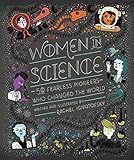
Overview: This beautifully illustrated collection profiles 50 groundbreaking women scientists from ancient times to modern day. The book spans diverse fields including physics, mathematics, medicine, and engineering. Each profile delivers a concise yet compelling snapshot of a pioneer’s life and contributions, making complex achievements accessible to middle-grade readers and beyond. The chronological organization reveals how women have steadily transformed STEM despite systemic barriers.
What Makes It Stand Out: The stunning visual design sets this apart from traditional biographical collections. Every page features original artwork, infographics, and scientific diagrams that captivate visual learners. The diversity of representation is exceptional—featuring scientists of different ethnicities, nationalities, and disciplines rarely highlighted in standard curricula. The format balances inspiration with substance, including key facts about each woman’s major discoveries and the obstacles they overcame.
Value for Money: At just $7.25, this book offers extraordinary value. Comparable anthologies typically retail for $15-20, making this an affordable entry point for building a STEM library. The quality of content and production exceeds its price point, delivering both educational depth and aesthetic appeal that will withstand repeated reading.
Strengths and Weaknesses: Strengths include breathtaking illustrations, broad historical scope, and age-appropriate complexity. The visual storytelling engages reluctant readers while maintaining scientific accuracy. Weaknesses are inherent to the format—each profile is necessarily brief, lacking the narrative depth of single-subject biographies. Some readers may crave more detail about specific scientists.
Bottom Line: An essential addition to any young reader’s collection. It sparks curiosity about STEM careers while celebrating unsung heroines. Perfect for classroom libraries, gifts, or inspiring the next generation of scientists.
2. Rosalind Franklin and the Secret of DNA: A STEM Biography for Curious Kids 8-12 (Women In STEM)
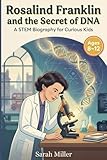
Overview: This focused biography explores Rosalind Franklin’s critical role in discovering DNA’s structure, tailored specifically for ages 8-12. Part of the Women In STEM series, it presents her story with scientific accuracy while remaining accessible to middle-grade readers. The narrative follows Franklin’s journey from curious student to accomplished chemist, emphasizing her meticulous X-ray crystallography work that revealed DNA’s double helix. It thoughtfully addresses the credit controversy with age-appropriate sensitivity, teaching lessons about scientific ethics and recognition.
What Makes It Stand Out: The single-subject approach allows deeper exploration than anthology formats. It dedicates space to explaining crystallography and DNA structure in simple terms, making complex science tangible. The book uniquely confronts historical injustice without oversimplification, helping young readers understand both the science and the human story behind it. Its targeted reading level ensures comprehension without condescension.
Value for Money: Priced at $10.99, this aligns with standard middle-grade nonfiction. While more expensive than broader collections, the depth justifies the cost. It serves as a specialized supplement to general STEM libraries, offering detail that anthologies cannot. For students studying genetics or DNA specifically, it provides focused value unmatched by broader surveys.
Strengths and Weaknesses: Strengths include narrative depth, scientific accuracy, and courageous handling of a complex historical issue. The focused scope creates an engaging story arc. Weaknesses include narrow focus—covering only one scientist—and potential overlap if purchasing multiple books from the series. It works best as part of a diverse collection rather than a standalone.
Bottom Line: Ideal for young readers fascinated by genetics or ready to explore one scientist’s story in depth. A valuable teaching tool for DNA units and discussions about scientific attribution.
3. She Can STEM: 50 Trailblazing Women in Science from Ancient History to Today – Includes hands-on activities exploring Science, Technology, Engineering, and Math (The Kitchen Pantry Scientist)

Overview: This comprehensive collection profiles 50 women scientists while integrating hands-on STEM activities throughout. Spanning from ancient history to contemporary innovators, the book connects biographical stories to practical experiments readers can conduct. As part of The Kitchen Pantry Scientist series, it emphasizes accessible, household-material-based activities that demonstrate scientific principles. Each profile is paired with related experiments, creating an interactive learning experience that bridges historical achievement with modern application.
What Makes It Stand Out: The fusion of biography and experiential learning is unique among these titles. Instead of passive reading, children actively engage with scientific concepts pioneered by these women. The historical breadth—from Hypatia to modern computer scientists—provides unprecedented scope. Activities are thoughtfully matched to each scientist’s field, making abstract concepts concrete through direct experimentation.
Value for Money: At $11.92, this represents strong value for an activity-inclusive book. While pricier than basic anthologies, the added experimental component justifies the premium. Parents and educators gain both a biographical reference and an activity book, eliminating the need for separate purchases. The reusable experiments provide ongoing educational value.
Strengths and Weaknesses: Strengths include interactive format, historical comprehensiveness, and practical application. It transforms role models into tangible learning experiences. Weaknesses involve activity requirements—some experiments need adult supervision or specific materials not universally available. The text-heavy format may appeal less to visual learners compared to illustrated collections.
Bottom Line: Perfect for hands-on learners and homeschooling families. It effectively transforms inspiration into action, making it an invaluable resource for STEM educators seeking integrated curriculum materials.
4. Mae Jemison, First Black Woman in Space: An Astronaut Biography for Kids Ages 8-12 (Women In STEM)
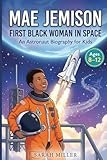
Overview: This inspiring biography chronicles Mae Jemison’s journey to becoming the first African American woman in space, designed for readers ages 8-12. Part of the Women In STEM series, it details her dual passions for science and dance, her medical career with Doctors Without Borders, and her ultimate achievement as a NASA astronaut. The narrative emphasizes perseverance against racial and gender barriers, making her story both historically significant and personally relatable for young readers dreaming big.
What Makes It Stand Out: The book uniquely addresses intersectionality in STEM, showing how Jemison navigated multiple identity barriers. It broadens the definition of scientist by showcasing her diverse interests and career paths. The space exploration narrative is inherently exciting, while her post-NASA work in STEM advocacy extends the story beyond a single achievement. This multidimensional portrayal helps readers see scientists as whole people.
Value for Money: At $10.99, it matches series pricing and offers fair value for a specialized biography. While focused on one figure, the quality of storytelling and historical importance justifies the investment. For space-enthusiast children or those needing diverse role models, it delivers targeted inspiration that broader books might lack.
Strengths and Weaknesses: Strengths include powerful representation, engaging narrative arc, and emphasis on overcoming systemic obstacles. The space program details captivate young readers. Weaknesses include narrow scope—focusing solely on Jemison—and limited scientific depth compared to experiment-inclusive titles. It’s most effective when paired with broader STEM collections.
Bottom Line: A must-have for building diverse, inclusive STEM libraries. Essential reading for young space enthusiasts and critical for demonstrating that STEM fields welcome all identities and backgrounds.
5. The Story of Marie Curie: A STEM Biography with 25 Experiments, Ages 8-12 (Women In STEM)

Overview: This immersive biography of Marie Curie combines detailed life narrative with 25 hands-on experiments, creating a comprehensive learning experience for ages 8-12. Part of the Women In STEM series, it covers Curie’s groundbreaking radioactivity research, her Nobel Prize achievements, and her enduring legacy. The book uniquely integrates scientific experimentation directly into the biographical storyline, allowing readers to replicate principles Curie pioneered using safe, accessible materials. Each experiment connects to a specific period or discovery in her career.
What Makes It Stand Out: No other title here offers such extensive experiential learning—25 experiments provide unmatched hands-on engagement. The experiments demystify complex physics and chemistry concepts through direct observation. The book maintains scientific rigor while ensuring safety, with clear adult supervision guidelines. This approach transforms Curie from historical figure to scientific collaborator, making her discoveries personally relevant.
Value for Money: At $10.99, this represents exceptional value. A standalone experiment book would cost $15-20, making the biography-plus-experiments combination a bargain. The reusable experiments provide ongoing educational return, justifying every penny for families and educators seeking interactive STEM resources.
Strengths and Weaknesses: Strengths include unparalleled hands-on integration, scientific depth, and inspiring personal story. The experiment variety accommodates different interests and skill levels. Weaknesses include safety considerations—some activities require careful adult oversight—and single-scientist focus. The radioactivity theme, while historically central, may limit interdisciplinary appeal.
Bottom Line: The ultimate choice for chemistry and physics enthusiasts. It brilliantly merges biography with laboratory experience, making it indispensable for hands-on learners and science educators seeking immersive curriculum supplements.
6. STEM Super Stars: Women of Today Changing the World

Overview: This collection profiles contemporary women making waves across STEM fields, offering young readers relatable role models from today’s world. The book bridges the gap between historical figures and modern innovators, showcasing diverse scientists, engineers, and technologists actively changing our world through cutting-edge research and discovery.
What Makes It Stand Out: Unlike many historical biographies, this focuses on living pioneers, making careers in STEM feel immediate and achievable. It covers a wide range of disciplines and backgrounds, ensuring every reader finds someone to connect with. The contemporary angle helps children see these paths as real possibilities rather than distant history, featuring women currently breaking barriers.
Value for Money: At $14.99, this anthology delivers multiple stories for the price of a single biography, representing solid value. Comparable individual titles often cost $12-18 each, making this collection economical for broad exposure. The relevance of current role models adds intangible value that extends beyond the pages.
Strengths and Weaknesses: Strengths include diverse representation, contemporary relevance, and inspiration from achievable career paths. It exposes readers to various STEM fields in one volume. Weaknesses: Limited depth per individual due to space constraints, and content may become dated as these careers evolve. Some profiles may resonate more than others depending on reader interests.
Bottom Line: An excellent resource for classrooms and libraries seeking modern STEM representation. Perfect for broadening horizons and showing kids that science heroes are still being made today.
7. Dinosaur Lady: The Daring Discoveries of Mary Anning, the First Paleontologist (Women in Science Biographies, Fossil Books for Kids, Feminist Picture Books, Dinosaur Gifts for Kids)

Overview: This beautifully illustrated picture book brings to life the story of Mary Anning, the 19th-century fossil hunter who revolutionized paleontology. Aimed at young readers, it transforms complex historical and scientific concepts into an engaging narrative about curiosity and perseverance against societal odds.
What Makes It Stand Out: The book captures the remarkable true story of a working-class woman who defied societal norms to become a pioneering scientist. Its stunning illustrations transport readers to the Jurassic Coast, while the narrative emphasizes how Anning’s discoveries shaped our understanding of prehistoric life and extinction, making abstract science tangible.
Value for Money: Priced at $15.92, this hardcover picture book sits in the standard range for quality illustrated biographies. The combination of historical significance, scientific content, and artistic merit justifies the cost. It serves as both an engaging story and an educational resource that grows with the child.
Strengths and Weaknesses: Strengths include gorgeous artwork, a compelling underdog narrative, and introduction to scientific methodology. It champions persistence and challenges gender stereotypes effectively. Weaknesses: The picture book format may limit appeal for older elementary students. Some scientific terminology might require adult explanation for younger readers unfamiliar with paleontology concepts.
Bottom Line: A must-have for dinosaur-loving children and essential for diversifying science history. It successfully makes paleontology accessible while honoring an overlooked scientific heroine.
8. Katherine Johnson and the Math That Launched Astronauts: A Biography for Kids, Ages 8-12 (Women In STEM)
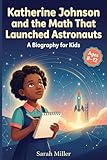
Overview: This middle-grade biography chronicles Katherine Johnson’s pivotal role in NASA’s space program, focusing on the mathematical genius that made manned spaceflight possible. Designed for ages 8-12, it translates complex calculations into an inspiring story of intellect and determination during the civil rights era.
What Makes It Stand Out: The book directly connects abstract mathematics to real-world heroics, showing how Johnson’s calculations were literally lifesavers. It demystifies the “Hidden Figures” story for younger audiences, emphasizing problem-solving and precision while tackling racial and gender barriers in an accessible, age-appropriate manner.
Value for Money: At $10.99, this is one of the more affordable STEM biographies available. The combination of space exploration appeal, mathematical content, and civil rights history delivers exceptional value. Comparable titles often cost 30-50% more, making this an accessible entry point for families and schools.
Strengths and Weaknesses: Strengths include clear explanations of Johnson’s mathematical contributions, historical context about segregation, and inspiration for underrepresented groups in STEM. The narrative makes math exciting and relevant. Weaknesses: Some mathematical concepts may challenge readers at the younger end of the target range. The focus on calculations might not engage all learning styles equally.
Bottom Line: An outstanding choice for young space enthusiasts and aspiring mathematicians. It makes both math and history exciting while celebrating an essential American hero.
9. Shark Lady: The True Story of How Eugenie Clark Became the Ocean’s Most Fearless Scientist (Women in Science Books, Marine Biology for Kids, Shark Gifts)

Overview: This vibrant picture book tells the story of Eugenie Clark, the renowned ichthyologist who revolutionized our understanding of sharks. Through engaging storytelling, it follows her lifelong passion for marine biology and challenges common misconceptions about these misunderstood creatures, inspiring curiosity about ocean life.
What Makes It Stand Out: The book brilliantly counters shark stereotypes while showcasing a fearless female scientist. It combines adventure with conservation, taking readers from Clark’s childhood aquarium visits to her groundbreaking research dives. The narrative emphasizes curiosity over fear, making marine science approachable and exciting for reluctant readers.
Value for Money: At just $7.42, this is exceptional value for a full-color picture book biography. It’s significantly more affordable than most STEM titles while delivering equal educational impact, making it accessible for classrooms and families on budgets who want quality science literature.
Strengths and Weaknesses: Strengths include an empowering message about challenging assumptions, beautiful oceanic illustrations, and introduction to marine conservation. It encourages environmental stewardship and scientific thinking. Weaknesses: Simplified storytelling may leave older readers wanting more detail. The focus on one scientist limits breadth compared to anthology titles covering multiple figures.
Bottom Line: An unbeatable introduction to marine biology for young readers. Its affordable price, engaging story, and conservation message make it essential for budding oceanographers and shark enthusiasts alike.
10. Jane Goodall for Kids: Inspiring Science Adventures with Chimpanzees, Ages 8-12 (Women In STEM)

Overview: This middle-grade biography explores Jane Goodall’s transformative work with chimpanzees in Gombe Stream National Park. Aimed at ages 8-12, it captures her patient observations, groundbreaking discoveries about tool use, and evolution into a global conservation leader, making primatology accessible and exciting.
What Makes It Stand Out: The book uniquely balances scientific discovery with animal welfare advocacy, showing how Goodall’s empathy revolutionized primatology. It includes details about her unconventional methods and ongoing activism, making it relevant for today’s environmentally conscious youth who want to understand how passion drives scientific breakthroughs.
Value for Money: At $10.99, this biography offers solid value, priced similarly to comparable STEM titles. The combination of scientific content, conservation message, and connection to a living legend enhances its worth. Goodall’s continued relevance prevents the content from feeling dated, extending the book’s shelf life.
Strengths and Weaknesses: Strengths include detailed research descriptions, emphasis on ethical science, and inspiration for animal lovers. It demonstrates how patience and observation drive discovery. Weaknesses: May overlap with other widely available Goodall children’s books. Some content about habitat loss could be emotionally heavy for sensitive readers, requiring adult guidance.
Bottom Line: Perfect for young animal enthusiasts and aspiring field researchers. It captures the wonder of scientific discovery while instilling crucial conservation values that remain urgent today.
What Are Science Bio-Graphics and Why They Matter
Science bio-graphics are narrative non-fiction works that use sequential art, illustration, and design to tell the life stories of scientists. Unlike traditional biographies, they leverage the visual language of comics and graphic novels to create an immersive experience. For women in STEM, this format is particularly transformative. It breaks down the “lone genius” myth by showing the human side of scientific discovery—the failed experiments, the societal barriers, the collaborative breakthroughs.
These resources matter because they address a critical timing issue in STEM education. Research shows that girls’ interest in science often peaks in elementary school but drops precipitously in middle school due to cultural messaging and lack of visible role models. Bio-graphics intervene at exactly the right moment, packaging rigorous content in a format that feels contemporary and engaging rather than preachy or academic. They whisper to a third-grader, “She was curious like you,” while showing a visual of a young scientist collecting pond water samples.
The Power of Visual Storytelling in STEM Education
Our brains process visual information 60,000 times faster than text, and we retain 65% of visual content three days later compared to just 10% of written material. This cognitive advantage makes bio-graphics a secret weapon for STEM education. When a child sees a panel-by-panel breakdown of how Chien-Shiung Wu disproved a major physics law, they’re not just reading about parity violation—they’re witnessing the scientific method in action.
Dual coding theory explains why this works so effectively. By presenting information through both visual and verbal channels, bio-graphics reduce cognitive load while increasing comprehension. A struggling reader can grasp the significance of Rosalind Franklin’s X-ray crystallography work because the helical structure of DNA is visually rendered alongside her analytical thought process. This multimodal approach builds scientific literacy across different learning styles and ability levels, making complex fields like quantum mechanics or genetic engineering feel approachable rather than intimidating.
Key Features to Look for in Quality STEM Bio-Graphics
Not every illustrated scientist story deserves space on your bookshelf. High-quality STEM bio-graphics share several non-negotiable features that separate educational gold from flashy distraction.
Scientific Accuracy and Source Transparency
The best publications include extensive back matter: source notes, bibliographies, interviews with scientists, and fact-checking credits. Look for works that cite primary sources like lab notebooks, published papers, or archival letters. This transparency teaches kids that real science is built on evidence, not just exciting stories.
Developmentally Appropriate Complexity
A book for kindergarteners should focus on curiosity and observation skills, perhaps showing a young scientist exploring nature. For middle schoolers, you want nuanced discussions of hypothesis testing, peer review, and ethical dilemmas in research. The language should be sophisticated enough to challenge without overwhelming.
Authentic Representation
Beware of books that tokenize women or present them as exceptional anomalies. Quality bio-graphics situate their subjects within historical and social contexts, showing how systemic barriers affected their work while celebrating their contributions as integral to scientific progress, not separate from it.
Age-Appropriate Content: Matching Complexity to Developmental Stages
Selecting the right bio-graphic means understanding how children’s cognitive abilities and interests evolve. A mismatch can either frustrate a young reader or bore an older one.
Early Elementary (Ages 5-8)
At this stage, focus on books that emphasize wonder, questioning, and hands-on discovery. The scientific content should be embedded in stories about observation and problem-solving. Look for simple narratives that show the scientist as a child, making connections to the reader’s own experience. Complex concepts should be introduced metaphorically—imagine a visual of Barbara McClintock “listening” to corn kernels tell their genetic secrets.
Upper Elementary (Ages 9-11)
These readers can handle multi-layered stories that introduce the scientific method, experimental design, and real-world applications. They’re ready to understand that science is a process, not just a collection of facts. Bio-graphics for this age should include some technical vocabulary with visual context clues, showing how scientists collaborate and build on each other’s work.
Middle School (Ages 12-14)
Middle schoolers crave authenticity and complexity. They want to see scientists grappling with failure, navigating professional politics, and confronting ethical questions. The art can be more sophisticated, and the narratives should include primary source quotes, timelines of scientific discovery, and connections to contemporary research. This is the perfect time to introduce women in cutting-edge fields like synthetic biology or climate modeling.
Representational Diversity: Beyond the Usual Suspects
While Marie Curie and Sally Ride deserve their fame, a truly inclusive library must go deeper. Seek out bio-graphics featuring women from Indigenous communities, women with disabilities, LGBTQ+ scientists, and women from non-Western backgrounds. This diversity isn’t about checking boxes—it reflects the reality that innovation happens everywhere.
Consider the impact of a graphic biography about Dr. Hayat Sindi, a Saudi Arabian medical scientist who pioneered affordable diagnostic tools, or Dr. Temple Grandin, whose autism gives her unique insights into animal behavior and engineering design. These stories teach children that STEM excellence isn’t limited to one demographic or cultural narrative. They also introduce kids to a wider range of scientific fields, from ethnobotany to aerospace engineering to marine archaeology.
Scientific Accuracy and Pedagogical Soundness
The most inspiring bio-graphic is worthless if it gets the science wrong or distorts historical facts. Educational rigor should be your top priority.
Fact-Checking and Expert Review
Reputable publishers collaborate with scientists, historians, and sometimes the subjects themselves. Look for books with forewords by working scientists or extensive acknowledgments of expert reviewers. Some superior titles even include scientist commentary panels that explain concepts in greater depth, like having a virtual mentor guide you through the pages.
Avoiding the “Great (Wo)man” Theory
Quality bio-graphics resist the temptation to portray their subjects as solitary heroes. Instead, they show scientific discovery as a collaborative, incremental process. They acknowledge contemporaries, predecessors, and teams. When discussing Grace Hopper’s computer programming innovations, for instance, a responsible bio-graphic will also show the women of the ENIAC team and the Navy personnel who implemented her work.
Balancing Inspiration with Realism
Kids need to see that failure is part of science. The best bio-graphics show experiments that flopped, papers that were rejected, and ideas that took decades to gain acceptance. This builds resilience and a growth mindset. They also honestly address discrimination without sanitizing it—showing how sexism, racism, and other barriers impacted careers while avoiding victim narratives that might discourage young readers.
Artistic Style and Visual Engagement
The artwork in STEM bio-graphics does more than decorate—it actively participates in teaching. Different styles serve different educational purposes.
Realistic Illustration
Highly detailed, realistic art works well for historical accuracy and showing actual scientific equipment, lab environments, and procedures. This style helps kids visualize what a real research setting looks like, demystifying the professional world of STEM.
Stylized and Cartoon Approaches
More stylized art can make complex emotions and abstract concepts accessible. A cartoon representation of a scientist’s thought process—perhaps showing mathematical equations transforming into visual metaphors—can make intangible ideas concrete for young minds.
Visual Metaphors and Infographics
The most effective bio-graphics integrate infographics, diagrams, and visual metaphors directly into the narrative. A story about Katherine Johnson’s orbital calculations might show numbers literally dancing into planetary orbits, while sidebar graphics break down the math in simple terms. This layered approach lets readers engage with content at their comfort level.
Integration with Curriculum Standards
For educators, alignment with standards isn’t just bureaucratic box-checking—it ensures these resources enhance rather than distract from learning objectives.
Next Generation Science Standards (NGSS)
Quality bio-graphics naturally support NGSS practices like asking questions, analyzing data, and constructing explanations. Look for materials that explicitly map to specific performance expectations. A book about environmental scientist Dr. Wangari Maathai, for instance, should connect to Earth and Human Activity standards while modeling how scientists communicate findings to impact policy.
Common Core ELA Integration
These books are literacy powerhouses, supporting standards for reading informational text, analyzing author’s purpose, and comparing media. The visual elements provide scaffolding for struggling readers while offering sophisticated narrative structures for advanced students to deconstruct.
Social Studies Connections
Many women in STEM bio-graphics situate scientific discovery within historical movements. Stories about scientists during WWII, the Civil Rights Era, or the Space Race provide cross-curricular opportunities, teaching kids that science doesn’t happen in a vacuum—it responds to and shapes society.
The Role of Narrative Structure in Biographical Learning
How a scientist’s story is told matters as much as the story itself. Different narrative approaches unlock different learning outcomes.
Chronological Life Stories
The traditional birth-to-death structure helps kids understand how early experiences shape scientific passions. Seeing a timeline of challenges overcome builds perseverance. However, this approach risks becoming a list of achievements rather than an exploration of scientific thinking.
Problem-Focused Narratives
Some of the most compelling bio-graphics center on a specific scientific puzzle. The story follows the scientist as they frame the question, design experiments, analyze data, and arrive at conclusions. This mirrors the scientific method itself and keeps kids engaged as active problem-solvers rather than passive biography readers.
Thematic Collections
Anthology-style books that group scientists by field or shared challenges can show patterns in scientific progress. A collection about women in astronomy, for example, might span centuries, showing how each built on others’ work, from Caroline Herschel’s comet discoveries to Dr. Sara Seager’s exoplanet research.
Interactive Elements and Hands-On Activities
The best STEM bio-graphics don’t end with the story—they invite readers to become scientists themselves.
Built-In Experiments and Challenges
Look for books that include “try this at home” sidebars with safe, simple experiments related to the scientist’s work. After reading about Ellen Ochoa’s optical systems inventions, a child might build a simple periscope. These activities cement learning and build confidence.
Discussion Prompts and Reflection Questions
Quality publications include questions that prompt critical thinking: “What would you have done differently in this experiment?” or “How did the scientist’s background influence her questions?” These turn solitary reading into collaborative learning experiences.
Digital Extensions and Community Connections
Some bio-graphics offer QR codes linking to virtual lab tours, interviews with contemporary scientists, or citizen science projects. This bridges the gap between the printed page and real-world STEM participation, showing kids that science is a living, breathing endeavor.
Digital vs. Print Formats: Pros and Cons
The format debate isn’t just about preference—it impacts accessibility, engagement, and learning outcomes in measurable ways.
Print Advantages
Physical books offer tactile engagement, freedom from screen distractions, and easier sharing in group settings. They’re collectible, can be annotated, and don’t require devices or internet access. For read-alouds and classroom libraries, print remains the gold standard for fostering community discussion.
Digital Benefits
E-books and interactive apps can include animations of scientific processes, audio clips of scientists speaking, and hyperlinked glossaries. They’re often more accessible for visually impaired readers (with screen readers) and can be updated with new discoveries. Digital formats support reluctant readers with adjustable text size and built-in dictionaries.
Hybrid Approaches
The ideal solution often involves both formats. A child might read the print version deeply, then use the digital companion for simulations and extended research. Some publishers offer bundles, recognizing that different contexts call for different modalities.
Building a Home Library vs. Classroom Collections
Your selection strategy should differ based on whether you’re curating for personal use or institutional purposes.
Home Library Considerations
For home collections, focus on depth over breadth. Choose a few high-quality bio-graphics that align with your child’s specific interests, then expand gradually. Consider books that span multiple reading levels so siblings can share and kids can revisit as they mature. Durability matters less than engagement—let them read their favorites to tatters.
Classroom and School Library Strategies
Educators need diversity and quantity to serve many students. Build a collection that covers various STEM fields, cultural backgrounds, and reading levels. Durability is crucial—look for reinforced bindings and library-quality paper. Consider purchasing classroom sets of particularly powerful titles to support literature circles or interdisciplinary units.
Budget-Friendly Approaches
Quality STEM bio-graphics can be pricey. Look for grants from organizations like the National Science Teaching Association, DonorsChoose projects, or partnerships with local businesses. Many public libraries now offer robust collections, and interlibrary loan can access rare titles. Book swaps with other families or schools also expand access.
Using Bio-Graphics to Spark Deeper Learning
These books are launchpads, not destinations. The real magic happens when they ignite curiosity that extends beyond the final page.
Connecting to Current Research
After reading about a scientist, explore their field’s modern frontiers. A bio-graphic about Dr. Kizzmekia Corbett’s COVID-19 vaccine development naturally leads to discussions about mRNA technology and ongoing vaccine research. Show kids that these aren’t just historical figures—they’re part of living scientific traditions.
Mentorship and Career Exposure
Use these stories to facilitate connections with local women in STEM. Many professionals are eager to Skype into classrooms or host field trips when kids show genuine interest sparked by a bio-graphic. Some schools have created “Scientist of the Month” programs where students read a bio-graphic, then interview a contemporary researcher in that field.
Project-Based Learning Extensions
A class reading about Dr. Mary Anning might conduct a fossil dig simulation. Students studying Dr. Temple Grandin could design more humane livestock handling systems. These projects transform inspiration into application, building the very skills that make scientists successful.
Addressing Common Concerns and Misconceptions
Despite their benefits, some parents and educators hesitate to embrace bio-graphics as serious learning tools. Let’s confront these concerns head-on.
“Aren’t Graphic Novels Just Comic Books?”
This outdated view ignores decades of research on visual literacy. Modern STEM bio-graphics are meticulously researched, often more so than traditional texts because every visual element must be fact-checked. The format doesn’t simplify content—it strategically scaffolds it, making rigorous concepts accessible without diluting them.
“Will Boys Read Books About Women Scientists?”
The answer is a resounding yes—when presented without apology. Boys benefit enormously from seeing women as competent, passionate scientists. It normalizes female expertise and prepares them for diverse workplaces. The key is framing these stories as exciting scientific adventures, not “girl books.” Focus on the science first, the scientist’s gender second.
“What About the Men in STEM?”
Including women doesn’t erase men—it corrects a historical imbalance. Most STEM curricula still overwhelmingly feature male figures. Bio-graphics about women simply provide the missing half of the story. Many excellent books show collaborative relationships between male and female scientists, presenting a more accurate picture of how science actually works.
Creating Your Own Bio-Graphic Projects
The ultimate extension is having students create their own STEM bio-graphics, deepening learning through production, not just consumption.
Research and Source Evaluation
Students learn to distinguish primary from secondary sources, evaluate credibility, and synthesize information. They might interview a local female scientist, creating a primary source themselves. This builds information literacy alongside STEM knowledge.
Scriptwriting and Storyboarding
The narrative challenges force kids to identify key turning points and scientific concepts. How do you explain Dr. Flossie Wong-Staal’s HIV research in six panels? This process builds empathy and deep conceptual understanding as students must think like both scientist and storyteller.
Artistic Choices and Design Thinking
Even non-artists can use digital tools like Canva or simple stick figures to convey ideas. The focus is on clarity and accuracy, not artistic mastery. Students learn that design choices impact meaning—a serious consideration for future scientists who must communicate their work visually.
Long-Term Impact: Inspiring the Next Generation
The true measure of these resources isn’t immediate test scores but the slow cultivation of scientific identity and persistence.
Building STEM Identity
When a child sees themselves reflected in a scientist’s story, they begin to think, “I could do that.” This identity formation is crucial. Research tracking girls who read STEM bio-graphics shows increased science self-efficacy and a greater likelihood of taking advanced science courses in high school.
Fostering Scientific Persistence
Stories of women who overcame obstacles teach grit better than any motivational poster. Kids internalize the message that setbacks are normal, that questions are valuable, and that persistence pays off. These narratives become mental touchstones during their own academic challenges.
Creating Cultural Change
As these books become more common, they shift the cultural narrative. A generation raised seeing diverse STEM heroes will expect diverse STEM workplaces. They’ll question homogenous conference panels and biased research teams. In this way, today’s bio-graphics plant seeds for tomorrow’s institutional transformation.
Frequently Asked Questions
How do I evaluate the scientific accuracy of a bio-graphic without being a scientist myself?
Look for transparency in sourcing. Quality books include extensive bibliographies, lists of expert reviewers, and sometimes even letters from scientists vouching for accuracy. Check if the publisher has a reputation for educational rigor. Read reviews from science educators and organizations like the National Science Teaching Association. When in doubt, cross-reference a few scientific facts with reputable sources like university websites or science museums to gauge reliability.
At what age should I start introducing STEM bio-graphics to my child?
You can begin as early as preschool with simple picture book biographies that emphasize curiosity and observation. True graphic novel-style bio-graphics become impactful around age 6-7, when children can follow sequential art and understand basic narrative structure. The key is matching complexity to interest rather than just age—some five-year-olds will be captivated by a book designed for ten-year-olds if the story is compelling and the visuals are clear.
My daughter loves these books but my son shows no interest. How can I engage him?
Frame the books around the scientific challenge, not the gender of the scientist. Say, “This is an amazing story about someone who solved a mystery in space,” rather than, “This is a book about a woman astronaut.” Choose stories that align with his existing interests—if he loves dinosaurs, find a bio-graphic about a paleontologist like Dr. Mary Anning. Read together and discuss the science, not the gender politics. Your enthusiasm is contagious; if you treat these as exciting adventure stories, he will too.
Are digital bio-graphics as effective as print versions for learning?
Both formats have unique strengths. Print encourages deeper, distraction-free reading and better retention of narrative flow. Digital formats excel at showing dynamic processes—like animations of chemical reactions or orbital mechanics—and offer accessibility features like text-to-speech. The most effective approach is often a hybrid: use print for initial deep reading, then explore digital extensions for interactive simulations and updated content. For struggling readers, digital versions with built-in vocabulary support can be game-changers.
How can teachers justify purchasing these books with limited curriculum time?
STEM bio-graphics are incredibly efficient multitaskers. They simultaneously address ELA informational reading standards, NGSS science practices, and social studies historical context. Use them as “hooks” to introduce units, as independent reading options during literacy blocks, or as mentor texts for teaching narrative non-fiction writing. Many schools have found success using grant funds from organizations that support diversity in STEM or literacy initiatives. They’re also perfect for substitute teacher plans, early finishers, and interdisciplinary project-based learning.
What should I do if a bio-graphic contains outdated scientific information?
Use it as a teachable moment about how science evolves. Discuss with kids why our understanding changes with new evidence. Compare the book’s information with current research, showing them how to find updated sources. Some publishers release revised editions, so check if you have the most recent printing. You can also contact the publisher—many welcome feedback from educators and may address inaccuracies in future printings. This process itself models scientific thinking: questioning, verifying, and updating knowledge.
How many bio-graphics should I buy to create a meaningful collection?
Start with three to five high-quality titles covering different STEM fields and backgrounds. This gives kids choice without overwhelming them. For classroom libraries, aim for at least one book per student in your largest class to enable literature circles. Build gradually, adding 2-3 titles per year. Focus on depth—having multiple books about different scientists in the same field allows kids to compare experiences and see science as a collaborative effort. A curated collection of 15-20 excellent titles is more powerful than 50 mediocre ones.
Can these books help with science anxiety or kids who think they’re “not good at science”?
Absolutely. The narrative format reduces intimidation by embedding science in human stories. Kids see scientists making mistakes, asking questions, and learning from failure. This normalizes the struggle inherent in scientific thinking. Many educators report that students who avoid traditional science texts will eagerly read bio-graphics, building background knowledge and confidence that transfers to other science learning. The key is letting kids self-select books that align with their interests, allowing them to discover that science is about curiosity, not just memorization.
How do I handle difficult topics like discrimination or controversial research in these books?
Approach these topics honestly but developmentally. Quality books present discrimination as a factual barrier the scientist faced, not as a defining characteristic. They show resilience and community support alongside the prejudice. For controversial research (like early eugenics-adjacent work), look for books that provide historical context without excusing harmful practices. Use these moments to discuss scientific ethics and how our understanding of responsible research has evolved. Preview books when possible, and be ready to facilitate conversations that connect historical discrimination to current equity issues in STEM.
Will reading about historical women in STEM make modern science seem less inclusive than it actually is?
Balance is key. Pair historical bios with stories of contemporary scientists working today. This shows both how far we’ve come and that challenges remain. Discuss how modern initiatives are actively working to increase inclusion. Many publishers now feature scientists from the past decade alongside historical figures, creating a continuum of progress. The goal isn’t to discourage kids but to inspire them to be part of the ongoing work to make STEM truly equitable. Frame it as: “These women opened doors; now we get to walk through them and hold them open for others.”