Habits are the invisible architecture of our lives. Every day, we execute hundreds of automatic behaviors—from our morning coffee ritual to how we respond to stress—often without conscious thought. Yet when we decide to change these patterns, we discover a frustrating truth: knowing what to do is infinitely easier than actually doing it. This is why the habit formation genre has exploded, promising to decode the psychology of lasting change. But here’s the reality most readers face: after finishing yet another “life-changing” book, their behaviors remain stubbornly the same.
The difference between a transformative habit book and one that gathers dust isn’t luck—it’s a specific combination of scientific rigor, practical application, and philosophical alignment with how real humans actually live. Whether you’re looking to overhaul your health, boost productivity, or finally stick to that creative practice, understanding what makes habit literature actually work is your first critical step. Let’s explore how to evaluate these resources like an expert and build a personal framework for change that sticks.
Top 10 Non-Fiction Books on Habits
Detailed Product Reviews
1. Tiny Habits: The Small Changes That Change Everything

Overview: This groundbreaking book by BJ Fogg revolutionizes personal development by focusing on microscopic behavior changes rather than overwhelming life overhauls. The core premise centers on making habits so small they’re nearly impossible to fail, building confidence through successive tiny wins that compound into remarkable transformation.
What Makes It Stand Out: Unlike traditional self-help that demands massive willpower, Fogg’s method leverages behavioral science and his “Fogg Behavior Model.” The approach requires identifying existing anchors in your daily routine and attaching infinitesimally small actions to them. The book provides concrete recipes like “After I brush my teeth, I will floss one tooth” that demonstrate the methodology’s elegant simplicity.
Value for Money: At $11.66, this represents exceptional value compared to costly coaching programs or seminars. The principles create lifelong utility, and the research-backed framework prevents the cyclical failure common with more ambitious systems. It’s essentially a permanent behavior-change toolkit for less than the price of two coffees.
Strengths and Weaknesses: Strengths include scientific credibility, immediate applicability, and sustainability. The method works particularly well for building foundational habits. However, those seeking rapid dramatic change may find the pace frustrating. The approach also requires consistent tracking and patience that some readers lack.
Bottom Line: Perfect for anyone who’s struggled with traditional goal-setting. If you’ve abandoned New Year’s resolutions by February, this book provides the missing piece: a system that works with human psychology rather than against it.
2. The Psychology of Money: Timeless lessons on wealth, greed, and happiness

Overview: Morgan Housel’s masterpiece transcends typical finance books by exploring the human behaviors and cognitive biases that truly drive financial outcomes. Rather than focusing on complex formulas, it examines how our relationship with money shapes our decisions, making it accessible to readers regardless of their financial literacy level.
What Makes It Stand Out: The book’s strength lies in its storytelling approach—each lesson unfolds through compelling historical anecdotes and psychological insights. Its compact size makes it ideal for travel, while the universal themes and elegant prose make it a thoughtful gift. It reframes wealth not as a number but as a measure of freedom and control over your time.
Value for Money: Priced at $10.99, it delivers immense value through timeless wisdom that remains relevant across economic cycles. The portability and re-readability enhance its worth, as each chapter stands alone. Compared to dense academic texts or expensive financial advisors, this offers profound insights at a fraction of the cost.
Strengths and Weaknesses: Strengths include engaging writing, practical behavioral insights, and broad accessibility. It’s particularly strong at explaining why smart people make financial mistakes. However, those seeking specific investment strategies or technical analysis will be disappointed. Some stories may feel familiar to avid readers of behavioral economics.
Bottom Line: An essential read for anyone who earns, spends, or invests money—which is everyone. Gift it to graduates, colleagues, or yourself. It’s the rare finance book that prioritizes wisdom over wealth accumulation tactics.
3. The Common Rule: Habits of Purpose for an Age of Distraction

Overview: Justin Whitmel Earley’s book offers a faith-infused framework for cultivating intentional habits amidst digital chaos. Designed for Christians seeking spiritual depth in a fragmented world, it provides eight practical habits rooted in monastic traditions but adapted for modern professionals and families.
What Makes It Stand Out: The book uniquely combines ancient spiritual practices with contemporary challenges like smartphone addiction and work-life imbalance. Its “Common Rule” includes habits such as daily prayer, weekly sabbath, and annual retreats, each explained with theological grounding and practical implementation strategies. The approach addresses soul-level exhaustion that productivity hacks cannot touch.
Value for Money: At $15.91, it’s pricier than secular habit books, but offers distinct value for faith-oriented readers. The spiritual dimension justifies the premium, providing content unavailable in mainstream personal development. It’s less a purchase than an investment in spiritual formation, with group discussion guides enhancing its communal value.
Strengths and Weaknesses: Strengths include deep spiritual insight, practical habit structures, and authentic vulnerability from the author’s personal struggles. It excels at connecting faith to daily rhythms. However, the explicitly Christian framework limits its universal appeal. Non-religious readers may find the theological language alienating, and some habits require significant lifestyle adjustments.
Bottom Line: Ideal for Christians feeling spiritually adrift in the digital age. If you want habits that nurture your soul rather than just checking boxes, this provides a theologically rich, practically sound roadmap. Others should seek secular alternatives.
4. 7 Habits Of Highly Effective People

Overview: Stephen R. Covey’s seminal work remains the gold standard for principle-centered leadership and personal effectiveness. This step-by-step guide presents a holistic framework based on character ethics rather than superficial personality techniques, emphasizing paradigms, principles, and proactive living that have influenced millions worldwide.
What Makes It Stand Out: The book’s unparalleled legacy and comprehensive scope set it apart. At just $3.49, it’s an almost unbelievable value for content that has shaped corporate training and personal development for decades. The seven habits progress from private victory (self-mastery) to public victory (effective relationships), providing a complete maturity continuum that other books merely touch upon.
Value for Money: This price point is unprecedented for a book of this caliber—essentially a 90% discount on transformative wisdom. No other personal development classic offers such accessibility. The investment returns compound across every life domain: career, family, and personal growth. It’s a budget-friendly entry into proven methodology.
Strengths and Weaknesses: Strengths include timeless principles, comprehensive framework, and widespread applicability. The habits are foundational and synergistic. However, the 1989 publication shows its age with dated examples and dense prose that can intimidate modern readers. The depth requires significant study and patience to implement properly.
Bottom Line: A no-brainer purchase at this price. Despite its age, the principles remain irrefutably relevant. Buy it, study it slowly, and revisit it annually. It’s the most cost-effective personal development investment you’ll ever make.
5. Germs Are Not for Sharing (Board Book)

Overview: Part of the award-winning “Best Behavior” series, this sturdy board book introduces toddlers and preschoolers to proper hygiene through simple language and vibrant illustrations. It covers coughing, sneezing, handwashing, and other germ-spreading behaviors in a way young children can understand and practice.
What Makes It Stand Out: The book excels at transforming abstract hygiene concepts into concrete, actionable behaviors for the 2-5 age group. Its colorful, diverse illustrations capture attention while the rhythmic text aids memorization. The inclusion of parent and caregiver tips on each page sets it apart, providing immediate guidance for reinforcing lessons during daily routines like bathroom time or before meals.
Value for Money: At $6.07, it’s reasonably priced for a durable board book that withstands rough handling. The educational value far exceeds the cost, potentially reducing doctor visits and sick days. The tips for adults essentially bundle a parenting guide with a children’s book, offering dual utility that justifies every penny.
Strengths and Weaknesses: Strengths include age-appropriate messaging, engaging visuals, and practical parental support. It successfully makes hygiene a positive topic rather than fear-based. However, as a board book, its content depth is inherently limited. Older children may find it too simplistic, and the physical format shows wear after extensive use. The scope focuses only on germ prevention, not broader health topics.
Bottom Line: Essential for daycare centers, preschool classrooms, and parents of toddlers. If you’re tired of constant colds circulating through your household, this book builds early hygiene habits that protect entire families. It’s prevention in literary form.
6. The High 5 Habit: Take Control of Your Life with One Simple Habit

Overview: This book introduces a deceptively simple psychological practice: giving yourself a high-five in the mirror each morning. Mel Robbins presents this as a transformative tool for building self-worth and breaking negative thought patterns. The premise centers on using physical action to rewire your brain’s relationship with yourself, making it accessible for readers intimidated by complex self-help systems.
What Makes It Stand Out: Unlike habit books demanding extensive tracking systems, The High 5 Habit requires just seconds daily. Robbins anchors the practice in neuroscience research about self-image and mirror neurons. The method addresses the root of many failed habit attempts: lack of self-trust. Her conversational, empathetic writing style makes scientific concepts digestible, while personal anecdotes demonstrate real-world application across various life challenges.
Value for Money: At $10.99, this is the most affordable title in this collection. You’re purchasing a single, actionable technique rather than a sprawling framework. For readers overwhelmed by complexity, the ROI is immediate—no apps, journals, or equipment needed. Compared to therapy or coaching, it’s a minimal investment for a tool that targets self-sabotage directly. The Kindle version often drops below $8, making it an even smarter buy.
Strengths and Weaknesses: Strengths:
- Immediately actionable with no learning curve
- Psychologically grounded in mirror neuron research
- Addresses emotional barriers that block other habits
- Excellent for building foundational self-esteem Weaknesses:
- Single-habit focus may feel limited for advanced readers
- Gimmicky premise might deter skeptics
- Requires genuine self-confrontation that some may resist
- Less comprehensive than systemic habit frameworks
Bottom Line: Perfect for self-help beginners or anyone whose inner critic sabotages progress. While not a complete life overhaul system, it’s a powerful, affordable starting point for rebuilding your relationship with yourself.
7. Read Your Mind: Proven Habits for Success from the World’s Greatest Mentalist
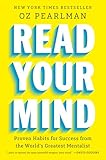
Overview: Authored by renowned mentalist Lior Suchard, this book translates psychological performance techniques into everyday success habits. Drawing from his experience reading thoughts and influencing decisions on stage, Suchard reveals how perception, focus, and mental agility can be trained. The content bridges entertainment psychology with practical self-improvement for business and personal life.
What Makes It Stand Out: Suchard offers a rare perspective from the world of mentalism, making abstract psychological concepts concrete through memorable demonstrations. The book excels at teaching readers to observe micro-habits in themselves and others, enhancing communication and decision-making. His “mind-reading” framework actually decodes body language, pattern recognition, and cognitive biases—skills rarely covered in traditional habit literature.
Value for Money: Priced at $21.00, this sits in the mid-range but delivers unique value. You’re paying for proprietary techniques not found in generic habit books. For professionals in sales, negotiation, or leadership, the communication insights alone justify the cost. However, general readers seeking simple habit tracking might find better ROI elsewhere. The hardcover’s production quality matches the price point.
Strengths and Weaknesses: Strengths:
- Fresh perspective from performance psychology
- Highly practical for social and professional interactions
- Engaging writing with memorable examples
- Develops observational skills that compound over time Weaknesses:
- Niche appeal may not suit all readers
- Techniques require practice and social context to master
- Less focus on personal productivity habits
- Some methods feel performative rather than authentic
Bottom Line: Ideal for professionals needing an edge in communication and those fascinated by psychology’s applied side. Skip if you want a straightforward morning routine book—this is about understanding human behavior, not just tracking habits.
8. The 7 Habits of Highly Effective People: 30th Anniversary Edition (The Covey Habits Series)

Overview: Stephen Covey’s seminal work needs little introduction, but this anniversary edition refreshes the timeless framework for modern readers. The seven habits progress from personal victory (self-mastery) to public victory (collaboration), grounded in principle-centered living. This edition includes updated examples and forewords while preserving the original’s integrity and depth.
What Makes It Stand Out: No other habit book matches this one’s philosophical foundation. Covey’s “character ethic” approach contrasts sharply with quick-fix culture, demanding internal transformation before external results. The habits build sequentially, creating a coherent life philosophy rather than a loose collection of tips. The 30th anniversary edition’s restored content and modern annotations make classic concepts like “sharpen the saw” and “begin with the end in mind” resonate with contemporary challenges.
Value for Money: At $16.89, you’re accessing decades of validated wisdom for less than most new hardcovers. This edition’s enhancements justify purchasing even if you own an older version. Compared to fragmented modern advice, this integrated system prevents costly trial-and-error. Many corporations buy it in bulk, but the individual price remains accessible for a book that functions as a lifelong reference.
Strengths and Weaknesses: Strengths:
- Comprehensive, principle-based framework
- Proven across millions of readers and 30+ years
- Encourages character development over technique
- Excellent for leadership and family systems Weaknesses:
- Dense and requires serious study commitment
- Can feel dated despite anniversary updates
- Religious undertones may not resonate with all
- Slower results than tactical habit books
Bottom Line: Essential reading for anyone building a life philosophy, not just checking boxes. Demands patience but rewards with permanent paradigm shifts. The best choice for leaders, parents, and those tired of superficial self-help.
9. [By James Clear] Atomic Habits: An Easy & Proven Way to Build Good Habits & Break Bad Ones Hardcover - Best Selling Book By [James Clear] (Story Based on |Business Processes & Infrastructure|)
![[By James Clear] Atomic Habits: An Easy & Proven Way to Build Good Habits & Break Bad Ones Hardcover - Best Selling Book By [James Clear] (Story Based on |Business Processes & Infrastructure|)](https://m.media-amazon.com/images/I/41Ar9bEZBPL._SL160_.jpg)
Overview: James Clear’s blockbuster distills habit formation into four simple laws: make it obvious, attractive, easy, and satisfying. The book’s core thesis is that tiny 1% improvements compound into remarkable results. Through scientific research and compelling stories, Clear provides a systematic approach to redesigning your environment and identity to support automatic behavior change.
What Makes It Stand Out: Atomic Habits excels at making behavioral science actionable. Clear’s “habit stacking” and “environment design” techniques are immediately implementable. The book’s strength lies in its focus on systems over goals, addressing why willpower fails. His two-minute rule and identity-based habits reframe success from outcome-driven to process-driven, creating sustainable change. The sheer volume of research cited lends credibility rarely matched in the genre.
Value for Money: At $22.97, this is the priciest option, but its bestseller status reflects market validation. You’re paying for a meticulously researched, comprehensive system with free companion resources. The hardcover’s durability suits frequent reference. For readers who’ve struggled with other methods, the investment often pays for itself through first successful habit adoption. However, the premium price lacks justification if you won’t implement the tracking systems.
Strengths and Weaknesses: Strengths:
- Exceptionally clear, actionable framework
- Strong scientific backing with 60+ pages of citations
- Applicable to any behavior change scenario
- Companion resources enhance implementation Weaknesses:
- Hype may create unrealistic expectations
- Requires consistent tracking that some find tedious
- Less emphasis on emotional/psychological barriers
- Can feel repetitive if familiar with behavioral economics
Bottom Line: The best all-around choice for readers wanting a complete, research-backed system. Worth the premium if you’re committed to implementation. If you just want inspiration, cheaper options suffice. This is a practical manual, not motivational fluff.
10. High Performance Habits: How Extraordinary People Become That Way

Overview: Brendon Burchard’s work emerges from a decade of coaching high achievers and original research with over 2 million participants. The book identifies six deliberate habits that correlate with sustained success: clarity, energy, necessity, productivity, influence, and courage. Unlike books targeting average improvement, this focuses on exceptional performance across career, health, and relationships.
What Makes It Stand Out: Burchard’s research base is unparalleled in this category, drawn from actual high performers rather than theory. The book’s “high performance planner” integration bridges reading and doing. His emphasis on “performance necessity”—linking habits to service and purpose—creates motivation deeper than self-interest. The writing balances ambition with sustainability, addressing burnout that plagues high achievers.
Value for Money: At $13.10, this offers extraordinary value for research-driven content. You’re getting peer-level insights typically reserved for expensive masterminds. The strategies scale from corporate executives to entrepreneurs. While less known than Atomic Habits, its specificity for ambitious individuals justifies the cost. The included assessments add diagnostic value competitors lack.
Strengths and Weaknesses: Strengths:
- Based on original research with high performers
- Addresses energy management and burnout prevention
- Excellent for leadership and team application
- Includes practical assessments and planners Weaknesses:
- Demands high initial effort and self-honesty
- May overwhelm those seeking simple lifestyle tweaks
- Less effective for casual readers not pursuing excellence
- Some concepts require team or community support
Bottom Line: Tailor-made for ambitious professionals and entrepreneurs ready to operate at the highest level. Not a casual read—it’s a performance system. If you’re serious about exceptional achievement, this underpriced gem delivers disproportionate value. Skip if you’re content with incremental changes.
What Separates Transformative Habit Books from Shelf Decor
The self-improvement aisle is littered with promises of overnight transformation, but genuine behavior change operates on different principles entirely. Books that genuinely work share common DNA: they respect your intelligence while acknowledging your humanity. They don’t just tell you what successful people do—they explain the underlying mechanisms that make those actions stick, then provide scaffolding for you to adapt those principles to your messy, unique life.
The Science vs. Anecdote Balance
Effective habit literature walks a tightrope between peer-reviewed research and relatable storytelling. A book heavy on anecdotes but light on evidence might inspire you temporarily, but without understanding the neurological and psychological principles at play, you’ll struggle when motivation fades. Conversely, a text drowning in academic citations without practical translation feels like homework and rarely translates to action. The sweet spot? Books that explain the dopamine reward loop or the role of the basal ganglia in plain language, then immediately show you how to apply that knowledge to your 3 PM snacking habit.
Look for authors who cite primary research from behavioral psychology, neuroscience, or longitudinal studies on behavior change. But more importantly, check whether they translate that research into “if-then” scenarios you can actually implement. A red flag is when studies are name-dropped without explanation of their methodology or limitations. The best books will tell you not just that something works, but why it works, when it works, and crucially, when it doesn’t.
Actionability: The Bridge Between Knowledge and Change
A book’s value is measured not in pages read but in behaviors changed. Transformative habit books treat implementation as a design challenge, not an afterthought. They provide clear, immediate actions you can take within 24 hours of reading. This might look like specific sentence stems for journaling, exact environmental tweaks for your workspace, or a 2-minute version of a larger habit to start with.
The structure itself often reveals a book’s commitment to action. Does each chapter end with reflection questions? Are there worksheets or mental models you can immediately apply? Does the author anticipate your resistance and provide troubleshooting frameworks? Books that work understand that insight without implementation is just intellectual entertainment. They build in accountability mechanisms, even if it’s just a personal commitment contract you sign with yourself.
The Psychology Behind Why Habit Formation Books Work
Understanding the mental machinery behind habits isn’t just academic—it’s the difference between forcing yourself to the gym and wanting to go. The most effective books don’t just give you a to-do list; they reprogram your relationship with change itself.
Dopamine Loops and Reward Systems
Your brain is a prediction machine constantly seeking reliable rewards. Books that leverage this understanding teach you to hijack your own neural pathways for good. They explain how variable rewards create addiction but also how consistent, immediate rewards build sustainable habits. The key is learning to manufacture your own dopamine hits that reinforce positive behaviors rather than destructive ones.
Effective literature will guide you to identify your personal reward currency—not everyone is motivated by the same things. For some, it’s visible progress tracking; for others, it’s social accountability or immediate sensory pleasure. The books that work help you run experiments to discover what actually registers in your brain’s reward center, then show you how to attach those rewards to behaviors you want to automate.
Identity-Based Change vs. Outcome-Based Goals
Perhaps the most profound shift in modern habit psychology is the move from “I want to lose 20 pounds” to “I am a healthy person.” Books that understand this distinction don’t just help you set goals—they help you reconstruct your self-concept. This is psychologically powerful because identity-based habits don’t require willpower; they’re simply expressions of who you believe you are.
The best books provide frameworks for shifting your identity narratives gradually. They recognize that you can’t just declare “I’m a writer” and magically write daily. Instead, they offer evidence-gathering processes: small, consistent actions that accumulate proof of your new identity. Look for books that include identity rehearsal exercises, language pattern shifts, and strategies for handling the cognitive dissonance when your old identity fights back.
Key Features to Evaluate Before Purchasing Any Habit Book
With thousands of titles competing for your attention and money, developing a critical evaluation framework saves you both. Think of this as your personal vetting system for separating substance from snake oil.
Research Citations and Methodology
Flip to the back of the book before you buy. A robust bibliography is a good start, but depth matters more than quantity. Check whether sources are primary research (original studies) or secondary (someone else’s interpretation). Are the studies recent? Do they come from peer-reviewed journals? More importantly, does the author explain the methodology in accessible terms? A book that mentions “a study” without explaining who was studied, for how long, and under what conditions is waving red flags.
The gold standard is when authors disclose the limitations of the research they’re citing. Science is provisional, and honest writers acknowledge contradictory findings or contexts where their preferred strategies might fail. This intellectual humility is actually a strength—it prepares you for real-world complexity.
Case Study Diversity
Beware of books that draw exclusively from Silicon Valley executives or professional athletes. While these stories can be inspiring, they often lack relevance for single parents, shift workers, or people with chronic health conditions. Transformative books showcase habit change across different ages, socioeconomic backgrounds, cultures, and cognitive styles.
Look for case studies that include failure and backsliding, not just triumph. Real habit change is messy, nonlinear, and context-dependent. Books that acknowledge this give you tools for resilience, not just launch sequences. The diversity of examples also helps you pattern-match principles across situations, making the core concepts more transferable to your own life.
Implementation Complexity
Some books offer elegant, simple frameworks. Others provide sophisticated, multi-layered systems. Neither is inherently better—the right complexity matches your current capacity. If you’re overwhelmed and looking for your first win, a book requiring elaborate tracking systems and weekly reviews will fail you. If you’re a systems thinker who loves optimization, overly simplistic advice will feel patronizing.
Evaluate your own “implementation budget”—the time, energy, and attention you can realistically devote to habit change right now. Then look for books that respect that budget. The best authors offer modular approaches: start here with the 5-minute version, then optionally layer on these advanced tactics as you gain momentum.
Different Philosophical Approaches to Habit Building
Not all habit formation strategies are created equal because not all humans are created equal. Understanding different philosophical foundations helps you choose an approach that resonates with your temperament and lifestyle.
The Micro-Habit Revolution
This approach operates on the principle that change is best achieved through actions so small they feel almost ridiculous. The philosophy here is psychological stealth: bypass resistance by making the habit too easy to say no to. Books in this category focus on consistency over intensity, helping you build the identity of “someone who shows up” before worrying about performance.
The strength lies in its accessibility and its respect for willpower limitations. The potential weakness? Staying in the micro-habit phase too long without strategic escalation. Effective books using this approach include clear graduation criteria—when and how to expand your habit once it’s automatic at the minimal level.
Environmental Design Strategies
This philosophy argues that willpower is unreliable and that your environment should do the heavy lifting. Books taking this approach treat your physical and digital spaces as the primary levers of behavior change. They teach you to redesign your kitchen for healthy eating, your phone for focus, and your social circles for accountability.
The power here is in its recognition that humans are context-dependent creatures. The challenge? It requires more upfront effort and sometimes financial investment. The best books provide low-cost, high-impact environmental tweaks and help you think like a choice architect for your own life.
Mindfulness and Intention-Based Methods
Drawing from contemplative traditions, this approach emphasizes awareness as the foundation of change. Before building new habits, these books guide you to dismantle automatic pilot mode and develop meta-cognition about your existing patterns. They argue that you can’t change what you can’t see.
This philosophy excels at addressing emotional and stress-based habits that environmental tweaks alone can’t fix. However, it requires patience and comfort with introspection. Look for books that balance meditation exercises with practical habit replacement strategies, preventing the common pitfall of awareness without action.
Red Flags That Signal a Book Won’t Deliver Results
Learning to spot warning signs early protects your time and prevents discouragement. The habit formation space attracts well-meaning amateurs and opportunistic marketers alongside legitimate experts.
Over-Promising and Quick-Fix Language
Phrases like “transform your life in 30 days” or “the secret to effortless change” reveal a fundamental misunderstanding of how behavior actually evolves. Real habit formation is fractal: some changes happen quickly, others take months or years, and most require periodic renewal. Books that acknowledge this temporal diversity are more trustworthy.
Be especially wary of language that pathologizes normal struggle. If a book implies that failure means you’re broken rather than that your system needs adjustment, it’s selling shame, not solutions. Transformative books normalize setbacks as data, not character flaws.
Lack of Personalization Frameworks
No habit works universally. Books that present their method as the only way without providing modification guidelines are essentially asking you to contort yourself to fit their system. This is backwards. The best books include “if this, then that” decision trees: if you have ADHD, try this adaptation; if you work night shifts, modify this way; if you hate tracking, focus on this instead.
Look for authors who explicitly state where their approach might not apply and what to do instead. This intellectual honesty is rare but invaluable. It shows they respect your autonomy and understand that sustainable change must be co-designed with your life, not imposed upon it.
How to Match a Habit Book to Your Learning Style
A book that works brilliantly for your detail-oriented friend might paralyze you with analysis. Understanding your cognitive preferences helps you choose a resource you’ll actually use, not just admire.
Analytical vs. Intuitive Learners
Analytical learners thrive on frameworks, taxonomies, and step-by-step processes. They want to understand the system before implementing it. If this is you, look for books with clear models, visual diagrams, and logical progression. You want authors who define terms precisely and build arguments methodically.
Intuitive learners, by contrast, learn through stories, metaphors, and big-picture principles. They prefer to grasp the essence first, then figure out details through experimentation. Books rich in narrative, case studies, and pattern recognition will resonate more than those heavy on academic structure. The key is recognizing which camp you fall into and choosing accordingly.
Visual and Kinesthetic Elements
Even within text-based books, some authors incorporate visual thinking tools: habit loops diagrams, decision matrices, or progress tracking templates. If you’re a visual learner, these features aren’t just nice-to-have—they’re essential for comprehension. Check the table of contents and sample pages for these elements.
Kinesthetic learners need to do while reading. Books that include exercises, reflection prompts, or physical experiments cater to this learning style. A book that invites you to stand up, rearrange your environment, or practice a technique immediately will be far more effective than one that keeps you passively reading.
The Role of Habit Tracking and Measurement Systems
What gets measured gets managed, but what gets over-measured creates anxiety. The best habit books help you find your personal Goldilocks zone of tracking.
Digital vs. Analog Tracking Methods
Digital tools offer convenience, automation, and rich data visualization. They can remind you, celebrate streaks, and reveal patterns you’d never notice manually. But they also create dependency and can turn habit formation into a video game where you’re chasing metrics instead of genuine change.
Analog methods—paper journals, checkmarks on a calendar, physical tokens—provide tactile satisfaction and reduce digital overwhelm. They force intentionality and create visible artifacts of progress. Books that acknowledge both approaches and help you choose based on your tech tolerance and habit type demonstrate nuance. The best strategy might be hybrid: digital for complex habits, analog for foundational ones.
The Danger of Over-Quantification
Tracking can become its own compulsive habit, divorced from original intentions. Effective books warn against this explicitly. They teach you to track leading indicators (process) rather than just lagging indicators (outcomes), but also when to stop tracking altogether. Once a habit is truly automatic, continued monitoring can actually undermine it by keeping it in conscious thought.
Look for books that include “graduation protocols”—clear signals that it’s time to reduce or eliminate tracking. They should also address what to do when tracking becomes a source of shame rather than motivation. The goal is data-informed living, not data-driven anxiety.
Beyond Individual Habits: Systems Thinking
Isolated habit changes rarely stick because behaviors exist in interconnected systems. Books that work address this complexity head-on.
Habit Stacking and Sequencing
This concept involves linking new habits to existing automatic behaviors, creating a chain reaction. Books that excel here don’t just tell you to “stack habits”—they provide principles for sequencing. Which habits make good anchors? How do you order habits for maximum energy efficiency? What do you do when your morning routine gets disrupted?
The best books treat habit stacking as a design problem with constraints: time, willpower, and context. They help you map your current habit landscape, identify the most stable anchors, and engineer chains that make sense for your specific life architecture.
Keystone Habits That Transform Everything
Some habits have disproportionate impact, creating ripple effects across multiple life domains. Books that identify these “keystone habits”—like sleep optimization, regular exercise, or daily reflection—help you focus limited willpower where it matters most. They explain the mechanisms: how exercise improves executive function which then makes other habit changes easier, or how consistent sleep regulates emotional regulation.
Crucially, effective books don’t just list keystone habits; they help you identify which one would be most impactful for you right now. They provide diagnostic questions and prioritization frameworks, recognizing that the same keystone won’t unlock everyone’s transformation.
Cultural and Lifestyle Considerations in Habit Literature
A habit system designed for a single, affluent tech worker in Silicon Valley will fail a working parent in a completely different context. Books that work acknowledge and bridge these gaps.
One-Size-Fits-All Pitfalls
Be skeptical of books that assume unlimited autonomy over your schedule, environment, and resources. They might suggest elaborate morning routines that are impossible with young children, or environmental redesigns that violate rental agreements. Transformative books include “constraint innovation” sections—strategies for when you lack time, money, space, or support.
They also recognize cultural differences in concepts like self-discipline, community accountability, and even what constitutes a “good” habit. A book that works will help you adapt its principles to your cultural values rather than asking you to adopt a foreign value system.
Adapting Principles to Your Circumstances
The best books function as translation layers. They provide core principles that are robust across contexts, then show you how to apply them given your specific constraints. This might include habit templates for shift workers, strategies for neurodivergent thinkers, or approaches for people living in multigenerational households.
Look for authors who share examples from varied socioeconomic backgrounds, family structures, and geographic locations. They should explicitly address adaptation rather than implying you should just “try harder” to fit their mold.
The Implementation Gap: Why Reading Isn’t Enough
Consuming information feels like progress, but it’s a dangerous illusion. Books that work treat this implementation gap as the central problem to solve.
The 48-Hour Rule for Taking Action
The most effective habit books build in urgency. They argue that if you don’t take some concrete action within 48 hours of reading a concept, you likely never will. These books don’t just suggest this—they structure the reading experience around it. Each chapter might end with a “do this now” prompt that’s small enough to execute immediately but significant enough to create momentum.
This principle recognizes that motivation decays exponentially. The longer you wait to act, the more your brain’s novelty-seeking circuits move on to the next shiny object. Books that work are designed to be used in real-time, not just consumed and filed away.
Creating Your Habit Experiment Protocol
Rather than presenting their method as gospel, transformative books frame habit change as a personal experiment. They teach you to form hypotheses (“I think exercising at 6 AM will work better than after work”), design small tests, collect data, and iterate. This scientific mindset transforms failure from a character judgment into useful information.
Look for books that include experiment design templates. They should teach you to identify variables, control for confounding factors, and know when you’ve collected enough data to make a decision. This approach builds self-trust and adaptability, the ultimate meta-habits.
Advanced Concepts in Modern Habit Research
Once you’ve mastered the basics, sophisticated books introduce nuanced concepts that explain why some habits stick while others dissolve.
The Compound Effect in Behavior Change
Small actions, repeated consistently, create exponential rather than linear results. But the math only works if the habit is truly consistent and the time horizon is long enough. Books that understand compound behavior change explain the “plateau of latent potential”—that frustrating period where you’re doing the work but seeing no results, right before the breakthrough.
They prepare you for this desert of apparent stagnation and provide mental models to persist through it. They also warn against the impatience that makes people abandon perfectly good habits just before they compound. This long-term perspective is what separates fad-chasers from genuine transformers.
Friction Reduction and Habit Design
Every habit has friction points—moments of resistance that can derail you. Advanced books teach you to conduct a “friction audit” of your desired habit, identifying each point of resistance. Then they provide specific strategies: automation, environmental design, batching, or temptation bundling.
The sophistication comes in recognizing that some friction is actually protective. You want friction between you and addictive behaviors, even while reducing it for beneficial ones. Books that work help you distinguish helpful from harmful friction and design your environment accordingly.
How to Build a Personal Habit Curriculum
No single book contains all the answers. The most sophisticated approach is curating your own education, layering concepts from multiple sources.
Layering Concepts from Multiple Sources
Think of habit formation like learning a musical instrument: you need theory, technique, repertoire, and performance practice from different teachers. Similarly, you might use one book for its scientific foundation, another for its implementation system, and a third for its troubleshooting framework. Books that acknowledge this reality often include “further reading” sections that complement rather than just promote their own work.
The key is sequencing: master one core framework before adding complexity. A book that works will tell you which of its concepts are foundational and which are advanced optimizations. It respects your cognitive load and provides a clear learning path.
Avoiding Contradiction Confusion
Different books will inevitably contradict each other. One preaches morning routines; another champions habit flexibility. One says track everything; another says track nothing. This can lead to paralysis. Transformative books anticipate this and provide meta-frameworks for resolving contradictions.
They teach you to ask: “Under what conditions would this advice be true? What are the underlying principles both approaches share?” This develops your critical thinking and helps you synthesize a personalized approach rather than blindly following conflicting gurus.
The Community and Accountability Factor
Habits don’t form in a vacuum. The social dimension of behavior change is powerful but often underexplored in individualistic Western self-help literature.
Solo Practice vs. Group Implementation
Some habits are best built alone (introspection practices), while others thrive on social energy (exercise). Books that work help you identify which is which. They provide frameworks for deciding when to go solo and when to enlist others. For group habits, they offer specific strategies for finding compatible partners, setting clear agreements, and handling the inevitable social friction.
They also address the dark side of social accountability: shame, comparison, and performing for others rather than genuine self-improvement. The best books teach you to leverage social dynamics without becoming dependent on external validation.
Finding Your Habit-Building Tribe
Beyond individual accountability partners, some books explore the concept of habit communities—groups united around shared behavior change goals. They analyze what makes these communities effective (shared language, visible progress, norm-setting) and what makes them toxic (dogmatism, comparison culture, guru worship).
Look for books that guide you in either finding or creating your own micro-community. They should provide conversation starters, shared challenge frameworks, and protocols for giving and receiving feedback that builds rather than erodes self-efficacy.
Measuring ROI: When a Habit Book Is Actually Working
How do you know if a habit book is delivering value? Without clear metrics, you might waste months on a framework that doesn’t suit you.
Short-Term Wins vs. Long-Term Transformation
Effective books help you distinguish between these two types of progress. Short-term wins (checking off 7 days in a row) build momentum but can be deceptive. Long-term transformation (fundamental identity shift) is the real goal but takes months to manifest. Books that work include both types of metrics and explain their relationship.
They also warn against “success theater”—performing habits for tracking’s sake while missing the deeper point. A meditation habit that you track religiously but practice distractedly isn’t working, even if the data looks perfect. The best books teach you to measure quality, not just quantity.
Knowing When to Pivot Strategies
A hidden sign of a great habit book is that it teaches you when to stop using its methods. It provides clear signals that a strategy isn’t working for you and gives you permission to pivot without guilt. This might include time-based evaluation checkpoints (“If you see no improvement after 6 weeks, try X instead”) or diagnostic questions to identify misalignment.
This meta-skill—knowing when to quit a strategy—is as important as knowing how to start one. It prevents the sunk cost fallacy that keeps people trapped in ineffective approaches.
Building Your Own Critical Lens for Habit Literature
Ultimately, you need to become your own expert. The goal isn’t to find the perfect book but to develop a personal philosophy of behavior change.
Questioning Authority While Remaining Open
The best books encourage healthy skepticism. They want you to test their claims, not worship their author. They include “try this and see for yourself” invitations rather than “trust me, I’m an expert” demands. This creates a partnership rather than a dependency.
Develop the habit of asking any book: “What would need to be true for this to work? What are the hidden assumptions? Where are the gaps in the evidence?” Books that survive this scrutiny are worth your time. Those that crumble under questioning were never robust enough to begin with.
The Evolution of Your Personal Habit Philosophy
Your approach to habit formation should evolve as you do. What works at 25 might not work at 45. What works during stability might fail during crisis. Transformative books acknowledge this evolution and provide frameworks for periodic reassessment.
They treat habit formation as a lifelong practice, not a one-time fix. The final chapter shouldn’t feel like an ending but like a commencement—preparing you to continue the work with or without the book in hand. This is the ultimate sign of a book that works: it makes itself unnecessary.
Frequently Asked Questions
How long should I realistically expect to wait before seeing results from implementing a habit book’s strategies?
Most people experience initial momentum within 1-2 weeks, but genuine identity-level change typically takes 2-4 months of consistent practice. The plateau of latent potential—where you’re working hard but seeing minimal visible progress—usually occurs around weeks 3-8. This is normal and expected. Measure success by process adherence (are you doing the habit?) rather than outcome changes (have you achieved the goal?) during this period.
Can I combine frameworks from different habit books, or should I stick to one system?
You can absolutely combine frameworks, but sequence matters. Master one foundational system completely before layering in elements from another. Think of it like learning multiple languages—get fluent in one first to avoid confusion. Start with the book whose philosophy resonates most deeply, implement it for at least 90 days, then selectively add complementary techniques from other sources. Always prioritize coherence over complexity.
What if I have ADHD, autism, or other neurodivergent traits? Will standard habit books work for me?
Many mainstream habit books assume neurotypical executive function and dopamine regulation. Look for books that explicitly address neurodivergence or that emphasize environmental design and external scaffolding over internal willpower. The key is finding frameworks that work with your neurological wiring rather than against it. Books focusing on hyperbolic discounting, temptation bundling, and friction reduction tend to be more neurodivergent-friendly.
How do I prevent habit tracking from becoming an obsessive, anxiety-producing behavior?
Set clear “tracking exit criteria” from the start. Decide in advance that you’ll stop daily tracking once a habit reaches 90% consistency for 30 days, or after 66 days total. Use tracking as a temporary scaffolding tool, not a permanent crutch. If you notice anxiety spikes around breaking streaks, switch to binary tracking (done/not done) instead of detailed metrics, or track weekly averages instead of daily perfection.
Is it better to change one habit at a time or overhaul multiple areas simultaneously?
For most people, focusing on one keystone habit creates positive spillover effects that make subsequent changes easier. However, some habits (like exercise and nutrition) have synergistic effects when paired. The optimal approach is to identify one foundational habit that makes everything else easier, master it until it’s automatic (usually 2-3 months), then add a second habit while maintaining the first. Avoid overhauling more than 2-3 habits simultaneously unless they’re tiny micro-habits requiring minimal willpower.
How do I handle habit slippage when life gets chaotic—travel, illness, family crises?
Effective books include “resilience protocols” for life disruptions. The key is having a “minimum viable habit”—the smallest version you’ll maintain even in crisis. For exercise, this might be 5 minutes of stretching instead of your full workout. The goal is preventing complete dormancy, which makes restarting much harder. Books that work also teach you to view disruptions as experiments in habit robustness, not personal failures.
What’s the difference between a habit and a routine, and why does it matter?
A habit is an automatic behavior triggered by a contextual cue with minimal conscious thought (brushing teeth after breakfast). A routine is a deliberate sequence of actions requiring active attention (your morning skincare regimen). Understanding this distinction matters because you build habits to conserve willpower for important routines. Books that confuse the two often give advice that works for routines but fails for true habit automation.
How much should I rely on accountability partners vs. building internal motivation?
External accountability is excellent for habit initiation, but over-reliance can undermine internalization. The optimal pattern is: use accountability to establish consistency for the first 30-60 days, then gradually shift to internal tracking and self-monitoring. If you find you can’t maintain a habit without external check-ins after 90 days, the habit may not align with your authentic values or identity. Books that work teach you to use accountability as scaffolding, not a permanent foundation.
Are expensive habit journals, apps, or courses necessary for success?
Absolutely not. The most effective habit change can be tracked with a free calendar app or a notebook. Expensive tools can sometimes create a false sense of progress (you’ve invested money, so you feel committed without actually doing the habit). However, if a particular tool’s design genuinely reduces friction for your learning style, it can be worth the investment. Books that work emphasize principles over products and provide low-cost alternatives to any recommended tools.
How do I know when it’s time to stop reading about habits and just start doing?
Follow the 3-book rule: read three high-quality books on habit formation, implement their strategies for 6 months, and only return to new literature if you’re genuinely stuck. Reading beyond this creates diminishing returns and becomes procrastination disguised as productivity. The best habit books will actually tell you this explicitly—encouraging you to close the book and take action. If you find yourself constantly seeking “the perfect system,” recognize this as resistance and commit to working with what you already know for a set period before consuming more information.