Understanding the complex dance of power, ideology, and near-catastrophe that defined the Cold War isn’t just a history lesson—it’s essential navigation training for today’s turbulent geopolitical seas. The echoes of that decades-long standoff reverberate in current conflicts, diplomatic strategies, and the very structure of international alliances. As tensions rise in new arenas, the demand for genuine insight into how superpowers managed (and nearly mismanaged) global stability has never been sharper. Yet, walking into a bookstore or scrolling online, you’re often met with overwhelming lists promising “the best” titles, leaving you more confused than enlightened. How do you cut through the noise to find resources that offer real analytical depth, not just dramatic retellings?
The truth is, the most valuable Cold War books for geopolitical understanding aren’t always the flashiest bestsellers or the densest academic tomes. They are works that equip you with frameworks to analyze power dynamics, decision-making under uncertainty, and the interplay of ideology and realpolitik—skills directly transferable to interpreting headlines about Ukraine, Taiwan, or nuclear proliferation today. This guide moves beyond arbitrary rankings. Instead, we’ll explore the critical features you should actively seek out when choosing Cold War literature. We’ll dissect what separates genuinely insightful geopolitical analysis from mere historical narrative, empowering you to build a personal library that deepens your strategic thinking for years to come, regardless of when a book was published.
Top 10 Cold War Books
Detailed Product Reviews
1. The Spy and the Traitor: The Greatest Espionage Story of the Cold War

Overview: Ben Macintyre’s gripping narrative recounts the astonishing true story of Oleg Gordievsky, a KGB officer who became MI6’s highest-ranking asset within the Soviet intelligence apparatus during the tense 1980s.
What Makes It Stand Out: Macintyre masterfully transforms complex Cold War espionage into a pulse-pounding thriller, leveraging unprecedented access to Gordievsky and declassified files. The book’s unparalleled detail on tradecraft and the spy’s perilous double life—culminating in a dramatic exfiltration from Moscow—sets it apart from dry historical accounts.
Value for Money: Priced competitively for a bestseller, it delivers immense value through meticulous research and cinematic storytelling. While dense academic works exist, this offers unparalleled accessibility and emotional engagement for the price, making Cold War history compelling for all readers.
Strengths and Weaknesses: Strengths: Exceptional pacing, rich character depth, and authoritative sourcing create an immersive, credible tale. Weaknesses: Focuses narrowly on one agent, offering limited broader geopolitical context beyond his missions.
Bottom Line: An essential, unputdownable read for espionage enthusiasts and history buffs alike; its narrative brilliance justifies every penny and earns a strong recommendation.
2. The Cold War: A New History

Overview: John Lewis Gaddis’s concise chronicle distills the entire Cold War era into a single, authoritative volume, examining ideological clashes, key crises, and superpower diplomacy from 1945 to 1991.
What Makes It Stand Out: Gaddis, a leading Cold War historian, synthesizes decades of scholarship into a remarkably clear, balanced analysis. His “new history” perspective emphasizes mutual misunderstandings between the US and USSR, moving beyond simplistic blame to explore structural and human factors driving the conflict.
Value for Money: An exceptional investment for foundational understanding. At standard nonfiction pricing, it surpasses pricier, fragmented textbooks by delivering comprehensive insights in a streamlined, readable format ideal for students and casual learners.
Strengths and Weaknesses: Strengths: Masterful clarity, balanced viewpoint, and focus on pivotal decision-making. Weaknesses: Oversimplifies regional nuances (e.g., Asia, Africa) to maintain brevity; minimal coverage of cultural/social dimensions.
Bottom Line: The definitive single-volume introduction; highly recommended for anyone seeking a trustworthy, intelligible overview of the era’s grand strategy and stakes.
3. The Cold War: A World History
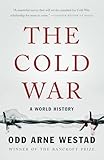
Overview: Odd Arne Westad’s ambitious work reframes the Cold War as a truly global phenomenon, emphasizing its profound impact on decolonization, revolutions, and everyday lives across Asia, Africa, and Latin America.
What Makes It Stand Out: Westad shifts focus from Washington-Moscow standoffs to the “Third World” battlegrounds, revealing how local actors exploited superpower rivalry. Archival depth and emphasis on anti-colonial struggles provide a revolutionary, inclusive perspective often missing in traditional narratives.
Value for Money: Justifies its cost through groundbreaking scope and scholarly rigor. Compared to US/Europe-centric histories, it offers unmatched value for readers seeking to understand the Cold War’s worldwide legacy in shaping modern geopolitics.
Strengths and Weaknesses: Strengths: Expansive geographical coverage, strong emphasis on agency of non-superpowers, and thematic richness. Weaknesses: Dense prose challenges casual readers; US/USSR diplomatic threads occasionally feel secondary.
Bottom Line: A vital correction to conventional Cold War histories; indispensable for grasping its global reverberations and highly recommended despite its academic intensity.
4. The Moscow Rules: The Secret CIA Tactics That Helped America Win the Cold War

Overview: Co-authored by former CIA Moscow Station Chief Jonna Mendez, this book unveils the clandestine techniques and protocols—dubbed “Moscow Rules”—used by American spies operating under extreme KGB surveillance in the Soviet capital.
What Makes It Stand Out: Rare insider authenticity defines this work. Mendez details ingenious, high-stakes tradecraft (dead drops, surveillance detection) based on firsthand experience, offering an unprecedented operational view of spycraft during the Cold War’s most dangerous posting.
Value for Money: Exceptional for espionage aficionados. While niche, its unique access to CIA methodologies provides more practical insight than theoretical histories at a comparable price point, making it a standout investment for spy genre fans.
Strengths and Weaknesses: Strengths: Unmatched authenticity, vivid real-world examples, and clear explanations of complex tactics. Weaknesses: Limited historical context; focuses narrowly on CIA operations without broader political analysis.
Bottom Line: A captivating masterclass in tradecraft; highly recommended for those fascinated by the gritty realities of intelligence work, though supplementary reading is needed for full historical context.
5. Cold War on Five Continents: A Global History of Empire and Espionage

Overview: David C. Engerman’s scholarly work examines the Cold War’s intricate ties to decolonization and imperial decline, arguing that superpower competition was fundamentally shaped by struggles for influence across newly independent nations.
What Makes It Stand Out: It uniquely interweaves espionage history with post-colonial studies, highlighting how intelligence agencies manipulated nationalist movements. Archival research across multiple nations reveals covert operations often overlooked in Eurocentric accounts, emphasizing Africa, Asia, and the Middle East.
Value for Money: High value for academics and deep-dive enthusiasts. Though dense, its original synthesis of empire and espionage justifies the cost better than single-region studies, offering a fresh lens for understanding Cold War globalization.
Strengths and Weaknesses: Strengths: Innovative framework, strong multinational evidence, and critical analysis of intelligence in anti-colonial conflicts. Weaknesses: Academic tone limits accessibility; espionage narratives sometimes feel secondary to political analysis.
Bottom Line: A crucial contribution for understanding the Cold War’s imperial dimensions; recommended for scholars and readers seeking a nuanced, globally oriented perspective, despite its scholarly density.
6. Checkpoint Charlie: The Cold War, The Berlin Wall, and the Most Dangerous Place On Earth (Compelling Cold War History)

Overview: This focused historical account dissects the iconic Berlin checkpoint as a microcosm of Cold War tensions. It chronicles the site’s evolution from a simple crossing point to a global symbol of ideological division, detailing key incidents, espionage, and the human stories of those who risked everything there between 1961 and 1989. What Makes It Stand Out: Its strength lies in hyper-specificity, transforming a single location into a gripping narrative lens for the entire Cold War era. The author masterfully weaves archival research with personal testimonies, offering an intense, ground-level perspective often missing in broader histories, making the abstract conflict visceral and immediate. Value for Money: Priced competitively for a specialized history, it delivers exceptional depth on its subject. While narrower than comprehensive surveys, it offers unique insights unmatched by pricier academic tomes or superficial overviews, justifying its cost for enthusiasts seeking focused drama. Strengths and Weaknesses: Strengths: Compelling narrative drive; rich primary source integration; excellent contextualization of Checkpoint Charlie’s global significance. Weaknesses: Limited scope may frustrate readers seeking wider Cold War analysis; minimal discussion of Soviet perspectives beyond checkpoint interactions. Bottom Line: Highly recommended for readers wanting an immersive, human-centered dive into one of the Cold War’s most potent symbols; less ideal as a sole introductory text but invaluable for deepening understanding of Berlin’s pivotal role.
7. The Billion Dollar Spy: A True Story of Cold War Espionage and Betrayal

Overview: Drawing on declassified CIA files, this narrative recounts the extraordinary true story of Adolf Tolkachev, a Soviet engineer who became one of the CIA’s most valuable assets in the 1980s. It details his risky espionage for microfilm, the high-stakes technology he stole, and the eventual, devastating betrayal that ended his mission. What Makes It Stand Out: The book excels as a real-life spy thriller, offering unprecedented access to tradecraft details and high-level CIA operations. Its meticulous reconstruction of Tolkachev’s motivations and the tense Moscow underworld provides a rare, granular view of human intelligence gathering at the Cold War’s peak. Value for Money: At standard nonfiction pricing, it offers immense value through its exclusive access to primary sources and gripping storytelling. It surpasses many pricier espionage histories in authenticity and narrative tension, making it a standout investment for true spy story enthusiasts. Strengths and Weaknesses: Strengths: Exceptional primary research; cinematic pacing; profound insights into KGB/CIA dynamics. Weaknesses: Limited geopolitical context beyond the spy operation; occasional over-reliance on CIA perspectives; technical details may overwhelm casual readers. Bottom Line: An essential, pulse-pounding read for Cold War and espionage aficionados; its unparalleled access to a major spy case justifies every penny and earns a strong recommendation despite niche technical passages.
8. Cold War: An Illustrated History, 1945-1991

Overview: This visual chronicle presents the entire Cold War era through a curated collection of photographs, political cartoons, maps, and documents. It systematically guides readers from the Yalta Conference to the Soviet collapse, using imagery as the primary vehicle to explain complex political, military, and cultural developments across five decades. What Makes It Stand Out: Its power is undeniably visual. The high-quality, often rare imagery—accompanied by concise, informative captions—makes abstract concepts tangible. Unlike text-heavy histories, it leverages the emotional and explanatory impact of visuals to create an accessible, memorable overview ideal for visual learners. Value for Money: Exceptional value given the production quality and depth of visuals. While monographs on specific events may cost more, this book’s broad scope and visual richness offer unmatched educational utility per dollar, especially for students or casual historians. Strengths and Weaknesses: Strengths: Stunning, well-annotated visuals; clear chronological structure; superb accessibility for all knowledge levels. Weaknesses: Text is necessarily concise, lacking deep analysis; limited exploration of non-Western perspectives; some images lack sufficient context. Bottom Line: Highly recommended as a starter text or reference guide; its visual approach provides an engaging foundation for understanding the era, though readers seeking deep analysis should pair it with narrative histories.
9. Cold War: For Forty-Five Years the World Held Its Breath

Overview: This concise history surveys the entire Cold War from 1945 to 1991, emphasizing the pervasive global anxiety and constant threat of nuclear conflict. It covers major crises, ideological battles, and proxy wars while underscoring the psychological burden of living “on the brink” for generations. What Makes It Stand Out: It uniquely prioritizes the human and psychological dimension of the era—the collective dread and resilience—alongside political milestones. Its thematic focus on tension and near-misses offers a distinct emotional perspective compared to strictly chronological or geopolitical accounts. Value for Money: As a used book in good condition, it represents outstanding value. Priced significantly below new releases, it delivers a solid, readable overview. Budget-conscious readers gain affordable access to core history, though newer editions might offer updated scholarship. Strengths and Weaknesses: Strengths: Strong thematic focus on global fear; clear, engaging writing; excellent affordability (used). Weaknesses: May lack recent archival revelations; condition variability with used copies; less detailed on specific events than dedicated studies. Bottom Line: A worthwhile, cost-effective choice for readers seeking an accessible emotional and narrative overview; recommended for students or casual readers, especially considering its used-book value proposition.
10. Blind Man’s Bluff: The Untold Story of American Submarine Espionage

Overview: This gripping account reveals the covert undersea shadow war between US and Soviet submarines during the Cold War. Based on extensive interviews and declassified material, it details daring missions to tap communication cables, steal missile components, and stalk enemy vessels in the ocean’s silent depths. What Makes It Stand Out: It uncovers a largely hidden theater of the Cold War, blending high-stakes naval adventure with technical detail. The narrative excels in portraying the claustrophobic tension aboard submarines and the audacious, near-suicidal missions executed in total secrecy beneath polar ice and deep oceans. Value for Money: Priced as a standard history, it offers premium value through exclusive access to insider accounts and previously classified operations. Its niche focus delivers more unique content per page than broader surveys, making it indispensable for naval history buffs. Strengths and Weaknesses: Strengths: Unprecedented access to submariners; thrilling narrative pace; fascinating technical insights. Weaknesses: Limited Soviet perspective; dense naval terminology may confuse some; minimal discussion of broader geopolitical implications. Bottom Line: A must-read for military and espionage enthusiasts; its revelatory stories and masterful storytelling justify strong recommendation, though casual readers should prepare for technical immersion.
Understanding Your Geopolitical Learning Goals
Before diving into any book, clarifying your specific objectives is crucial. Are you seeking foundational knowledge of key events, or do you want to dissect the underlying strategic doctrines that shaped decades of policy? Understanding your “why” directly impacts which books will serve you best.
Defining Your Core Interests
Pinpointing whether your focus leans towards military strategy, economic statecraft, intelligence operations, or cultural diplomacy will dramatically narrow your search. Someone fascinated by nuclear deterrence theory needs different resources than another exploring how the Non-Aligned Movement navigated superpower pressures. Be specific about the geopolitical mechanisms you want to understand.
Assessing Your Current Knowledge Level
Honesty about your baseline understanding prevents frustration. Introductory surveys are invaluable for newcomers, but seasoned readers might find them lacking depth on nuanced policy shifts. Conversely, highly specialized monographs assuming prior knowledge can overwhelm beginners. Match the book’s presumed expertise to your own to ensure comprehension and engagement.
Considering Practical Application
Think about how you intend to use the knowledge. Is it for academic research requiring meticulous citations, professional analysis needing actionable frameworks, or personal enrichment fostering critical thinking about current events? Books emphasizing primary source analysis suit researchers, while those offering clear conceptual models might benefit professionals more.
Evaluating Source Material and Research Rigor
The bedrock of credible geopolitical insight lies in the quality and breadth of the sources a book draws upon. Superficial accounts relying on secondary summaries simply cannot offer the depth needed for true strategic understanding.
Scrutinizing Primary Source Integration
Look for evidence the author has engaged deeply with declassified documents, diplomatic cables, memoirs from key decision-makers (evaluated critically), and archival materials from multiple nations involved. Books that transparently cite these sources, especially from former Eastern Bloc or non-aligned states, provide a richer, less US/West-centric perspective essential for holistic insight.
Assessing Archival Depth and Breadth
Beyond just mentioning archives, consider which archives were accessed and how comprehensively. Did the author utilize newly opened Russian, Chinese, Cuban, or Eastern European collections, or rely primarily on well-trodden Western archives? Greater geographic diversity in source material often reveals overlooked motivations and constraints faced by different actors.
Analyzing Memoir and Oral History Reliability
While memoirs offer invaluable personal perspectives, they are inherently subjective and retrospective. Strong geopolitical analyses will critically evaluate these sources, cross-referencing them with documentary evidence and acknowledging potential biases, omissions, or myth-making common in recollections of high-stakes events.
Analyzing Perspective and Narrative Balance
The Cold War was a global conflict with participants far beyond Washington and Moscow. Truly insightful books move beyond a single-nation viewpoint to capture the complex interplay of multiple actors and ideologies.
Seeking Multi-Polar Frameworks
Prioritize works that treat the Soviet Union, China, key European powers, the Global South, and non-state actors as active, independent agents with their own strategic logics, not merely as satellites reacting to superpower moves. Geopolitical insight emerges from understanding these diverse, often competing, agendas.
Identifying Ideological Nuance
Avoid books that present ideology as mere propaganda or a simplistic binary. The most valuable analyses explore how communist, capitalist, nationalist, and anti-colonial ideologies actually shaped decision-making, resource allocation, alliance structures, and perceptions of threat among different actors, often in contradictory ways.
Recognizing Western-Centric Pitfalls
Be vigilant for narratives that implicitly assume Western actions were primarily reactive or defensive while portraying Soviet/Chinese actions as inherently aggressive. Insightful geopolitical analysis contextualizes all major players’ actions within their perceived security needs, historical experiences, and strategic doctrines, acknowledging miscalculations on all sides.
Examining Thematic Depth Beyond Military Confrontation
While nuclear brinkmanship captures the imagination, the Cold War’s geopolitical reality was woven from far more intricate threads. Books offering the deepest insights explore these less visible but equally critical dimensions.
Understanding Economic Statecraft and Resource Competition
The struggle over trade routes, resource access (like oil or rare minerals), development aid, and economic systems (capitalist vs. centrally planned) was fundamental. Look for analyses dissecting how economic tools were wielded as strategic weapons and how economic vulnerabilities influenced political decisions globally.
Exploring Intelligence and Covert Operations
Beyond spy thrillers, examine how books treat the strategic impact of intelligence failures (like the U-2 incident) and successes, the role of disinformation campaigns, and how covert actions influenced diplomatic trajectories and proxy conflicts, often with long-term unintended consequences.
Deciphering Alliance Management and Diplomatic Maneuvering
The skillful (and sometimes clumsy) maintenance of vast alliance networks (NATO, Warsaw Pact, Non-Aligned Movement) was critical. Insightful books detail the constant negotiations, burden-sharing disputes, and efforts to prevent allies from defecting or acting unilaterally, revealing the friction within blocs.
Analyzing the Role of Culture and Propaganda
Ideological competition played out fiercely in cultural spheres – from the Space Race and Olympics to jazz diplomacy and film. Books that analyze how soft power, cultural exchange (and suppression), and competing visions of modernity were deployed as geopolitical tools offer a more complete picture.
Assessing Author Expertise and Context
The credibility of the geopolitical analysis hinges significantly on the author’s background, methodology, and awareness of the scholarship surrounding their topic.
Verifying Scholarly Credentials and Specialization
Research the author’s academic background, institutional affiliations, and prior publications. Are they recognized specialists in Cold War history, international relations theory, specific regions, or intelligence studies? Deep expertise in a relevant field generally correlates with more nuanced analysis than a general historian’s overview.
Evaluating Methodological Transparency
Strong geopolitical analyses explicitly state their theoretical framework (e.g., realism, constructivism) and explain how they interpret evidence. Look for authors who acknowledge limitations in sources or alternative interpretations, demonstrating intellectual honesty crucial for trustworthy insight.
Considering Publication Era and Evolving Scholarship
While vintage classics have value, prioritize works engaging with the latest archival openings and contemporary historiographical debates. Scholarship has evolved significantly, especially regarding Soviet motivations, the Global South’s agency, and the role of non-state actors. A book published after major archive releases (e.g., post-1991) generally incorporates more comprehensive evidence.
Ensuring Readability and Conceptual Clarity
Even the most rigorously researched book fails as a geopolitical tool if it’s inaccessible. The best works translate complex strategic concepts into clear, engaging prose without sacrificing analytical depth.
Judging Explanatory Power of Concepts
Does the author effectively define and illustrate key geopolitical concepts like deterrence, brinkmanship, containment, or spheres of influence? Look for clear explanations that connect abstract theory to concrete historical events, making the strategic logic tangible and applicable to modern scenarios.
Assessing Narrative Flow and Structure
A well-structured argument is easier to follow and absorb. Check if the book builds its case logically, chapter by chapter, using events to illustrate broader strategic principles rather than getting bogged down in a purely chronological “one-thing-after-another” account. Maps and clear timelines are also significant assets.
Balancing Detail with Big-Picture Insight
The ideal book provides enough specific detail to ground its analysis but consistently ties events back to overarching geopolitical themes and lessons. Avoid works that drown you in minutiae without synthesis or, conversely, those offering sweeping generalizations unsupported by evidence. Look for the “so what?” clearly articulated.
Connecting Historical Analysis to Modern Geopolitics
The ultimate test of a Cold War book’s value for geopolitical insight is its ability to illuminate present-day challenges without forcing simplistic analogies.
Identifying Enduring Strategic Principles
Does the analysis reveal principles of power balancing, crisis management, alliance dynamics, or the limits of military power that remain relevant? Books highlighting how leaders navigated uncertainty, miscalculation, and the fog of war offer timeless lessons for contemporary statecraft.
Encouraging Critical Analogy-Making
The strongest works don’t claim “history repeats,” but they equip readers to draw informed parallels. They help you recognize similar structural dynamics (e.g., multipolar competition, nuclear deterrence challenges, information warfare) while emphasizing crucial contextual differences between eras.
Fostering Long-Term Strategic Thinking
Look for books that move beyond immediate crises to explore how long-term strategic visions (or the lack thereof) shaped outcomes. Understanding how policies were formulated with decades-long horizons in mind cultivates a similar strategic patience and foresight valuable today.
Frequently Asked Questions
Frequently Asked Questions
How recent does a Cold War book need to be for relevant geopolitical insight? Focus less on the publication date and more on whether the author utilized the most significant archival openings (primarily post-1991) and engaged with modern scholarly debates. A well-researched book from the early 2000s might offer deeper insight than a superficial 2025 release lacking primary source depth.
Can memoirs by former officials provide genuine geopolitical insight? Yes, but with critical caution. They offer unique “in the room” perspectives on decision-making, but are inherently subjective and retrospective. Prioritize memoirs that are well-documented, acknowledge uncertainties at the time, and are cross-referenced with documentary evidence in analytical works.
Are books focusing on specific regions (like Asia or Latin America) during the Cold War useful for broader geopolitical understanding? Absolutely. These works are often essential, revealing how global superpower competition intersected with local conflicts, national aspirations, and anti-colonial struggles. They demonstrate the decentralized, multi-theater nature of Cold War geopolitics beyond Europe.
How can I tell if a book presents a balanced view of both superpowers’ strategies? Look for analyses that explore the internal drivers, perceived threats, and constraints faced by both the US and USSR (and China). Avoid books that portray one side as purely rational/reactive and the other as inherently irrational/aggressive without deep contextual justification.
Do I need a background in political science to understand geopolitical analysis in Cold War books? Not necessarily. The best analytical books explain key concepts like deterrence or realpolitik clearly within the historical narrative. Prioritize works known for readability and conceptual clarity, often found in well-regarded academic presses or by veteran journalist-historians.
Are academic journal articles better than books for deep geopolitical insight? Books generally offer the sustained, narrative-driven analysis needed to grasp complex geopolitical dynamics over time. Journal articles excel on hyper-specific topics but often lack the broader context. Books synthesizing the latest research are usually the best starting point.
How important is the author’s nationality for Cold War geopolitical analysis? Nationality itself is less critical than the author’s demonstrated ability to access and interpret diverse source materials and perspectives. Some of the most insightful analyses come from scholars outside the US and Russia precisely because they engage deeply with non-dominant narratives.
Should I prioritize books covering the entire Cold War or focus on specific crises (like Cuba or Vietnam)? Both have value. Broader surveys provide essential context and reveal long-term patterns, while deep dives into specific crises offer unparalleled detail on decision-making under pressure. Start broad, then use specific crises to test and deepen your understanding of the overarching dynamics.
Can fiction or historical novels offer useful geopolitical insight into the Cold War? While primarily for entertainment, exceptionally well-researched historical fiction can vividly convey the atmosphere, dilemmas, and human dimensions of the era. However, for analytical insight into strategy and statecraft, non-fiction with rigorous sourcing remains essential. Use fiction as a supplement, not a replacement.
What’s the biggest mistake people make when choosing Cold War books for geopolitical insight? Relying solely on popular bestsellers or simplistic “top 10” lists without evaluating the book’s source base, analytical framework, and perspective balance. Focus on the critical evaluation criteria discussed here—rigor, perspective, thematic depth, and conceptual clarity—rather than popularity or publication date alone.